UGC marketing strategies for CPG brands get everyday products into real people's hands, then reuse the photos, videos and reviews those people create across ads, product pages and retail listings.
For consumer packaged goods, user-generated content (UGC) shows the product being tasted, used and repurchased by people like the shopper. The strongest CPG programs seed products through samples and creators, turn reviews and customer posts into ad creative, match the format to the category, and measure UGC by sales rather than likes.
This playbook covers the strategies that work for food and drink, beauty and personal care, household and wellness brands, with real CPG-style ad examples and how to measure what UGC sells.
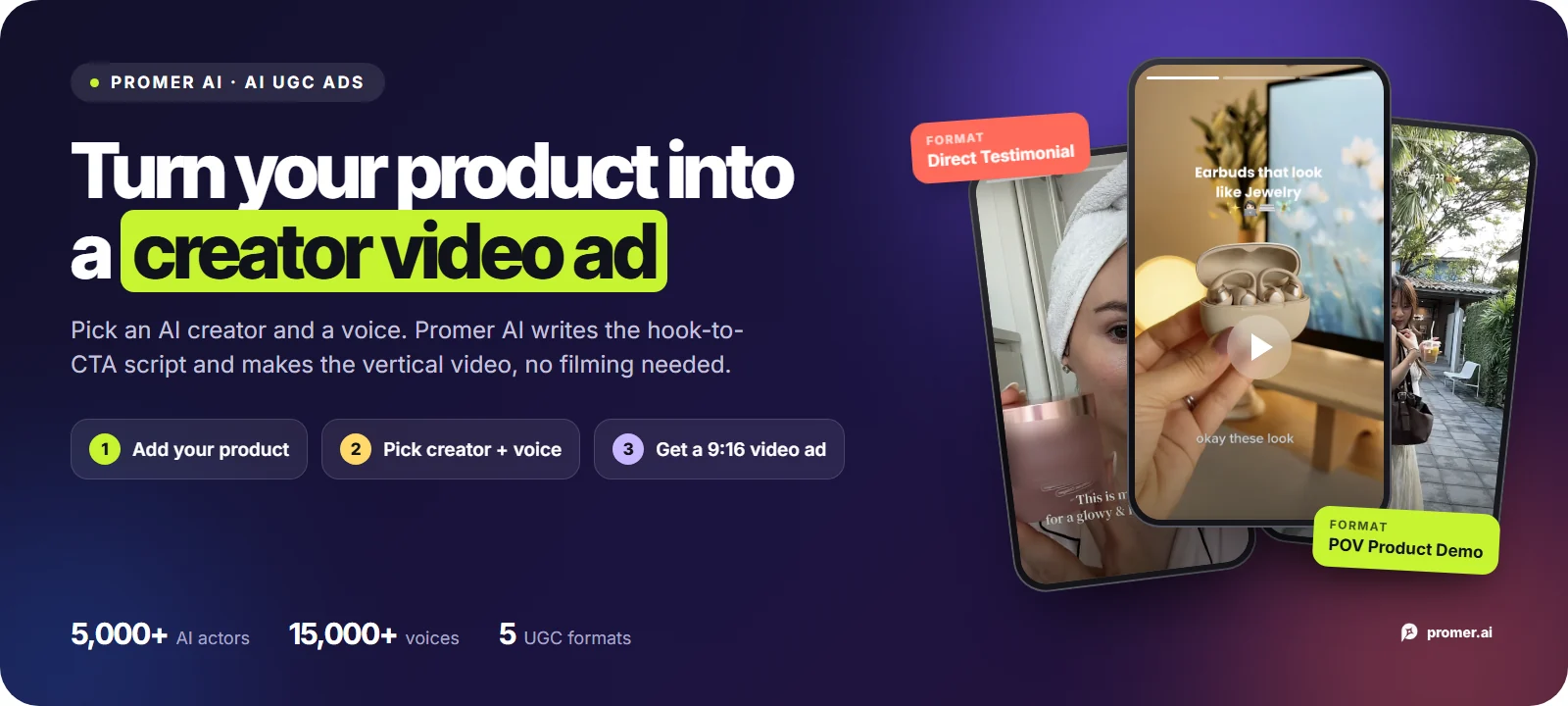
Not enough creator content to keep your ads fresh? Promer AI's AI UGC Ads turns a product into a creator-style video with an AI actor and an AI voice, so you can test UGC angles before you brief real creators.
Trial comes first. CPG products are cheap to sample, so seeding is the fastest way to get real content.
Reviews are your biggest UGC asset. Star ratings and short quotes turn into ads, product page proof and retail listing content.
The format depends on the category. Food sells on taste, beauty on texture and routine, household on visible results, wellness on habit.
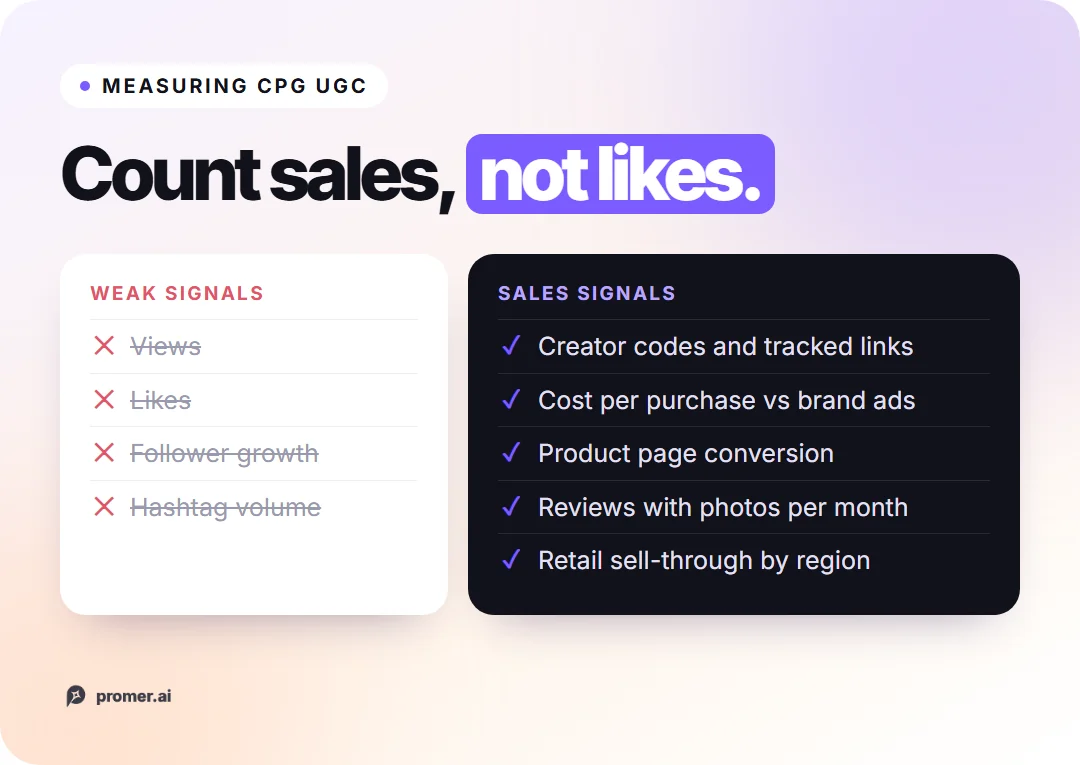
Measure UGC by sales. Creator codes, tracked links and sell-through tell you more than views or likes.
Get rights and disclose. Ask permission to reuse content and disclose free products and paid partnerships.
What is UGC marketing for CPG brands?
UGC marketing for CPG brands is the practice of collecting content that customers and creators make about everyday products, such as snacks, drinks, skincare, cleaning supplies and supplements, and using it in marketing.
That content includes photos, short videos, unboxings, recipes, routines, ratings and written reviews.
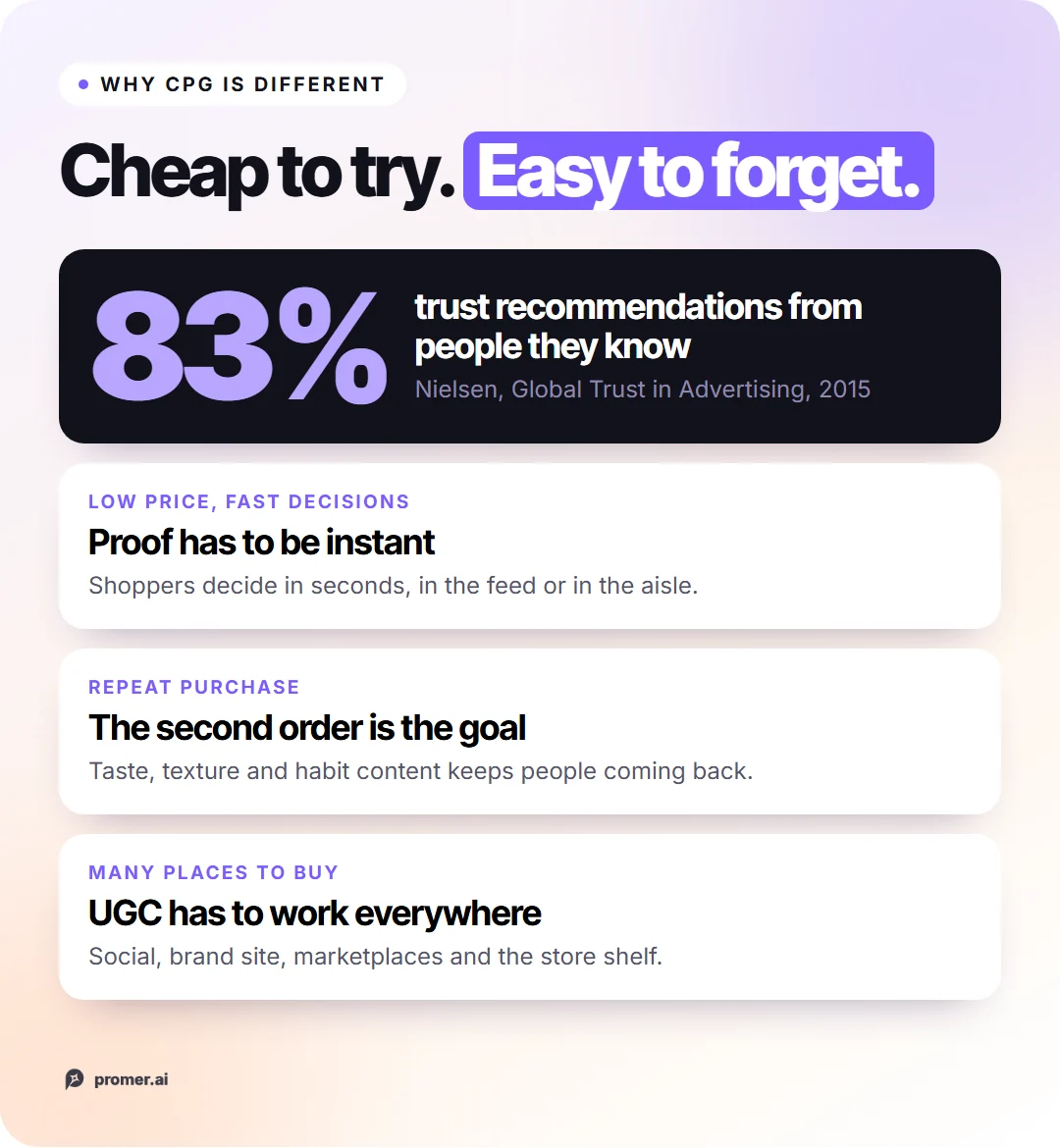
CPG is different from most ecommerce categories in three ways:
Low price, fast decisions. Shoppers decide in seconds, so proof has to be instant.
Repeat purchase. The real goal is the second and third order, which makes taste, texture and habit content valuable.
Many places to buy. One product sells on social, on a brand site, on marketplaces and in stores, and UGC has to work in all of them.
Peer content works because people trust people more than brands. In Nielsen's Global Trust in Advertising survey, 83% of respondents said they trust recommendations from people they know, the most trusted source in the study.
Definition: CPG (consumer packaged goods) are products people use up and buy again, such as food, beverages, beauty and personal care, household supplies and supplements.
UGC marketing strategies for CPG brands
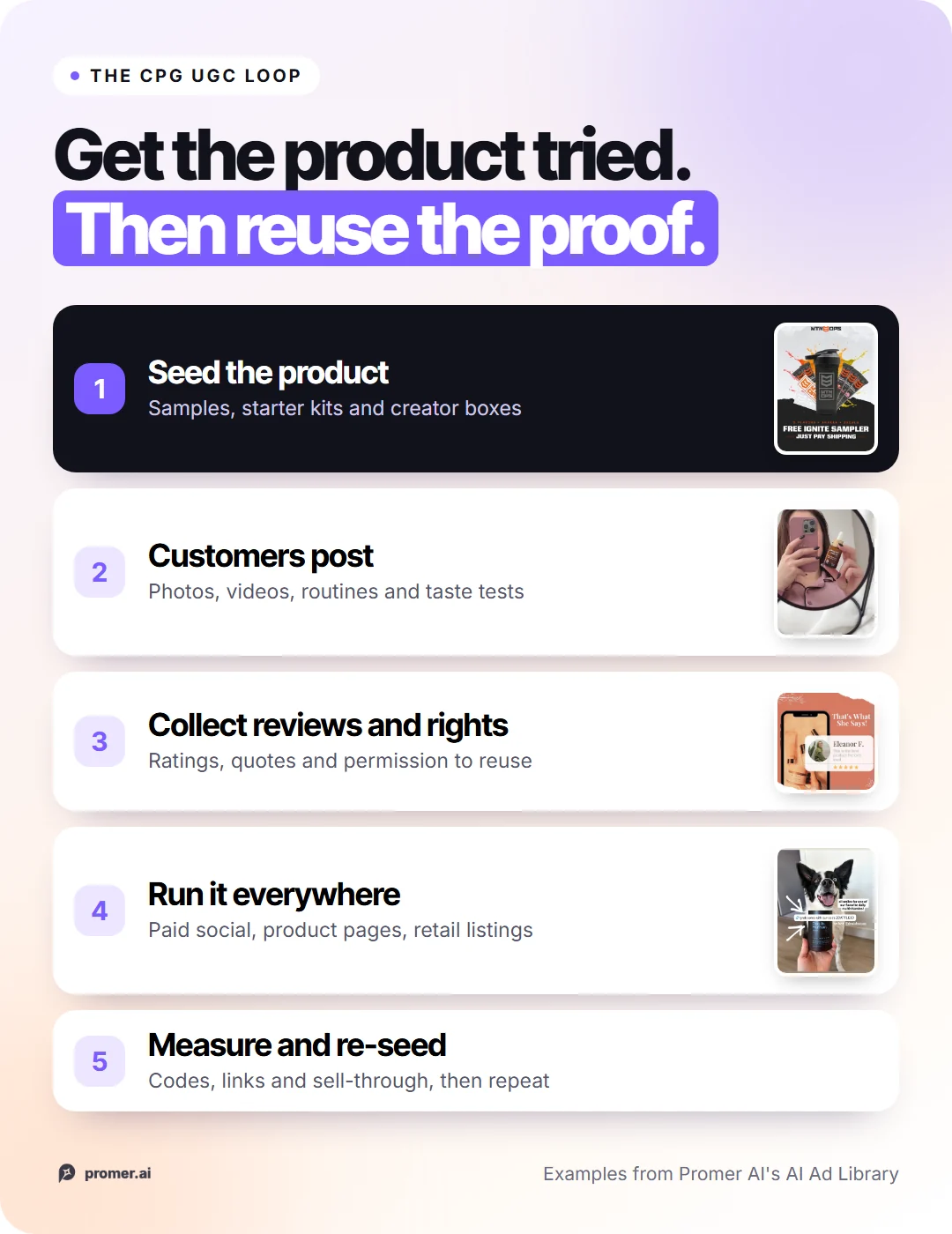
The strategies below follow the order a CPG program usually runs in: get the product tried, collect the proof, put it to work, then repeat.
1. Seed the product with samples and creator programs
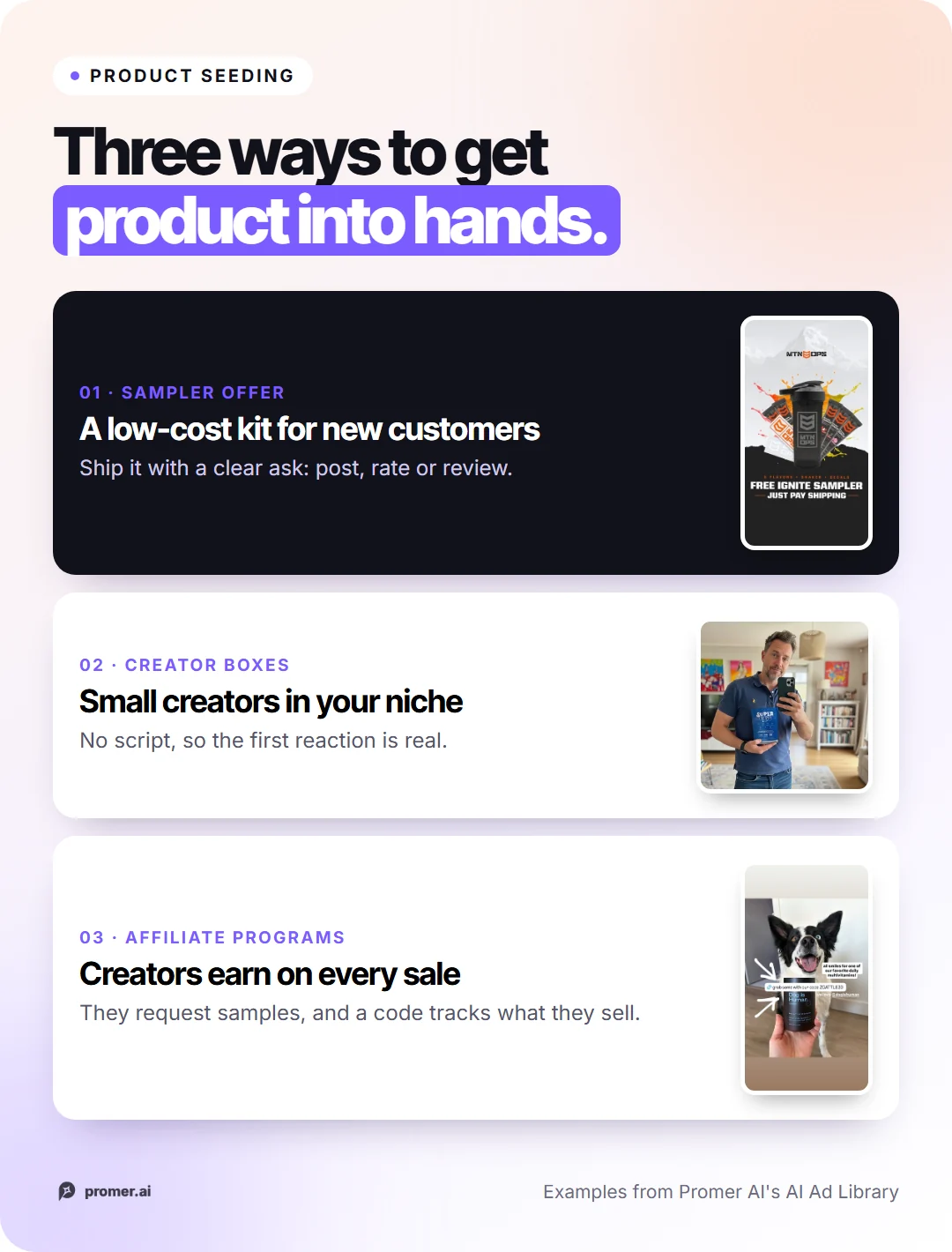
Product seeding means sending samples, starter kits or creator boxes to customers and creators so they make content about the product.
Because CPG products cost little to ship, seeding is cheaper than for most categories. It works in a few ways:
Sampler offers: a free or low-cost starter kit for new customers, with a request to post or review.
Creator seeding: boxes sent to small creators in the right niche, with no script, so the reaction is real.
Affiliate programs: on marketplaces such as TikTok Shop, creators request samples and earn a commission on sales.
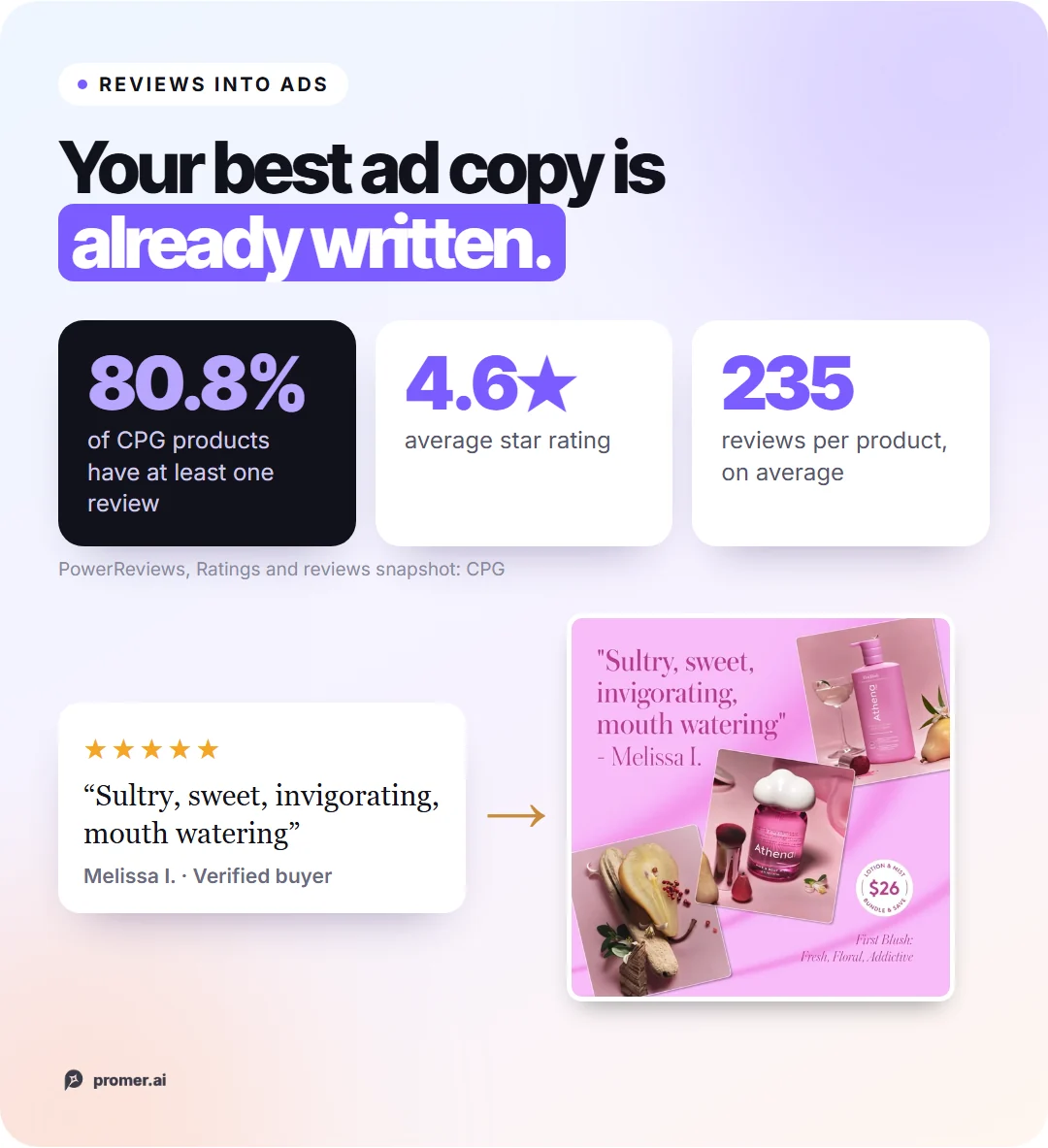
Reviews are the most plentiful UGC a CPG brand owns, and they turn into ads with very little work: a quote, a star rating, a first name and the product.
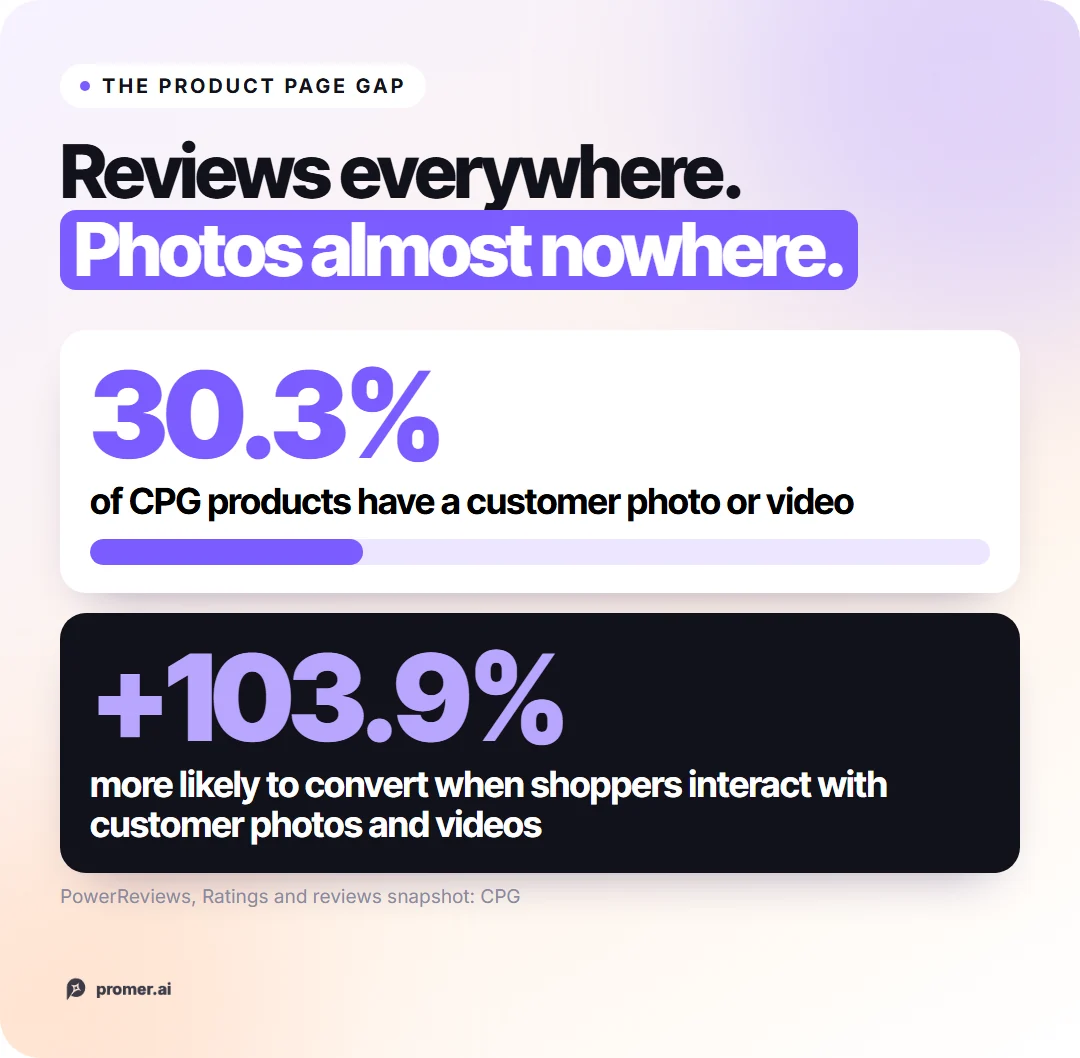
PowerReviews found that 80.8% of the CPG products in its analysis have at least one review, with an average rating of 4.6 stars and an average of 235 reviews per product.
Pick quotes that answer a buying question, such as taste, scent, texture or how long a pack lasts, rather than generic praise.
Pro tip: sort reviews by the objection they answer ("too sweet?", "does it foam?", "is it worth the price?") and build one ad per objection. Each ad then tests a different reason to buy.
3. Put UGC on product pages and retail listings
Customer photos and videos on product pages show the product at real size, in real kitchens and bathrooms, which studio shots can't.
The same PowerReviews analysis found that only 30.3% of CPG products have at least one customer photo or video, while visitors who interact with user-generated photos and videos are 103.9% more likely to convert.
Most CPG products still have reviews but no visual proof, so a photo request in your post-purchase emails can make a page stand out.
4. Match the UGC format to the category
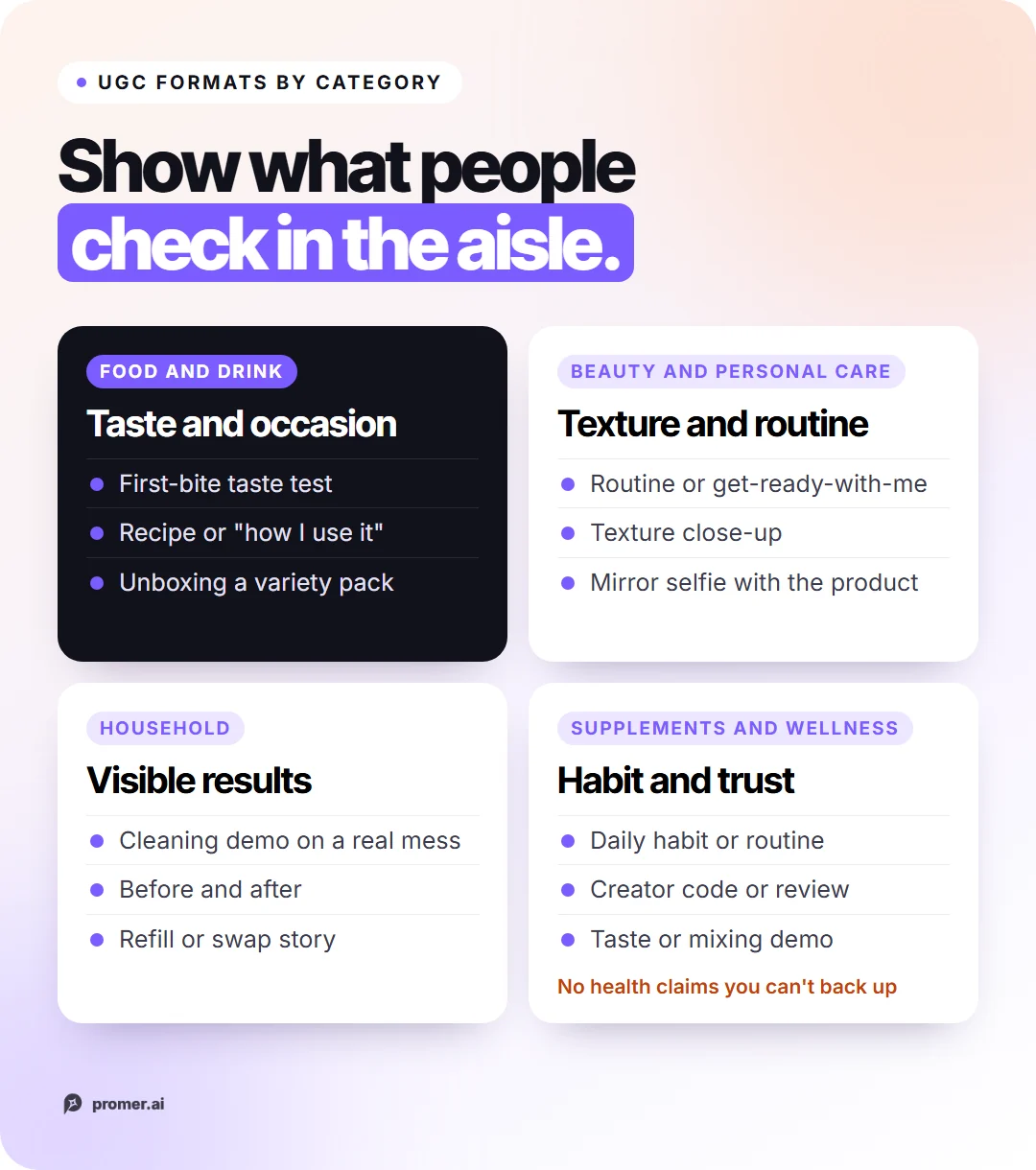
Each CPG category has a different question that shoppers want answered, and the best UGC format is the one that answers it.
Food and drink: first-bite taste tests, recipes and variety-pack unboxings.
Beauty and personal care: routines, texture close-ups and mirror selfies with the product.
Household: cleaning demos on real messes, before and after, refill stories.
Supplements and wellness: daily habit content, creator codes and mixing or taste demos, without health claims you can't back up.
5. Show usage occasions, not just the product
Usage occasion content shows when and how people use a product: the after-school snack, the post-workout drink, the Sunday reset clean.
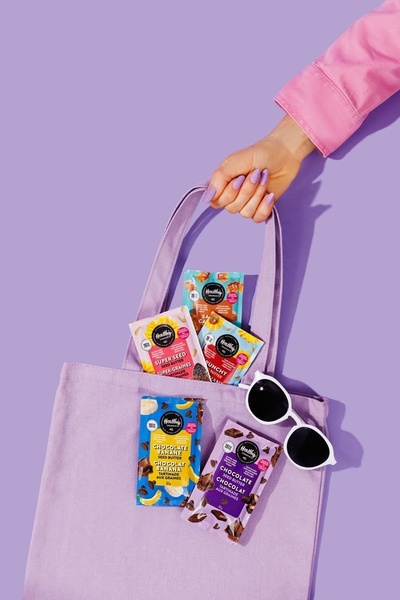
Occasions give a repeat-purchase product more reasons to be bought. A seed butter shown in a beach bag sells a different moment than the same jar on a breakfast table.
Ask customers "when do you use it?" in review forms and creator briefs, then build ads around the answers that come up most.
6. Run UGC in paid social with creator permission
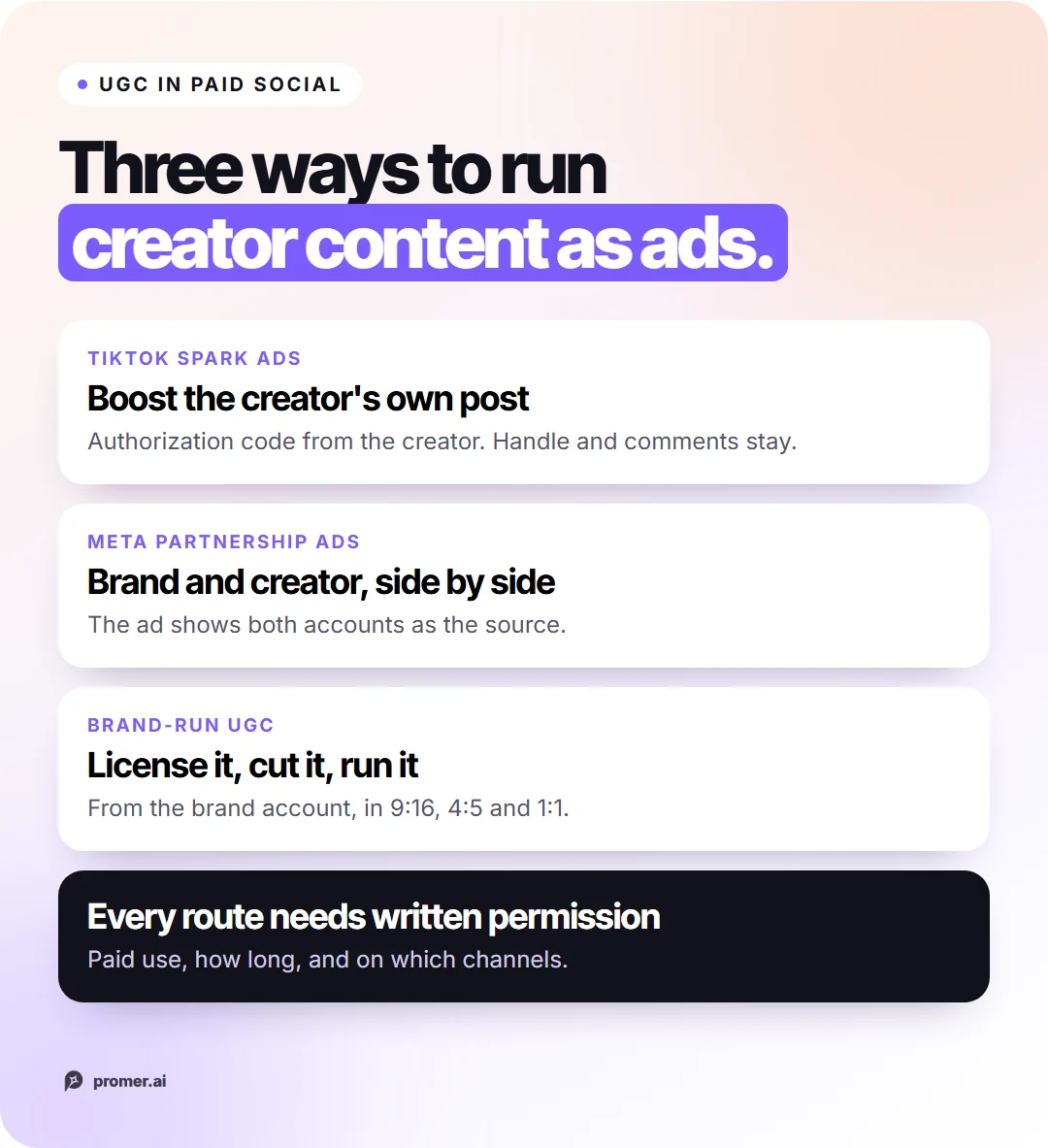
The best organic UGC usually becomes a paid ad, and platforms have formats for running it from the creator's own account.
TikTok Spark Ads: boost a creator's post with an authorization code, keeping their handle and comments.
Meta partnership ads: run an ad that shows both the brand and the creator as the source.
Brand-run UGC: license the clip and run it from the brand account, cut into 9:16, 4:5 and 1:1.
Whichever route you use, get written permission that covers paid use, how long you can run it and where.
7. Plan UGC around launches and seasons
CPG sales follow the calendar: summer drinks, back-to-school snacks, holiday gift sets and New Year wellness.
Seed products four to six weeks before a launch or season so the content is ready when demand starts. Late UGC misses the window, and a fresh flavor with no reviews has nothing to show.
Moment
CPG categories
UGC to collect
New Year
Supplements, healthy snacks
Daily habit and "week one" check-ins
Summer
Drinks, sunscreen, frozen treats
Outdoor taste tests and beach-bag hauls
Back to school
Snacks, lunch items, hair care
Lunchbox packs and morning routines
Holidays
Gift sets, baking, candles
Unboxings, recipes and gifting reactions
8. Fill creator gaps with AI UGC videos
Real creators can't always keep up with how fast paid social burns through creative, especially for brands testing several flavors, scents or variants at once.
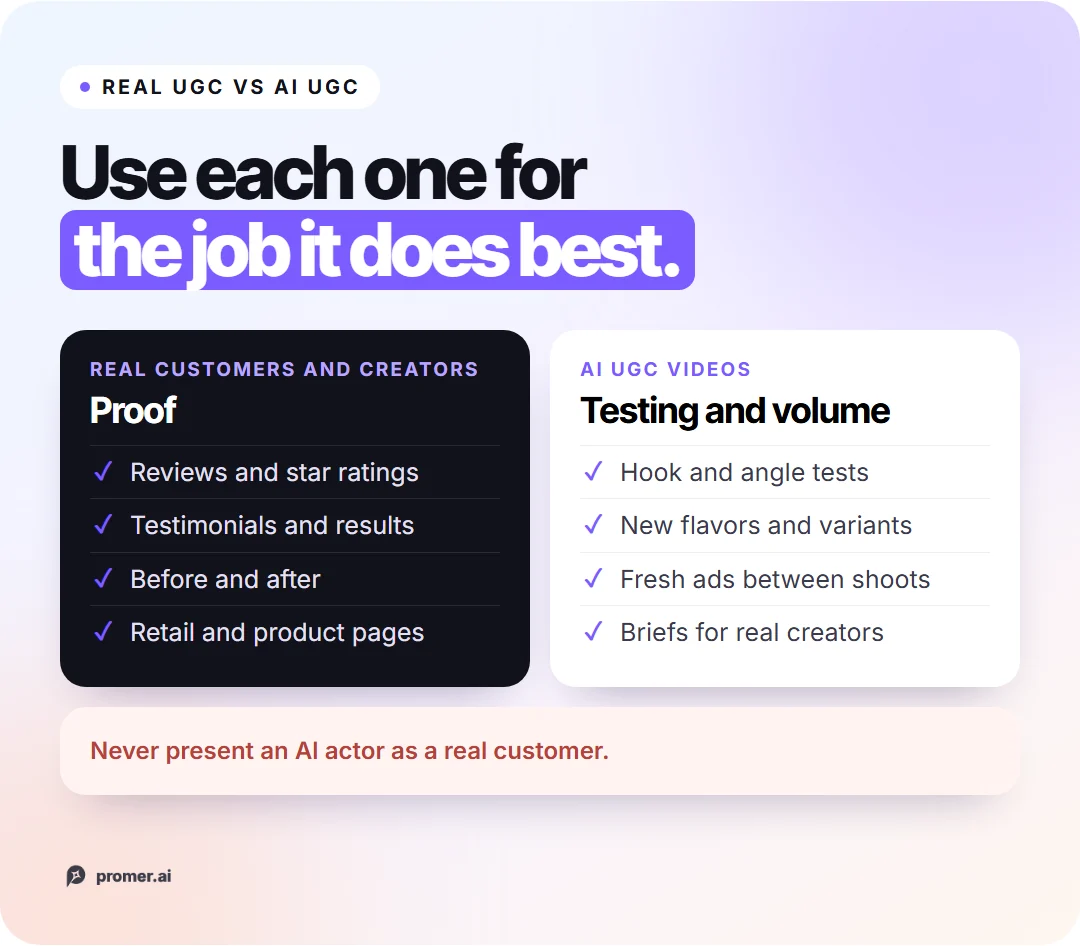
AI UGC videos fill that gap: creator-style clips with an AI actor that let you test an angle, a hook or a variant before you pay for a real shoot. Keep real customer content for the claims and reviews, and use AI for volume and testing.
CPG UGC ad examples
Every example below is a real CPG or CPG-style creative from Promer AI's AI Ad Library, which holds 60,000+ static ad templates.
Each one lists its ratio and concept, why it works, and which strategy from this guide it uses.
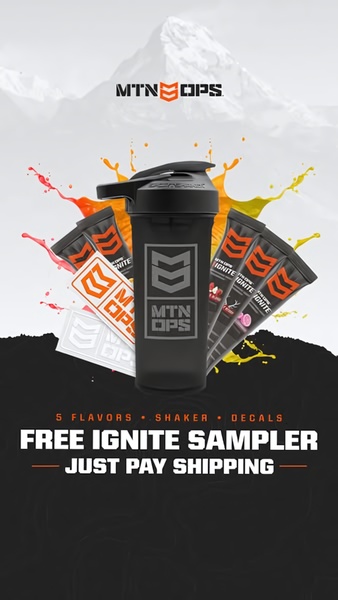
1. Sampling Offer: "Free Ignite Sampler" Energy Supplement
Ratio: 9:16 | Concept: Sampler offer
A black shaker bottle and a fan of flavor stick packs sit in front of a snowy mountain, above the line "Free Ignite sampler, just pay shipping."
Why it works:
A free sampler removes the risk of trying a new flavor
Showing every stick pack makes the kit feel generous
Every sampler shipped is a customer who can post or review
Strategy: seeding through a sampler offer.
2. Review Card: "That's What She Says!" Face Scrub
Ratio: 1:1 | Concept: Customer review
A phone screen shows the scrub in use next to a review card from "Eleanor F." that reads "This is the best product I've ever used," with five stars, on a warm terracotta background.
Why it works:
A named reviewer and stars read as real proof
The playful headline stops the scroll before the quote does the selling
One quote keeps the ad simple at feed size
Strategy: turning reviews into ad creative.
3. Sensory Review: "Sultry, Sweet, Invigorating" Body Mist
Ratio: 1:1 | Concept: Review quote with bundle offer
A pink hair and body mist and a matching lotion sit among pears and berries under a customer quote, "Sultry, sweet, invigorating, mouth watering," with a $26 bundle badge.
Why it works:
A customer describes the scent, which a screen can't show
Fruit props back up the words in the quote
The bundle badge gives a reason to buy two products at once
Strategy: picking reviews that answer the buying question, here "what does it smell like?"
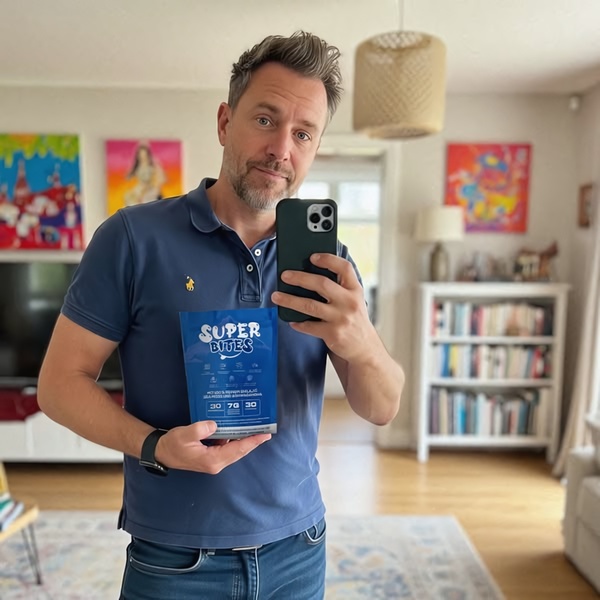
4. Founder-Led: Snack Pouch Mirror Selfie
Ratio: 1:1 | Concept: Founder-led UGC
A founder in a polo shirt takes a phone mirror selfie in a lived-in living room while holding a blue Super Bites pouch at chest height.
Why it works:
A real home and a phone in hand look like a friend's post
The founder puts a face to a small brand
The pouch is held where the eye lands first
Strategy: UGC-style content when customer content is still thin.
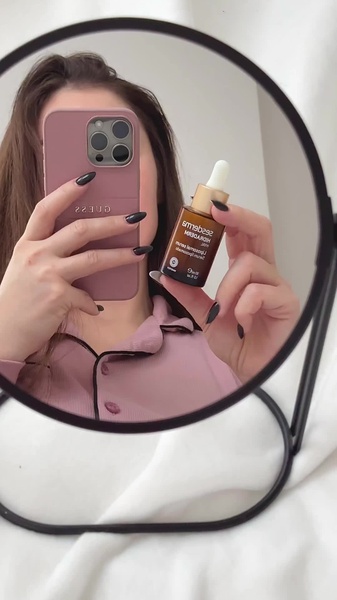
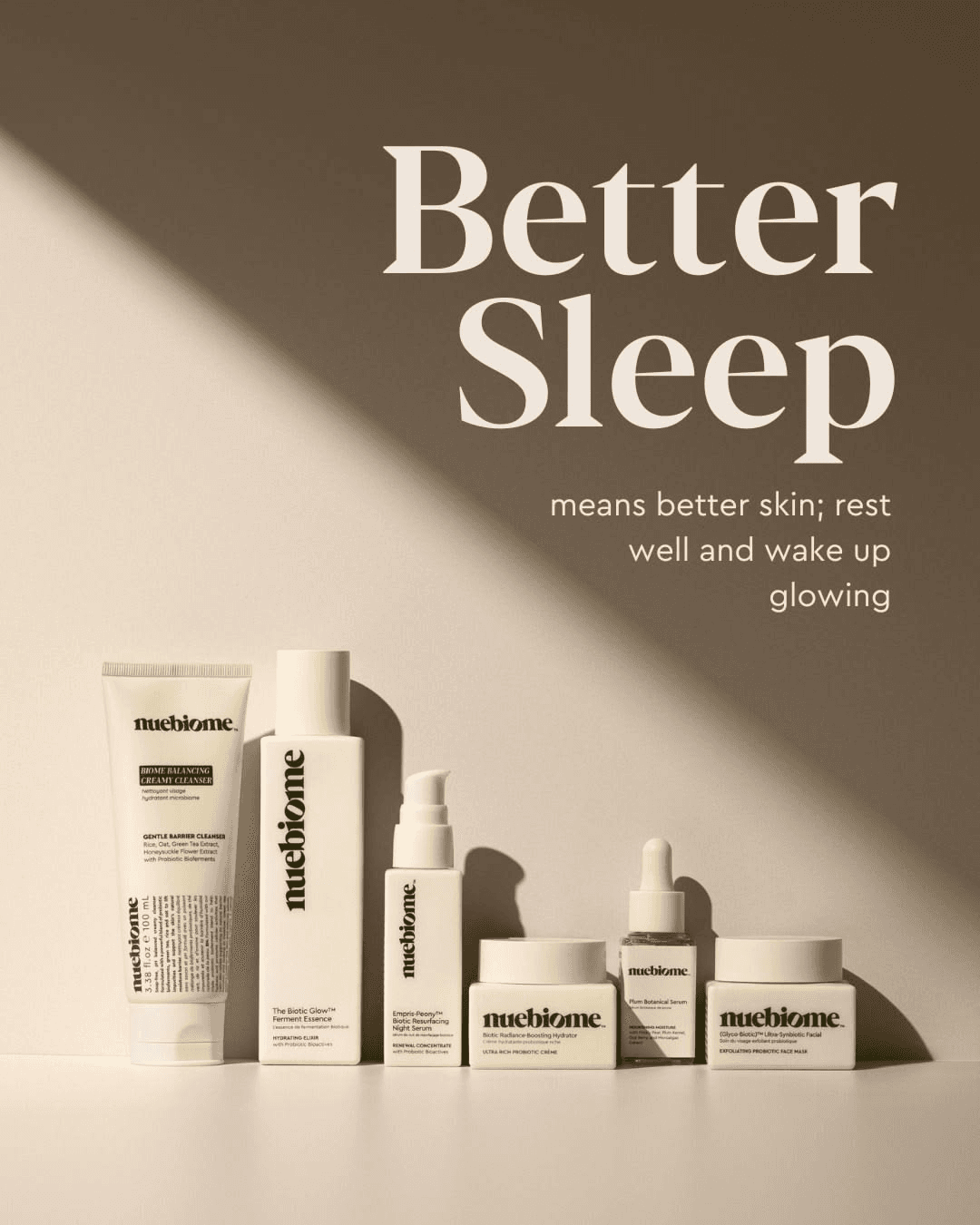
5. Routine: Serum Mirror Selfie
Ratio: 9:16 | Concept: UGC mirror selfie
A woman in pink pajamas takes a mirror selfie in a round mirror, holding a small dropper bottle of serum up to the camera.
Why it works:
Pajamas and a bedroom mirror place the product in a nightly routine
No text overlay, so it blends into Stories and TikTok
The bottle is the only sharp, bright object in the frame
Strategy: matching the format to beauty, where routine sells.
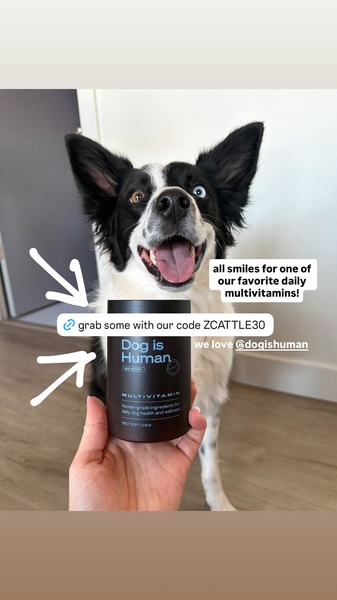
6. Creator Code: Dog Multivitamin
Ratio: 9:16 | Concept: Creator endorsement with discount code
A phone photo of a smiling dog sits behind a hand holding a tub of multivitamins, with arrows, the creator's note "all smiles for one of our favorite daily multivitamins" and a discount code.
Why it works:
It looks like a Story from a pet owner, not a brand
Arrows point straight to the product and the code
The code tells the brand exactly which sales this creator drove
Strategy: running creator content in paid social, with a code for measurement.
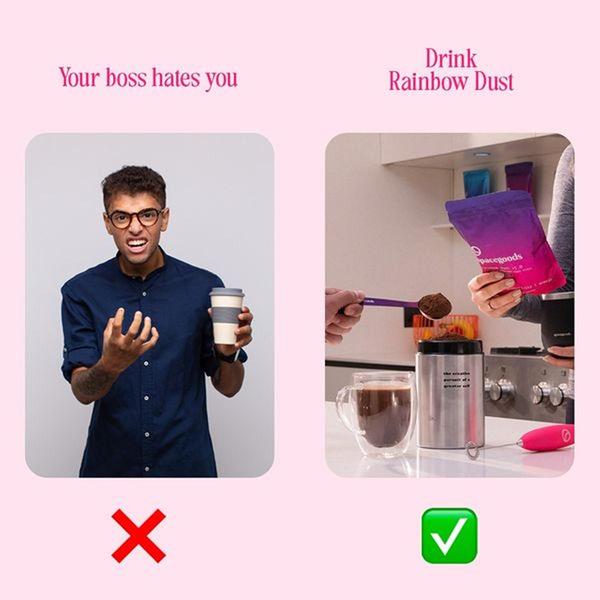
7. Meme Comparison: "Your Boss Hates You" Drink Powder
Ratio: 1:1 | Concept: Us vs. them
On a pink background, a frustrated man with a coffee cup sits under "Your boss hates you" with a red X, next to a hand scooping drink powder from a pouch under "Drink Rainbow Dust" with a green check.
Why it works:
The meme format reads like a post someone would share
The X and the check explain the ad without a sentence
A real kitchen scoop shows how the product is used
Strategy: showing a usage occasion, the morning drink, in a native format.
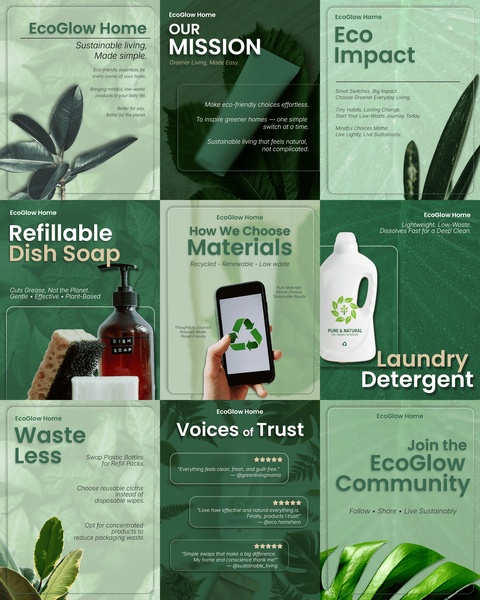
8. Review Grid: Eco Cleaning Products
Ratio: 4:5 | Concept: Mission grid with reviews
A nine-panel green grid mixes refillable dish soap and laundry detergent shots with a mission panel and a "Voices of trust" panel of five-star customer quotes.
Why it works:
Reviews sit next to the products they describe
The grid covers product, mission and proof in one scroll
One color system keeps nine panels from looking busy
Strategy: combining reviews with household proof points.
Pro tip: most of these layouts work with the content you already have, such as one review, one customer photo or one creator clip. Start from your best-rated product and its most-quoted review.
CPG UGC has to follow the same advertising rules as any other ad, plus a few that matter more for food, beauty and wellness products.
Permission to reuse: a customer posting about your product does not give you the right to run it as an ad. Get written permission that covers paid use.
Disclosure: under the FTC's Endorsement Guides, creators who received free product or payment must disclose that connection clearly.
Real reviews only: the FTC's rule on fake reviews bans fake or AI-generated reviews and testimonials presented as real customers.
Claims: a creator's "this cleared my skin" or "this boosted my energy" becomes your claim once you run it, so it needs the same support as your own copy.
Watch out: never put a made-up quote, name or star rating into a review ad, even as a placeholder. If you use AI actors, present them as a creator-style demo, not as a real customer's testimonial.
How to make CPG UGC ads with Promer AI
Promer AI, an AI ad generator built for ecommerce, helps CPG brands turn one product into UGC-style videos and review-led static ads.
Step 1: Create a creator-style video with AI UGC Ads
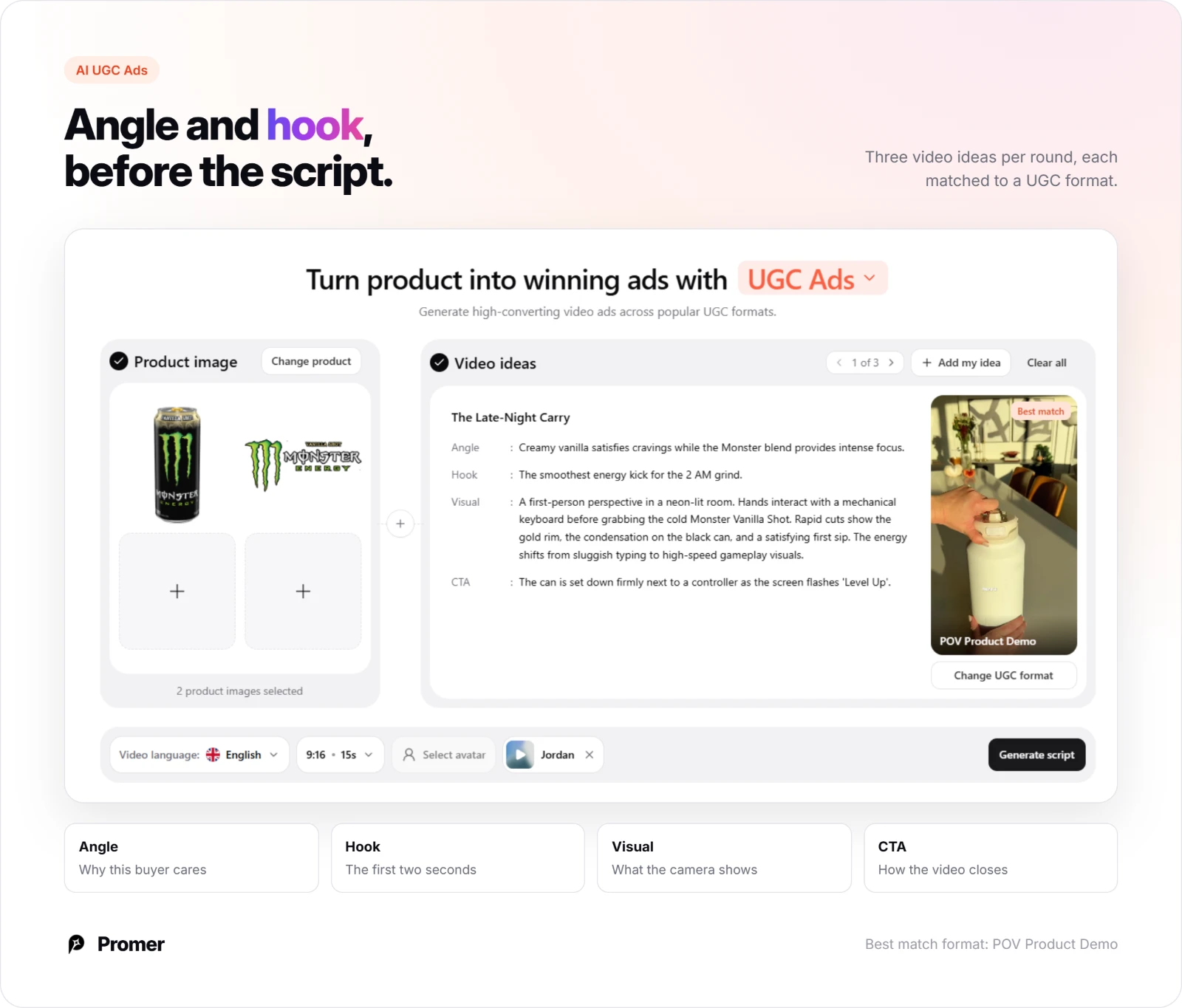
Promer AI's AI UGC Ads turns a product into a creator-style video in one of 5 formats: Direct Testimonial, Voiceover Product Review, POV Product Demo, Problem and Solution, or Routine or Day in the Life.
Ideas: AI suggests video ideas with an angle, a hook, a visual and a CTA, or you add your own.
Actors and voices: pick from 5,000+ AI actors and 15,000+ voices, filtered by age, region, language and accent.
Script: the AI writes a scene-by-scene script you can edit before generating.
Output: export in 9:16 or 16:9, then download it or push it to connected Facebook, Instagram or TikTok accounts.
For CPG, Routine or Day in the Life suits beauty and wellness, and POV Product Demo suits food, drink and household products.
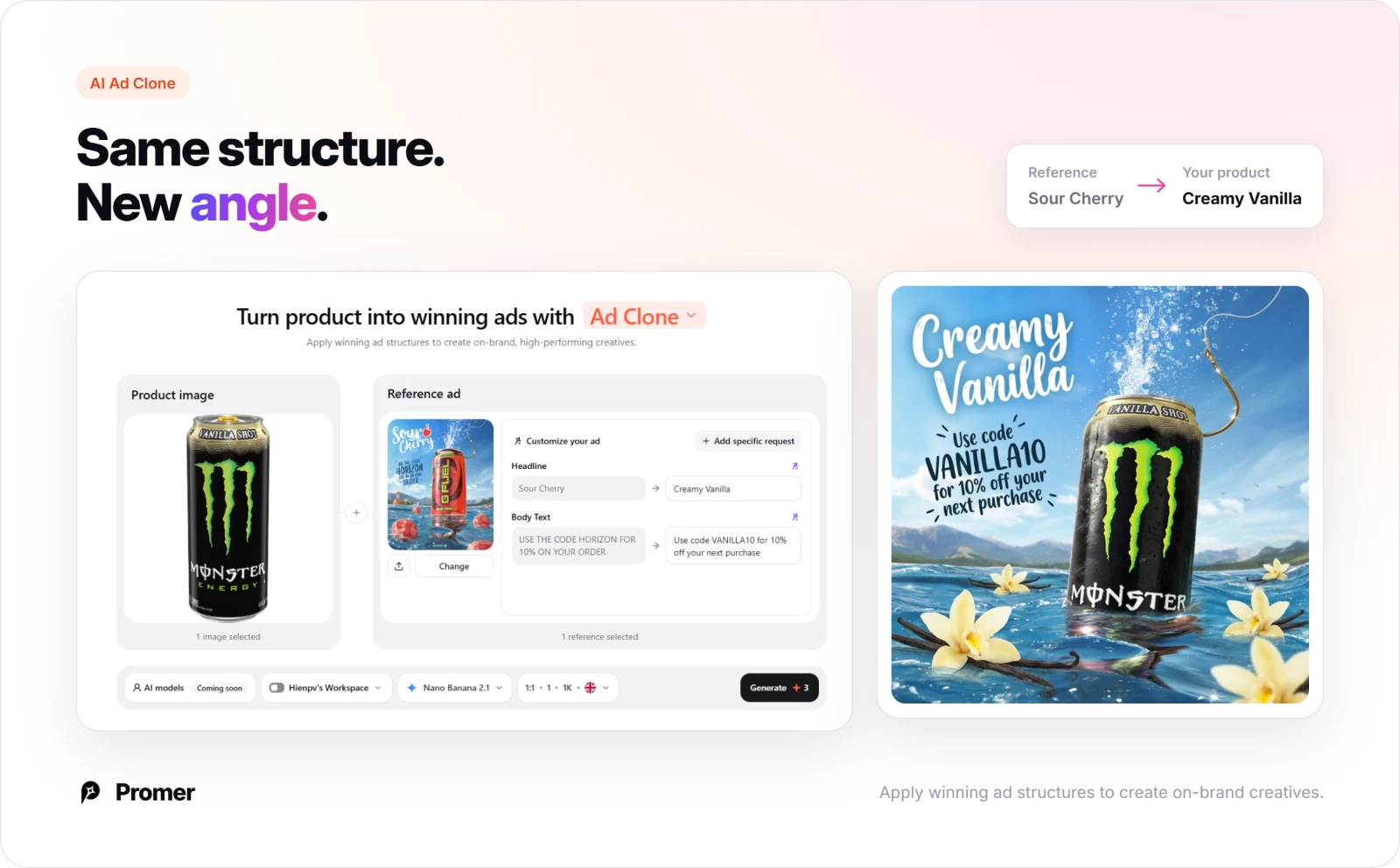
Step 2: Turn reviews into static ads with AI Ad Clone
Promer AI's AI Ad Clone applies the structure of a proven ad, such as the review cards and sampler offers above, to your product. AI suggests a headline, body text and CTA, and you replace the quote with a real review from your customers.
Step 3: Test new angles with AI Ad Concept
Promer AI's AI Ad Concept reads your product into four fields (product highlights, ideal customer, pain point and customer need) and generates several concepts, each with its own audience, angle and hook. That helps you find the occasions and objections worth briefing real creators on.
Watch out: review every AI-generated ad before it runs. Check product details, and make sure any taste, result or health statement matches what you can support.
Common mistakes in CPG UGC marketing
Most CPG UGC programs that stall make one of these mistakes:
Seeding without asking for content. Samples sent with no request, brief or follow-up rarely turn into posts or reviews.
Over-scripting creators. A creator reading brand copy loses the natural reaction that made UGC worth paying for.
Using UGC only on social. Content that never reaches product pages, retail listings and emails does a fraction of its job.
Judging UGC by views. Views say little about whether a shopper bought anything, so track codes, links and conversion.
Running content without rights. Reposting a customer's video as an ad without permission risks takedowns and lost trust.
FAQs about UGC marketing for CPG brands
CPG marketers ask these questions most often when they start a UGC program.
How do CPG brands get user-generated content?
CPG brands get UGC by seeding products with customers and creators, asking for reviews and photos after purchase, running sampler offers, and recruiting affiliate creators on marketplaces such as TikTok Shop. A clear request, such as "show us how you use it," turns more samples into posts.
What types of UGC work best for food and beverage brands?
Food and beverage brands get the most from taste tests, recipes, unboxings of variety packs and short clips that show when the product is eaten or drunk. Taste is the main question, so content that shows a real first reaction tends to work best.
Can CPG brands use customer content in paid ads?
Yes, with written permission that covers paid use, duration and channels. Platforms also offer formats such as TikTok Spark Ads and Meta partnership ads that run creator content from the creator's own account.
How do you measure the ROI of UGC for CPG?
Measure UGC with creator codes, tracked links, ad-level cost per purchase, product page conversion and, for retail products, sales velocity in the regions where a campaign ran. Compare UGC ads with brand-made ads on the same budget to see the difference.
Is AI-generated UGC allowed for CPG ads?
AI-generated UGC-style videos are allowed on major ad platforms, which offer AI disclosure settings for realistic AI content. They should be presented as creator-style demos, never as reviews from real customers, and any claim in them needs the same support as your own ad copy.
Summary
UGC marketing for CPG brands works as a loop: seed the product, collect posts and reviews with permission, reuse them across ads, product pages and retail listings, then measure sales and seed again.
Match the format to the category, measure by sales, and keep every review and claim real. To learn the basics of the format first, read what UGC ads are.
Sources
Nielsen. (2015). Global trust in advertising. nielsen.com/insights/2015/global-trust-in-advertising/
PowerReviews. Ratings and reviews snapshot: CPG. powerreviews.com/ratings-reviews-snapshot-cpg/
Federal Trade Commission. Guides concerning the use of endorsements and testimonials in advertising. ftc.gov
Federal Trade Commission. Trade regulation rule on the use of consumer reviews and testimonials. ftc.gov
Nana Phan has 16 years of experience across marketing, ecommerce, and SaaS, including running her own dropshipping business and nearly 8 years at FireGroup working on products for online merchants. Her experience spans both selling online and building software for the people behind those businesses.
As Head of Growth at Promer AI, she works across customer research, product, and marketing. She writes about ecommerce growth, ad creative, and practical applications of AI, informed by firsthand experience and conversations with merchants about the challenges they face.
You may also like
UGC Marketing Strategies for CPG Brands
UGC marketing strategies for CPG brands: how to seed products, turn reviews into ads, match formats to each category and measure what UGC really sells.