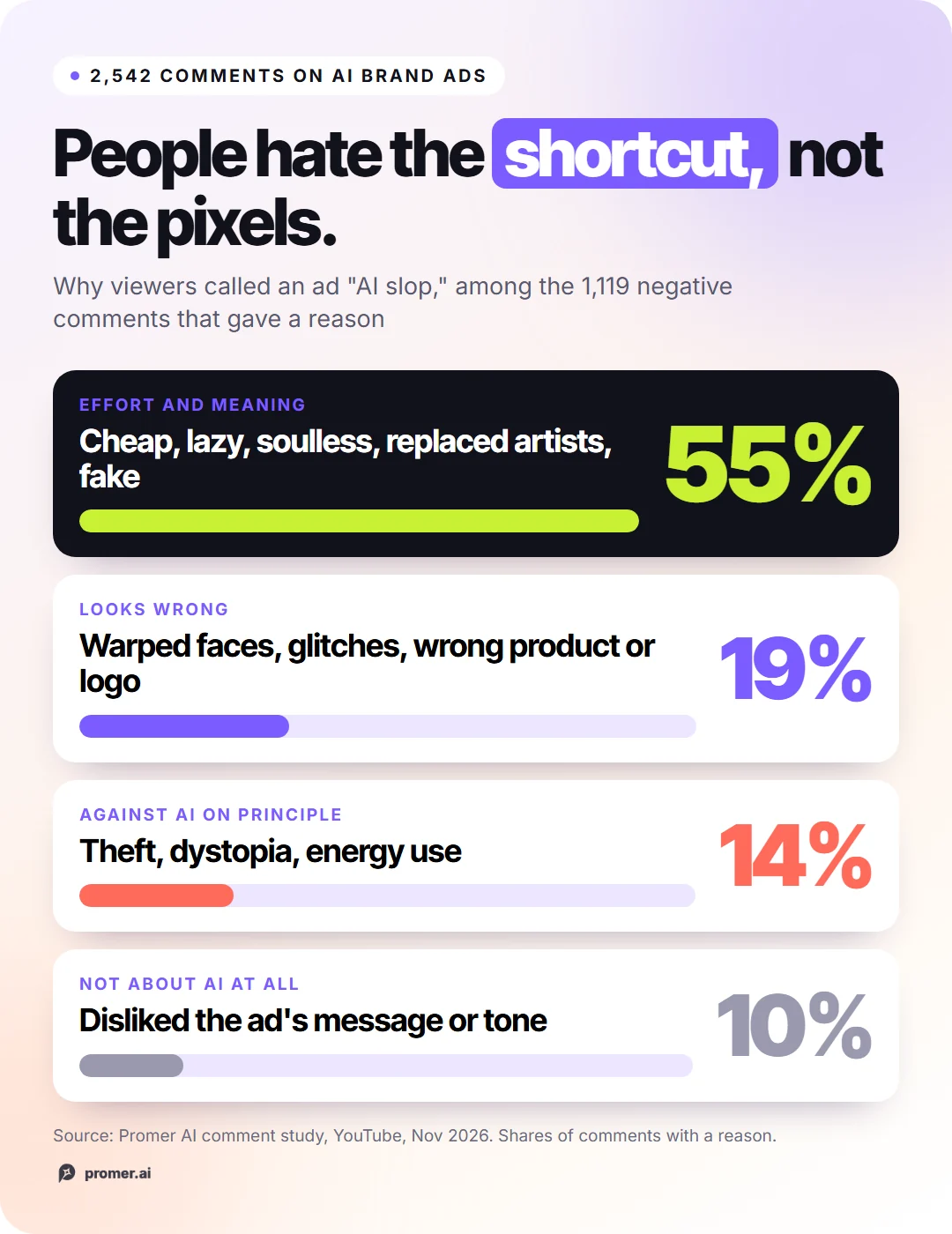
AI slop ads are ads that look like nobody cared: Made fast with AI, with no clear idea, no proof and no visible human effort. In our study of 2,542 YouTube comments on AI brand ads, 55% of the complaints that gave a reason were about effort and meaning. Only 19% were about how the ad looked.
Most advice on AI slop ads says to fix the pixels: The extra fingers, the melting logos, the plastic skin.
The comments say something else.
We read and coded 2,542 public comments under AI ads from Coca-Cola, McDonald's, Toys"R"Us, Valentino and Guess, plus a creator who bought products from obviously AI-made ads.
Then we ran one real sneaker through our own AI ad maker and graded all 11 outputs with the same rules, including the ones that failed.
Want to see how your own product holds up? Promer AI's AI Ad Concept turns one product photo into several ad concepts, each with a different angle, so you can run the slop test on real outputs instead of guessing.
Test an AI ad concept on my product →
Key takeaways
- Effort beats pixels: 55% of reasoned complaints were about the ad feeling cheap, lazy, soulless or fake. 19% were about visual errors.
- The likes went to people: "It replaced artists" collected 34.5% of all likes on reasoned complaints. "It looks wrong" collected 10.5%.
- Better AI moved the anger, it didn't end it: Visual complaints fell from 52% (Toys"R"Us, 2024) to 14% (Coca-Cola, 2025).
- For product ads, fake beats ugly: On the ecommerce video, 30 of 44 negative comments were about the product not matching the ad.
- Our own test: 7 of 11 Promer AI outputs passed as generated, 3 needed a fix and 1 failed.
What is an AI slop ad?
An AI slop ad is an ad that viewers read as mass-produced by AI with no care behind it.
The word comes from "slop," which Merriam-Webster named its 2025 Word of the Year and defines as "digital content of low quality that is produced usually in quantity by means of artificial intelligence."
"AI slop ad" is a judgment, not a technical category.
The same AI tool can make an ad people call slop and an ad nobody notices was AI-made at all.
What decides the label is what the viewer thinks happened behind the ad:
- Slop: "They typed a prompt and shipped whatever came out."
- Not slop: "Someone had an idea about me, the buyer, and checked that it was true."
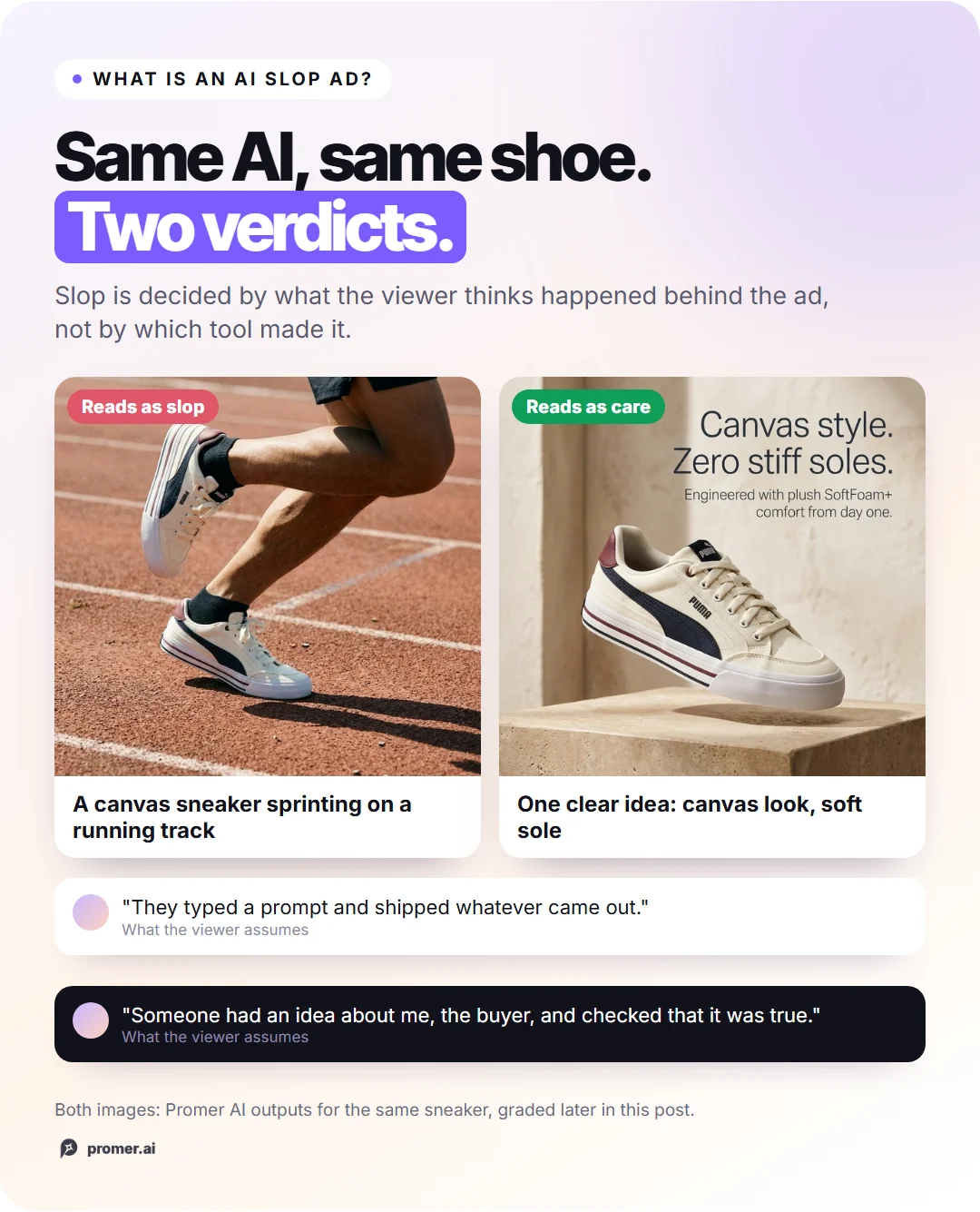
That is why the fix is rarely "use a better model." The fix is to show the care.
Further reading: For click and conversion data on AI ads, see our breakdown of whether AI-generated ads actually work.
AI slop ad examples
The clearest AI slop ad examples come from big brands that used generative AI for their holiday campaigns, and from AI-made product ads on social media.
Each example below shows real frames from the ad and the top comment that named the problem.
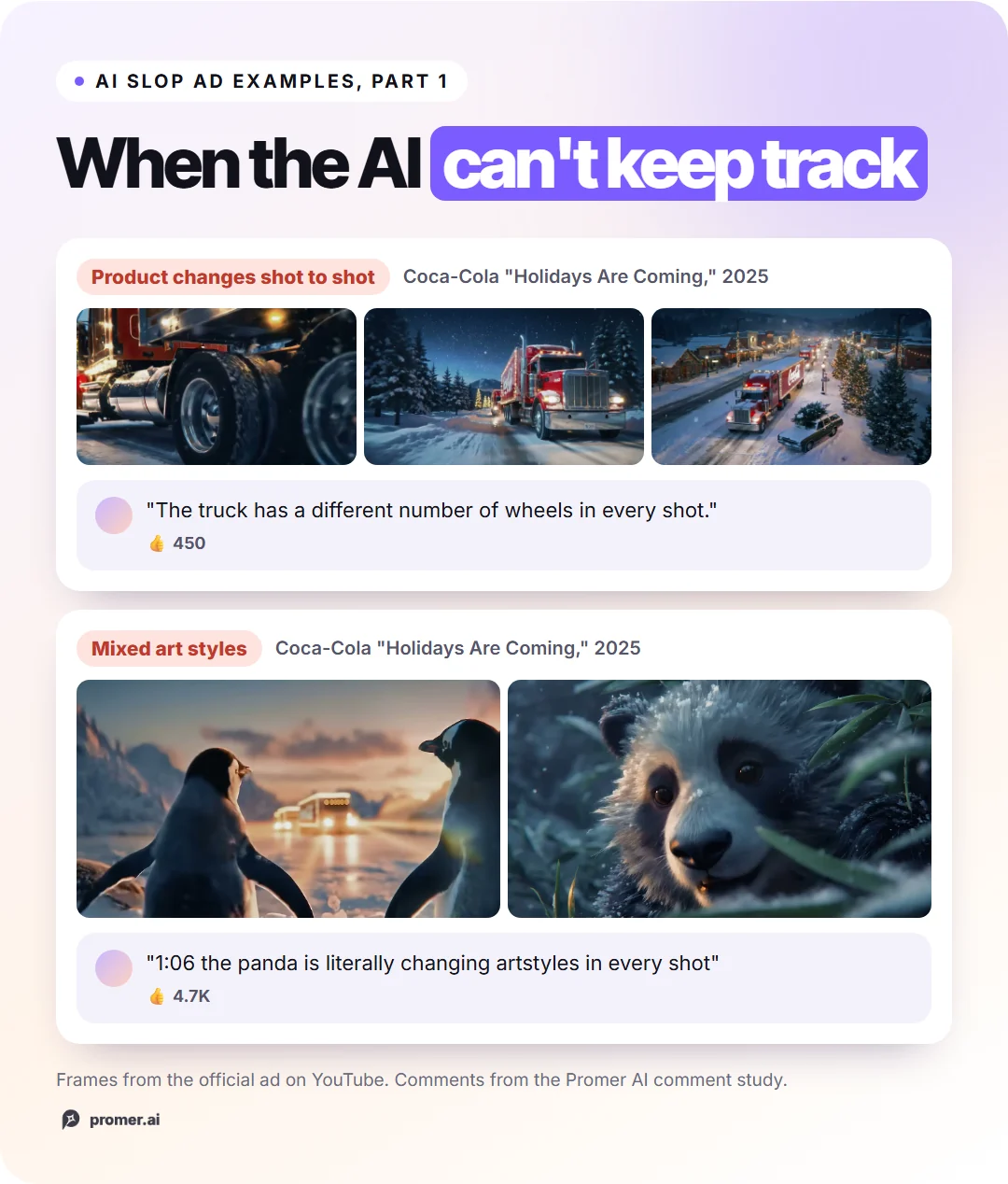
- Coca-Cola, 2025: The famous red trucks change from shot to shot, and the animals switch between photo-real and cartoon. Viewers noticed: "The truck has a different number of wheels in every shot."
- Toys"R"Us, 2024: A brand film made with OpenAI's Sora, with an uncanny boy and toys that don't exist. One comment summed it up: "This is like if I had a nightmare about Toys R Us."
- McDonald's Netherlands, 2025: An AI-made ad calling Christmas "the most terrible time of the year." The top complaint was about the idea, not the pixels.
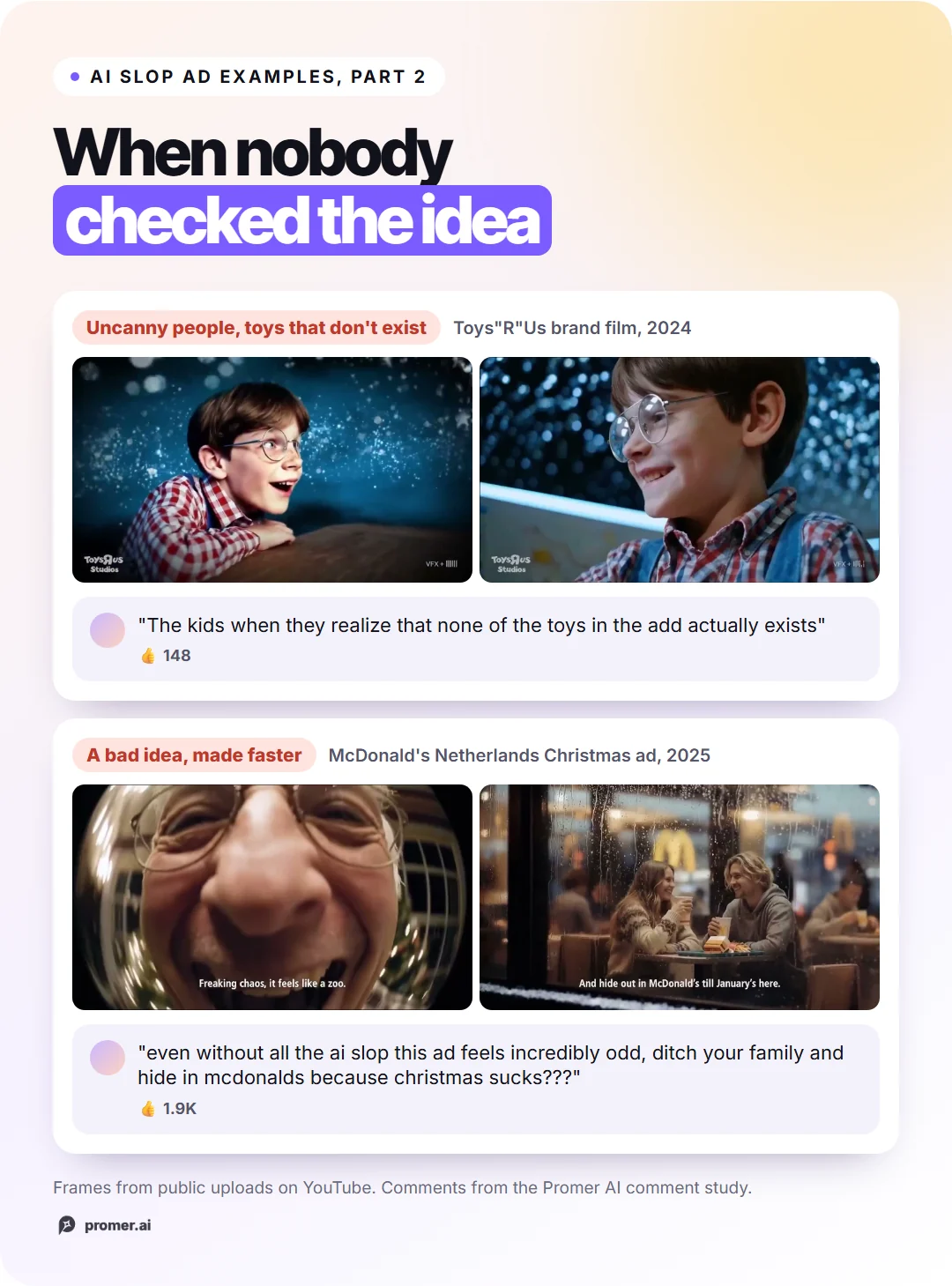
The pattern across all three: The AI did what it was asked, and nobody stopped to ask whether a buyer would believe it, or want it.
How did we study 2,542 comments on AI ads?
The Promer AI comment study pulled the top public comments from 13 YouTube videos about AI-made ads in November 2026.
The videos were official uploads, re-uploads, news segments and reaction videos for these campaigns:
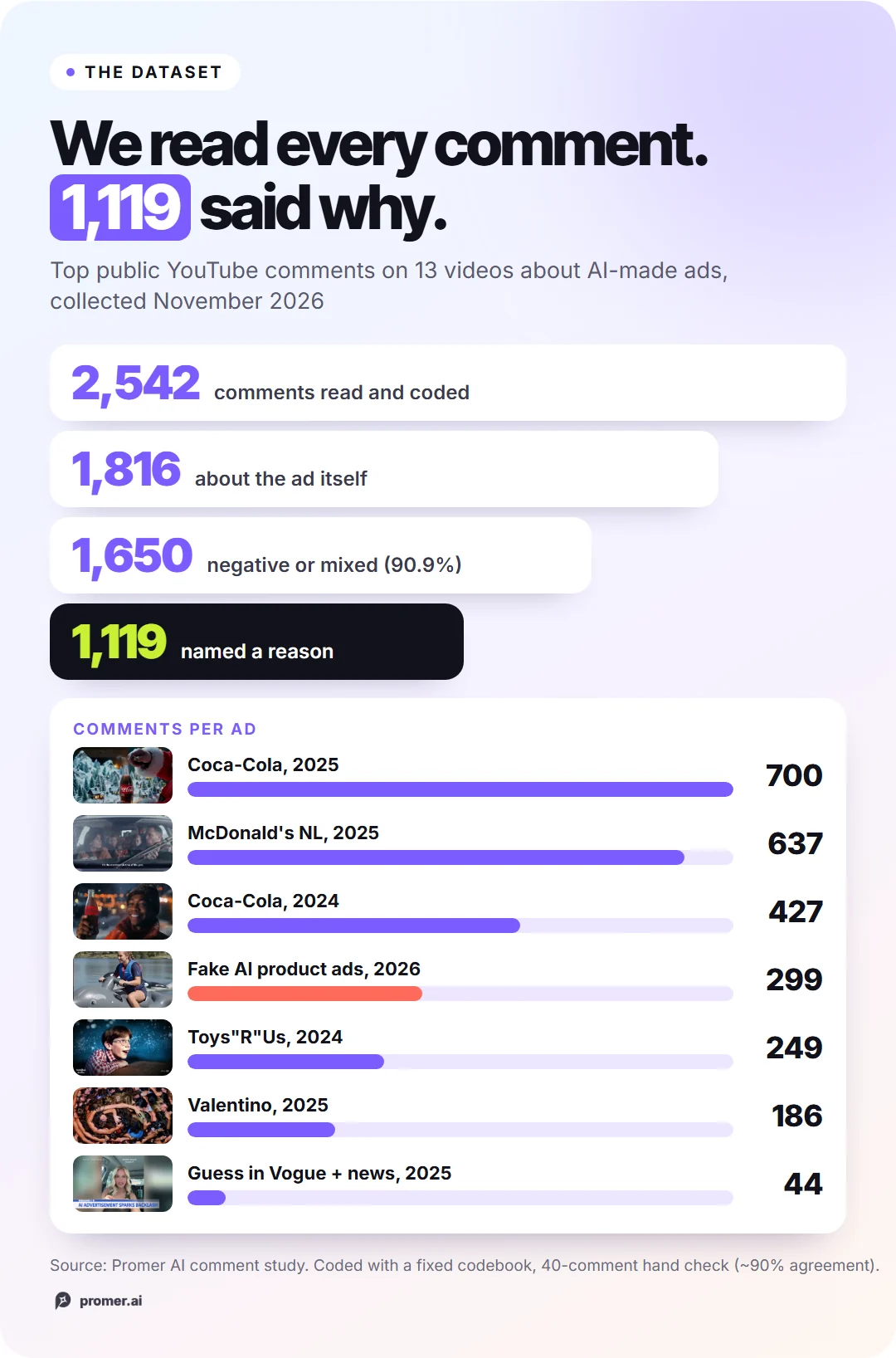
Every comment was coded for stance (negative, positive, mixed or off-topic) and for every reason it gave, using a fixed codebook of reasons.
We then re-split the two catch-all codes and hand-checked 40 random comments, with about 90% agreement.
Here is how the 2,542 comments broke down:
- 1,816 were about the ad (the rest were jokes, timestamps or off-topic).
- 1,650 (90.9%) of those were negative or mixed, and 166 were positive.
- 1,119 negative comments named a specific reason. Another 324 just said "slop" or "terrible."
Why do people call an ad AI slop?
People call an ad AI slop mainly because it feels like the brand skipped the work, not because the picture is broken.
Here is what the 1,119 reasoned complaints said, in five findings.
1. "Nobody cared" beats "it looks weird"
Complaints about effort and meaning made up 54.8% of reasoned comments: Cheap or lazy (17.7%), soulless or ruined a tradition (16.7%), fake or dishonest (15.0%) and replaced artists (13.1%).
Complaints that the ad looked wrong, such as warped faces, glitches or a wrong product, made up 18.7%.
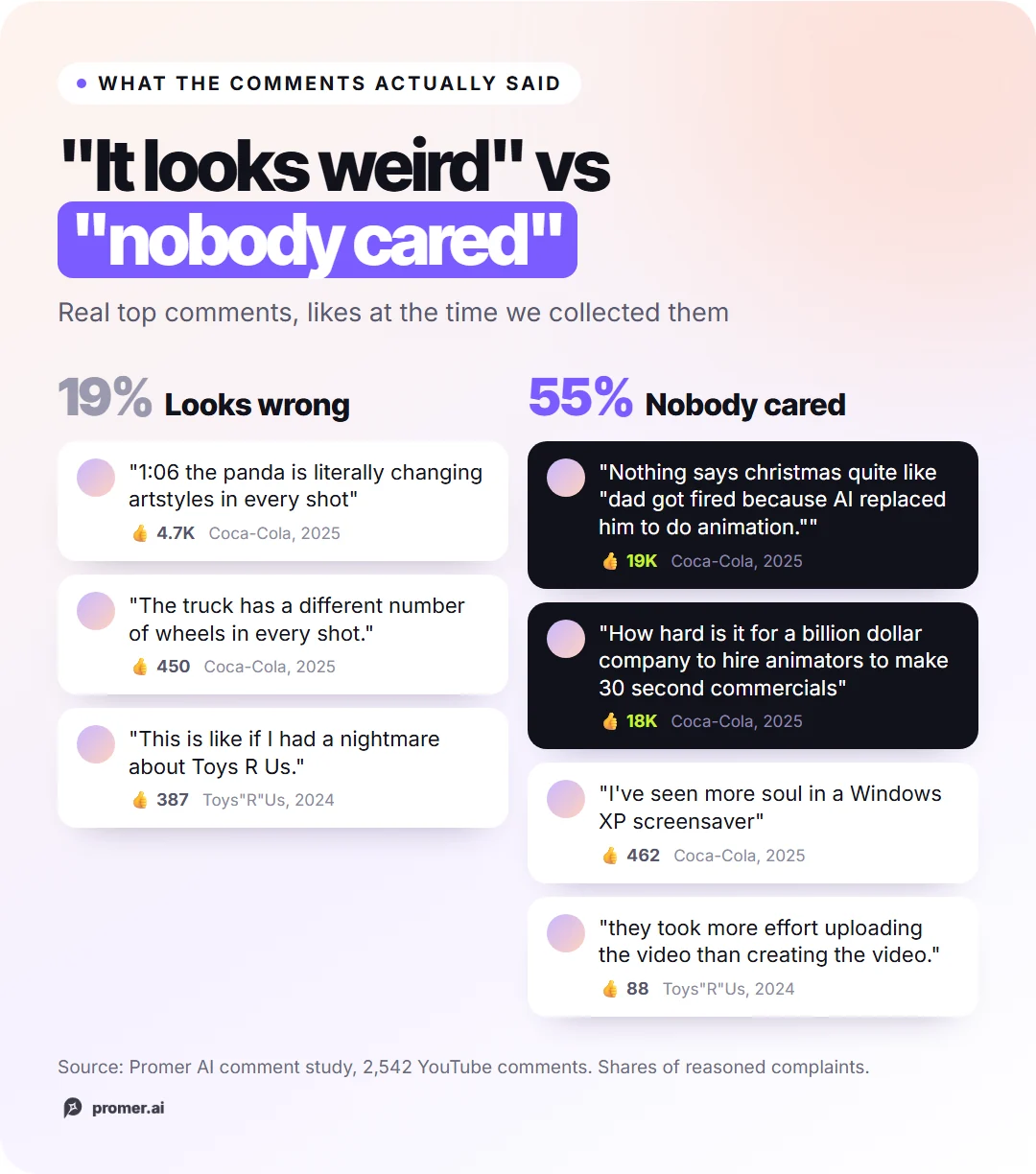
The most-liked visual comments were funny, and specific:
- "The truck has a different number of wheels in every shot." (Coca-Cola, 2025)
- "1:06 the panda is literally changing artstyles in every shot" (Coca-Cola, 2025, about 4,700 likes)
But the effort comments were angrier and far more common:
- "They took more effort uploading the video than creating the video." (Toys"R"Us)
- "I've seen more soul in a Windows XP screensaver" (Coca-Cola, 2025)
2. The most-liked complaints are about people
Weighted by likes, the human cost of AI ads dominates the comment sections.
"It replaced artists and animators" collected 34.5% of all likes on reasoned complaints, and "it's cheap and lazy" collected 28.1%.
"It looks wrong" collected just 10.5%.
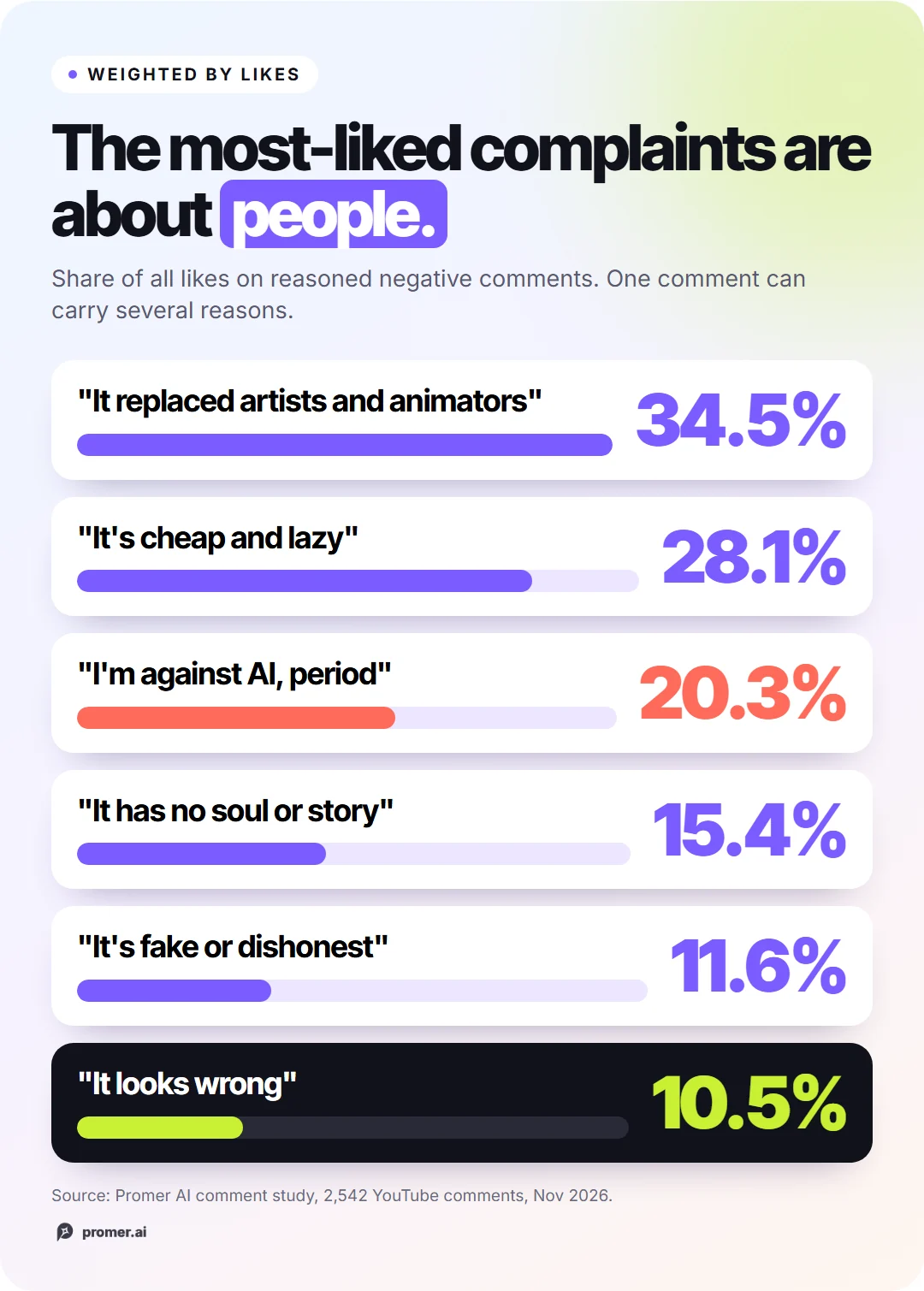
The two most-liked comments in the whole dataset were both under Coca-Cola's 2025 ad:
- "Nothing says christmas quite like "dad got fired because AI replaced him to do animation."" (about 19,000 likes)
- "How hard is it for a billion dollar company to hire animators to make 30 second commercials" (about 18,000 likes)
3. Better visuals moved the complaint, they didn't remove it
The share of reasoned complaints about visuals fell as the AI improved: 52% for Toys"R"Us in 2024, 17% for Coca-Cola in 2024 and 14% for Coca-Cola in 2025.
The negative comments didn't go away.
They switched from "this looks like a nightmare" to "you didn't bother."
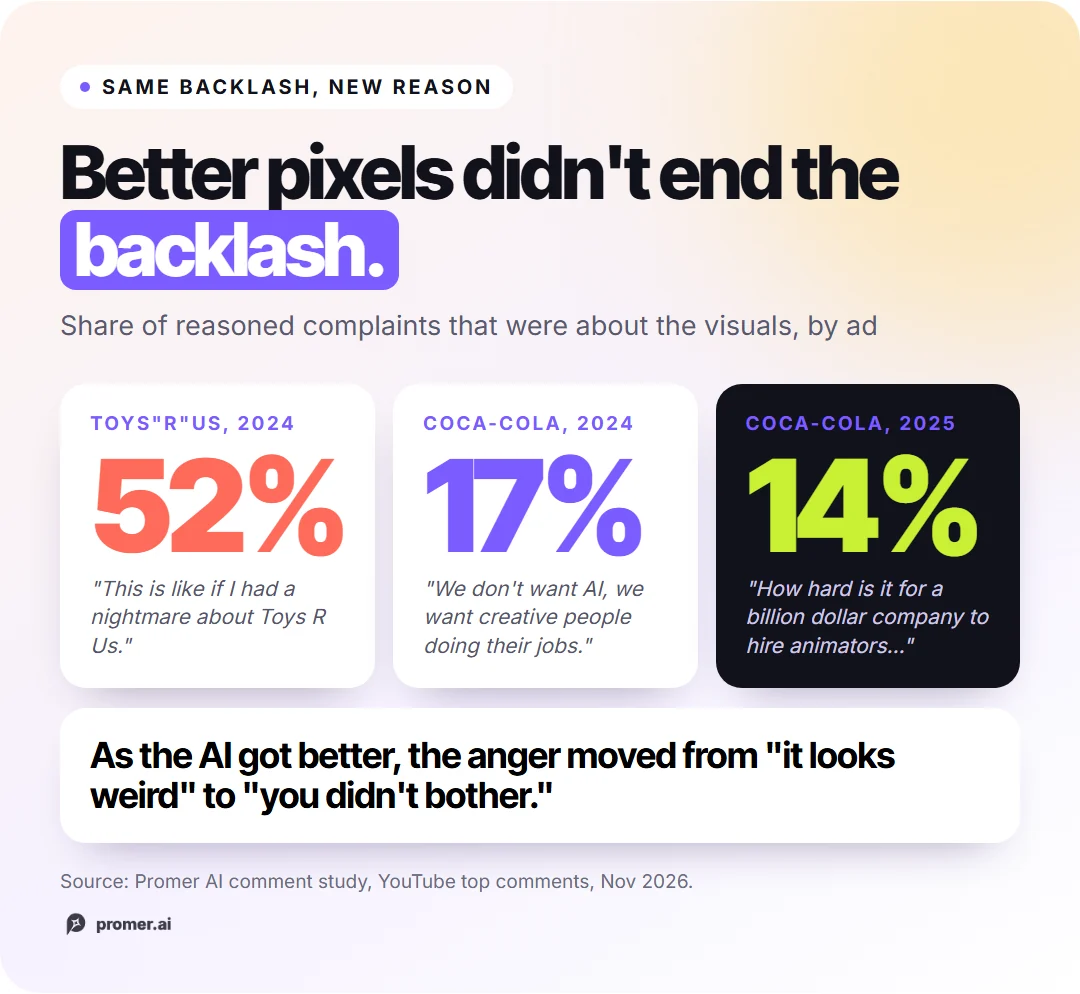
That is the most useful finding for anyone making ads with AI.
Fixing visual glitches only covers about one in five complaints, and that share keeps shrinking as the models get better.
The rest of the risk sits in the idea, the honesty and the effort a viewer can see.
4. Few people say they'll stop buying, but many make fun of the brand
Only 117 comments, 7.1% of all negative ones, said outright that the writer would stop buying or boycott the brand.
Another 99 were jokes at the brand's expense, like "best Pepsi ad," and 38 predicted damage to the brand.
Note: The main cost of an AI slop ad is not a boycott.
The cost is that the comment section becomes the ad, and the joke travels further than the message.
5. One in ten complaints isn't about AI at all
9.6% of reasoned complaints were about the ad's message or tone, not the AI.
Most of these sat under McDonald's Netherlands' ad, where viewers objected to calling Christmas "the most terrible time of the year."
Note: AI ads get blamed for everything, including old-fashioned bad copy. A weak idea made with AI still gets read as an AI problem.
What does this mean for ecommerce brands?
For ecommerce brands, the biggest AI slop risk is an ad that promises a product the buyer won't receive.
The one ecommerce-type video in our study shows it clearly.
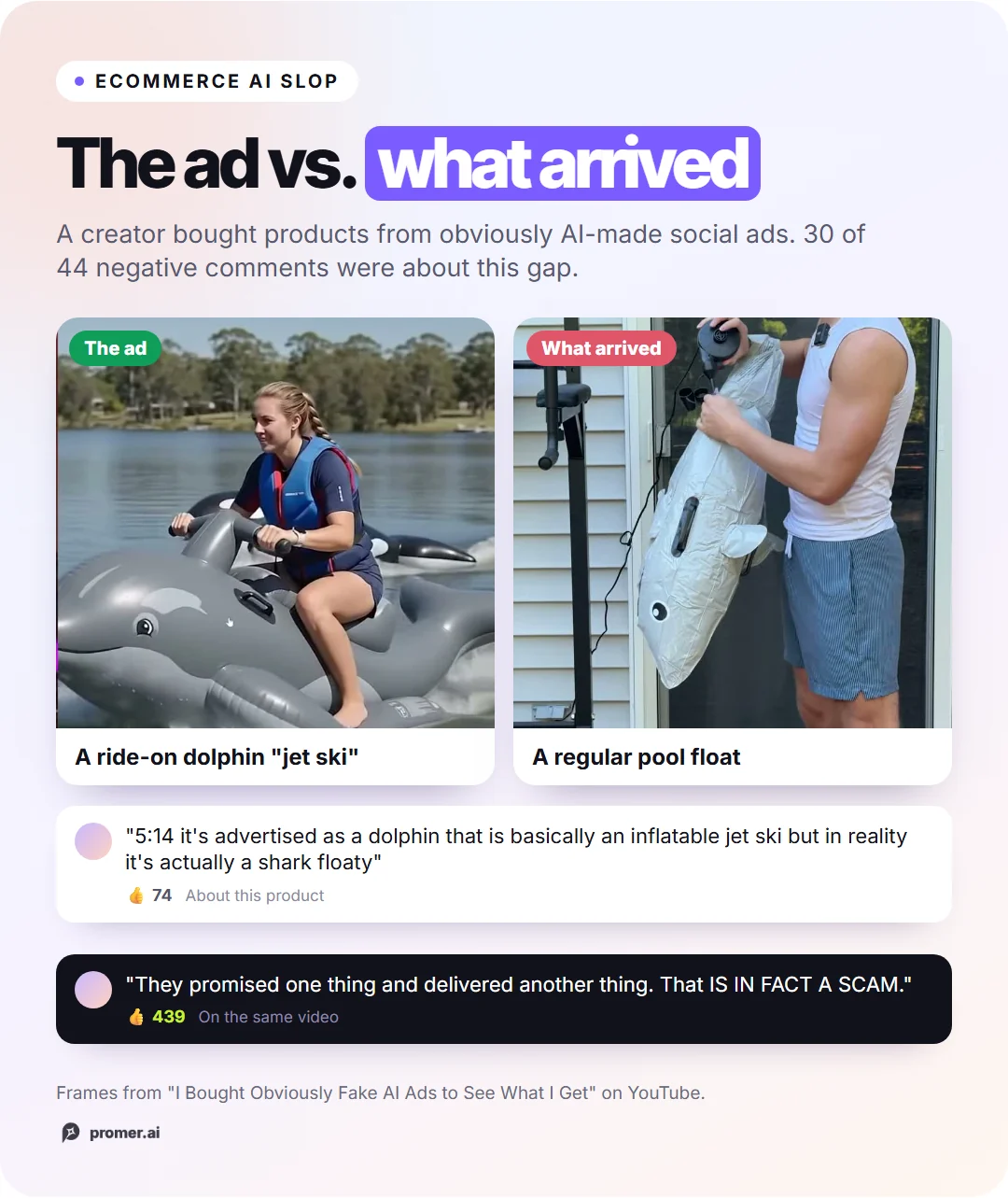
A creator bought products from obviously AI-made social ads and compared what arrived with what was shown.
Of the 44 negative comments on that video, 30 (68%) were about deception and only 10 were about uncanny visuals:
- ""Tank bed," and it's a Humvee" (about 1,100 likes)
- "They promised one thing and delivered another thing. That IS IN FACT A SCAM." (439 likes)
- "it's advertised as a dolphin that is basically an inflatable jet ski but in reality it's actually a shark floaty" (74 likes)
A small store is not a billion-dollar brand replacing an animation studio, so the "it replaced artists" anger lands less on you.
The "fake" anger lands harder, because buyers can check your claim the day the package arrives.
This lines up with what we saw in our AI in advertising examples: the AI campaigns people praised used AI for the scene, and kept the product and the proof real.
The 5-second slop test
The 5-second slop test is five yes-or-no questions to ask about any AI ad before it goes live.
Look at the ad for 5 seconds, the way a scrolling buyer would, then answer each question. One "no" means fix it first.
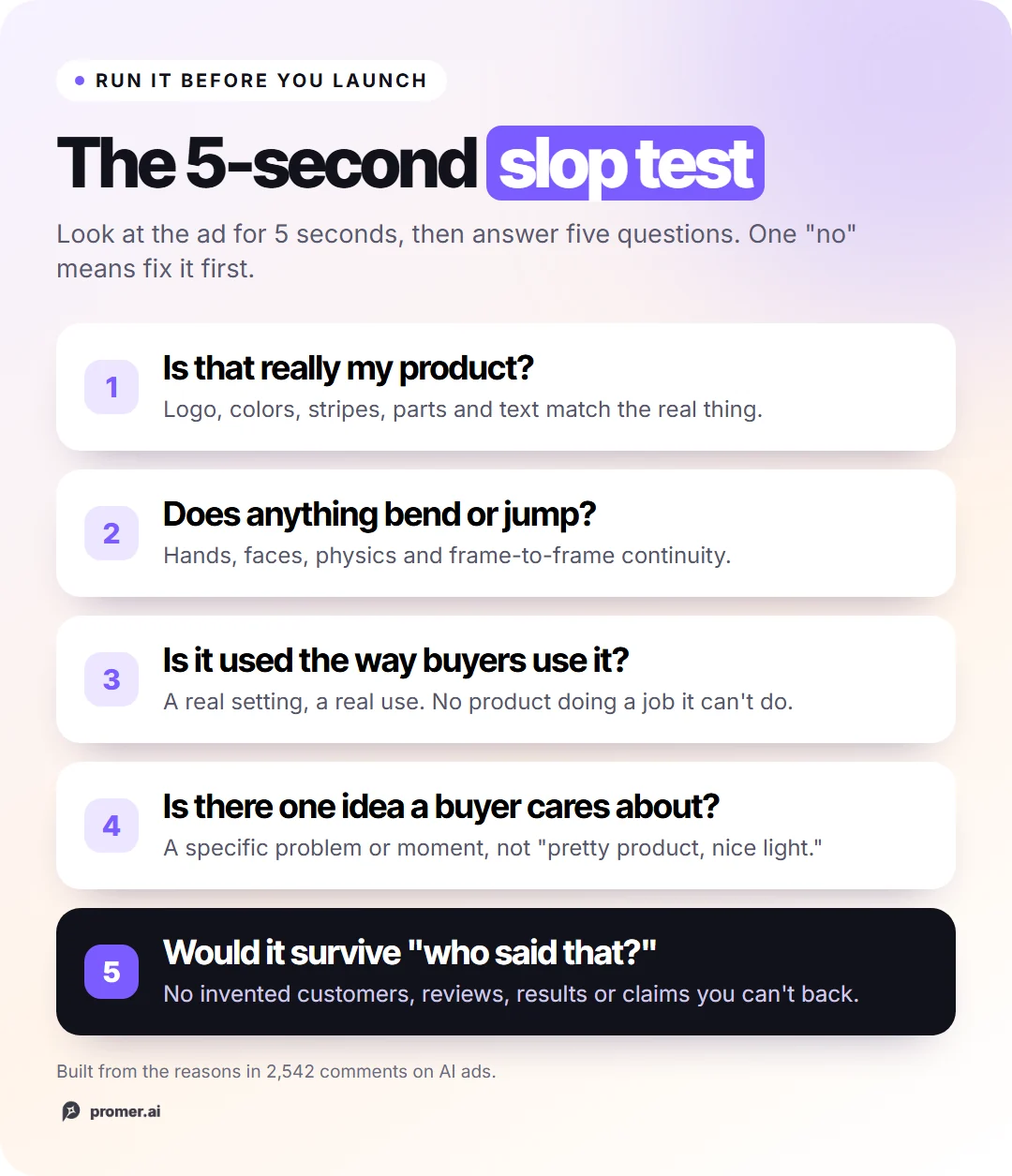
Each question maps to a group of complaints from the study:
- Is that really my product? Logo, colors, parts and printed text match the real thing. This covers the "wrong product or logo" complaints.
- Does anything bend or jump? Hands, faces, physics and shot-to-shot continuity hold up. This covers the "uncanny" complaints, like the truck with a different number of wheels in every shot.
- Is it used the way buyers use it? The setting and use are realistic for this product. This covers "fake" complaints about scenes that oversell.
- Is there one idea a buyer cares about? The ad names a specific problem, moment or reason, not just "nice product, nice light." This covers the "soulless" and "lazy" complaints.
- Would it survive "who said that?" No invented customers, reviews, results or claims you can't back. This covers the "dishonest" complaints, and the legal risk.
Pro tip: Run the test on your phone, at feed size, with the sound off first. That is how a buyer meets your ad, and it is where wrong colors and odd hands show up.
We ran our own product through Promer AI. Here's how it scored
To be fair, we put Promer AI through the same test, using one real product and no edits.
The product was a cream canvas sneaker with a navy side stripe, a burgundy heel tab and a "SoftFoam+" insole, shot on its box with a phone.
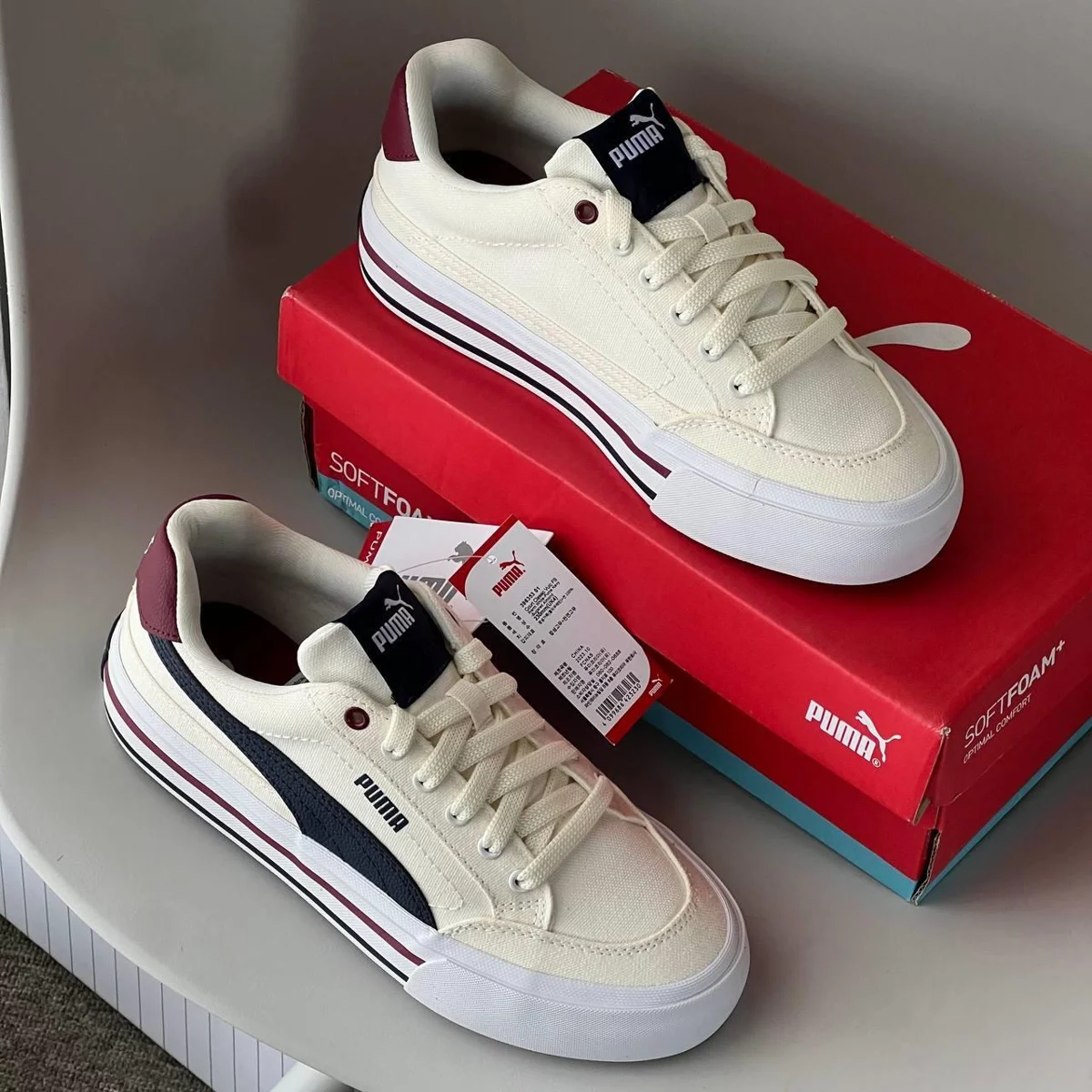
From that one photo we generated 11 outputs with three features:
- AI Ad Concept: 5 static ads, theme "Product Showcase," 1:1.
- AI Photoshoot: 4 on-foot shots from the AI-suggested concept.
- AI UGC Ads: 2 creator-style unboxing videos, 9:16.
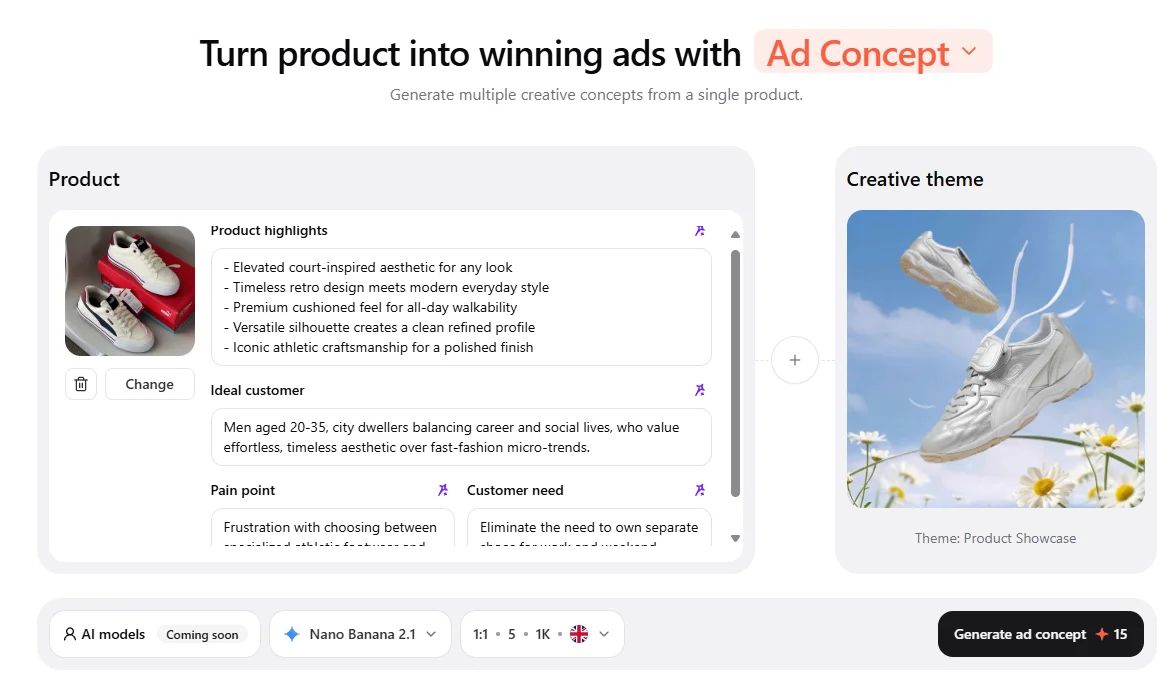
AI Ad Concept read the photo and filled in the product highlights, ideal customer ("Men aged 20-35, city dwellers balancing career and social lives"), pain point and customer need before it made any image.
That step matters for test question 4, because each concept starts from a buyer problem instead of a blank prompt.
Here is the full scorecard:
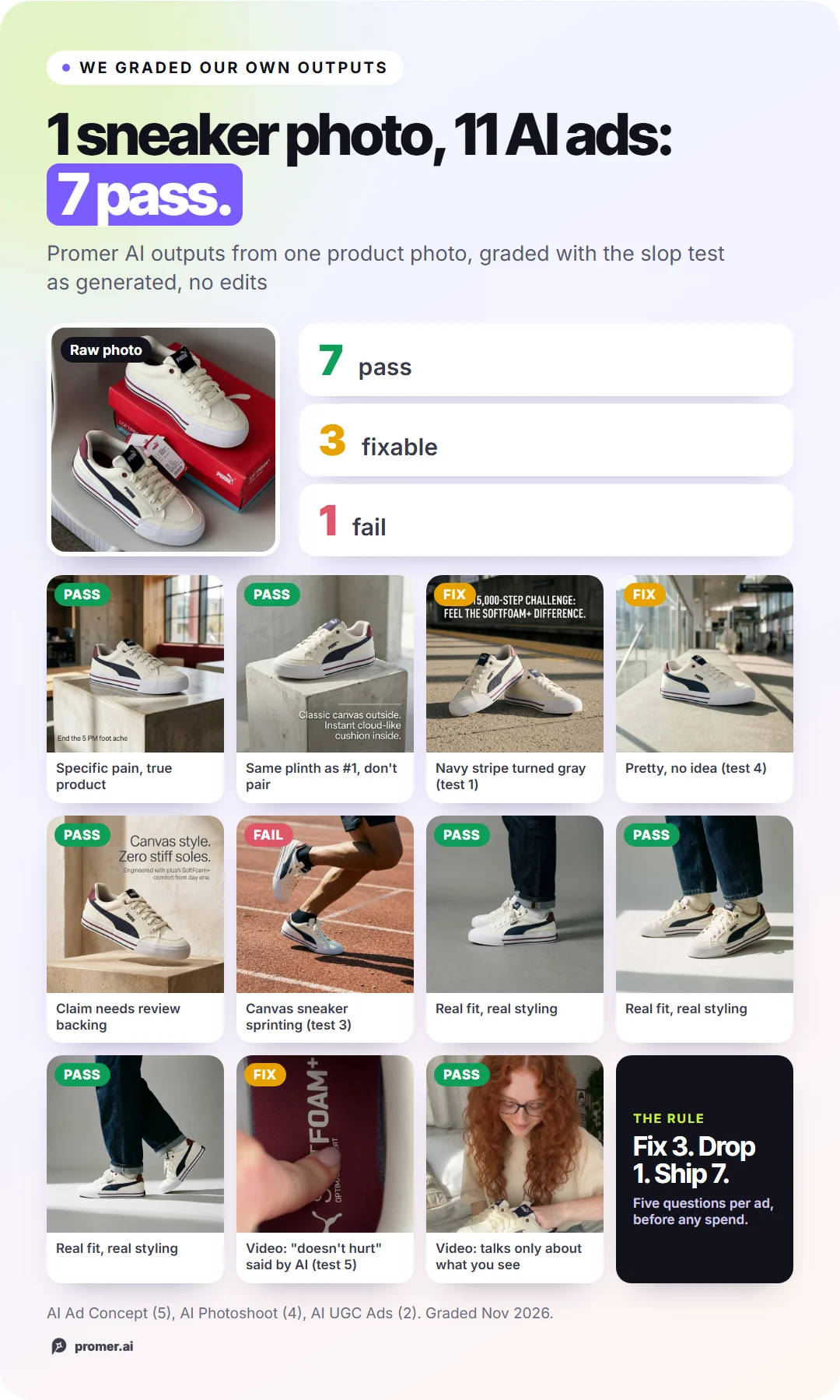
7 of 11 passed as generated
Seven outputs passed all five questions as generated.
- "End the 5 PM foot ache": A specific pain for the office buyer, with the stripe, heel tab and wordmark all correct.
- "Classic canvas outside. Instant cloud-like cushion inside.": A clear idea in nine words. It uses the same concrete plinth as the first ad, so we'd run only one of the two in an ad set.
- "Canvas style. Zero stiff soles.": Passes, with one condition: "From day one" should be backed by your own reviews or return data before you run it.
- Three AI Photoshoot on-foot shots: Cuffed denim, white socks and natural light. They look like a real lookbook, and the shoe stays true to the photo.
- UGC video 2: The creator only talks about what the viewer can see ("the navy stripe with the maroon heel"). Nothing in it pretends to be a test result.
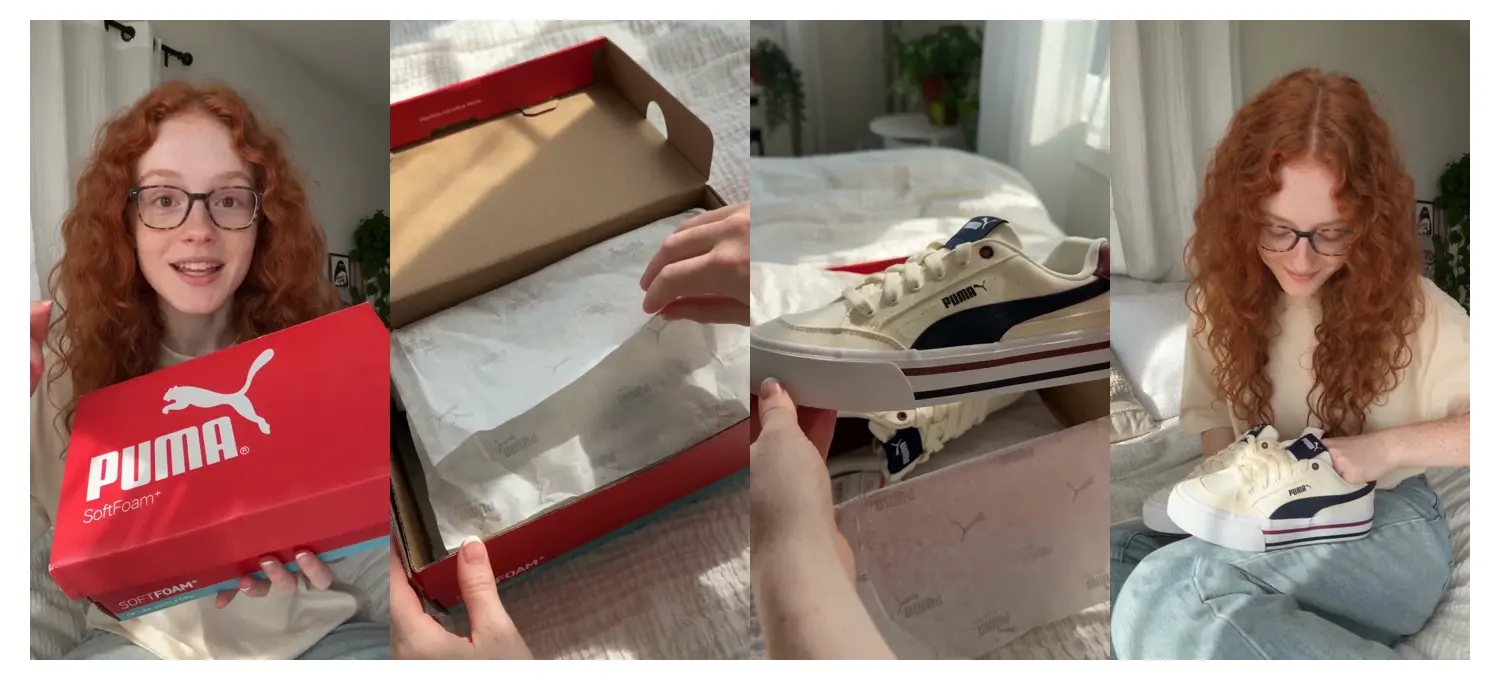
Example: UGC video 2, which passed. The AI creator unboxes the shoe and talks only about what the viewer can see.
3 of 11 needed one fix
Three outputs had one fixable problem each.
- "The 15,000-step challenge" (question 1): The navy side stripe came out slate gray. A buyer who sees gray in the ad and gets navy at the door will feel misled. Fix: Regenerate, and compare the color with the raw photo side by side.
- The train-station shot with no text (question 4): True to the product but no idea at all. Fix: Use it as the background for one real review line or a specific use, such as a commute.
- UGC video 1 (question 5): The AI creator says, "I think I found the first retro shoe that doesn't actually hurt to walk in." That is a first-person experience claim from someone who never wore the shoe.
The script problem in UGC video 1
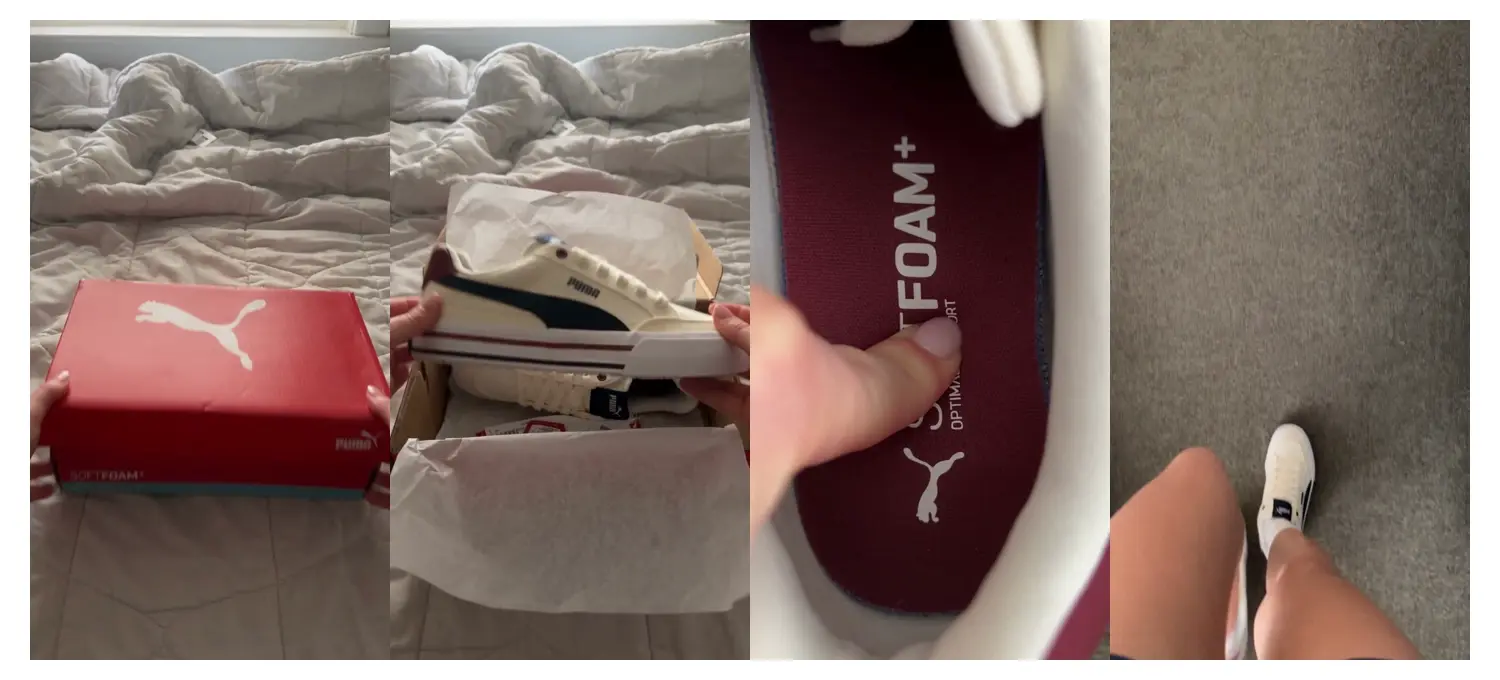
Visually, UGC video 1 is the strongest output in the set: Hands-only unboxing, a close-up of the real "SoftFoam+" insole and an on-foot shot.
The script is the problem.
The FTC's rule on consumer reviews and testimonials, in force since October 21, 2024, bans testimonials that misrepresent who gave them or their experience, and that includes AI-generated fakes.
The fix is in the script editor: Turn "I found a shoe that doesn't hurt" into a voice-over about what the shoe has ("a SoftFoam+ insole"), or put a real buyer's review on screen with their permission.
Watch out: AI creators can show and describe your product. They should not claim to have worn, used or been helped by it. That is the line between AI UGC and a fake review.
If you are new to the format, our guide to what AI UGC is covers where AI creators fit and where real customers still need to appear.
Can an AI creator review your product without faking it? Promer AI's AI UGC Ads lets you edit every line of the script before rendering, so you can keep the creator on what the viewer can see and leave the claims to real buyers.
1 of 11 failed
One output failed, and it failed on question 3.
The AI Photoshoot "Athletic run action" shot shows the canvas court sneaker sprinting on a running track.

The shoe looks right at a glance, but nobody buys a vulcanized canvas sneaker for track sprints, and a runner who did would be disappointed.
It is the small-store version of the "tank bed": A real product, sold for a job it doesn't do.
Quick fix: Don't chase a better render. Skip that composition and pick "Lateral profile on-foot" or "Mid-step profile," which passed.
The AI-suggested style was "Field-Test Documentary," which leans sporty, so catching the mismatch took a human who knows how the shoe is actually worn.
How do you fix AI slop before it ships?
Fixing AI slop means putting visible care back into the ad, in six places.
1. Start from a real product photo
Generate from a photo of the actual product, not a text description.
Every output in our test that kept the stripe, heel tab and wordmark right started from the same phone photo.
AI Photoshoot works this way: It places the product you uploaded into new scenes instead of drawing a new one.
2. Write the idea before you generate
Write one sentence about who the ad is for and what problem it solves before you press generate.
"End the 5 PM foot ache" passed because it names a moment the buyer has lived. The train-station shot failed question 4 because it names nothing.
3. Check the product side by side
Put each output next to the raw photo and check colors, logo, parts and printed text.
Quick fix: A 10-second side-by-side check catches problems like our gray stripe, which looked fine on its own.
4. Keep the use realistic
Show the product in places and uses your real buyers have.
- Keep: Commutes, office floors, weekend errands for a canvas sneaker.
- Cut: Running tracks, hiking trails or anything that sells a job the product can't do, even if it looks better.
5. Keep proof human
Use AI for scenes, angles and formats, and use real people for proof: Reviews, results, before-and-after photos and testimonials.
If an AI creator speaks, keep their lines to what the viewer can see or what the product spec says.
6. Make several, ship the best
Generate more versions than you need and throw away the ones that fail.
We kept 7 of 11. Shipping all 11 would have put one misleading claim and one wrong color in front of buyers.
From there, ad creative testing tells you which of the passing ads actually sells.
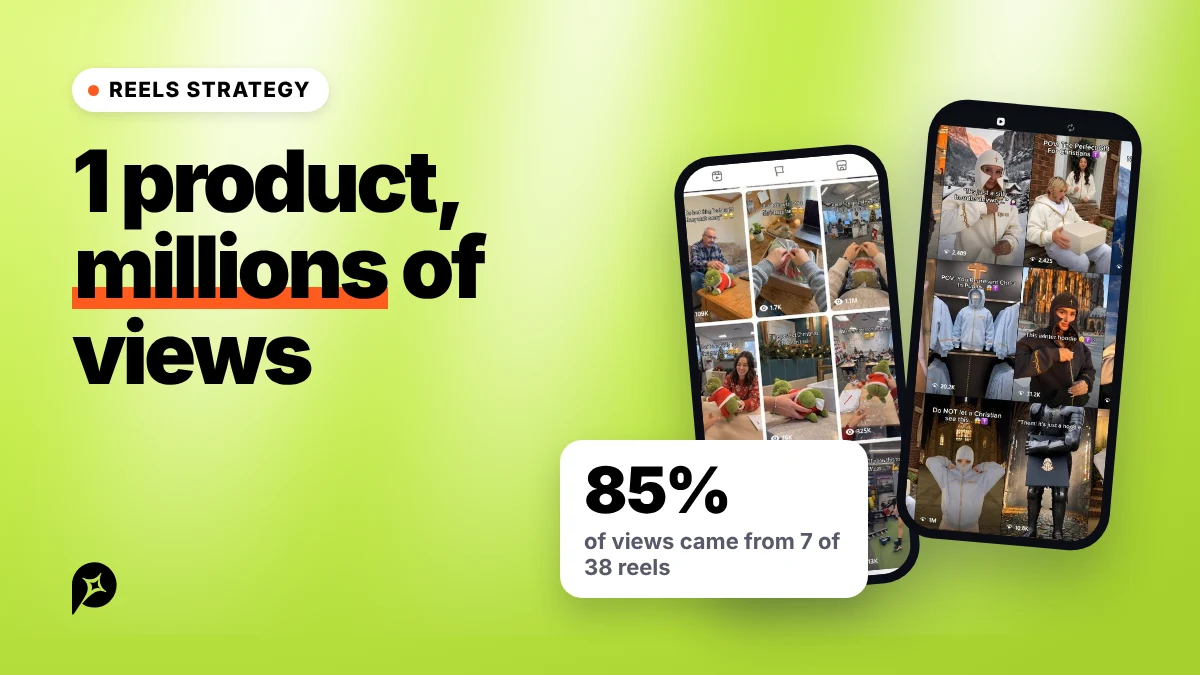
Example: In our analysis of 38 ecommerce Reels, the hooks that kept repeating named a person, not a feature ("Don't show this to a Christmas fan"). That is question 4 of the slop test, applied to video.
What are the limits of this study?
The Promer AI comment study has four limits worth knowing before you quote it.
- Top comments skew loud: YouTube ranks the funniest and angriest comments first, so this is not a representative survey of all viewers.
- Mostly big brands: Most comments were on big-brand holiday spots. Only one video, with 44 negative comments, was about ecommerce product ads.
- AI-assisted coding: An AI model coded the comments with a fixed codebook, and a person spot-checked 40 of them (about 90% agreement). It was not double-coded by two humans.
- One product, one run: The Promer AI test used one sneaker and one run per feature. Other products and settings will score differently.
Note: Reddit was not included, because it blocked scripted access during the study.
None of these limits change the direction of the finding, but they should change how hard you lean on the exact percentages.
Frequently asked questions
What does "AI slop" mean in advertising?
In advertising, "AI slop" means an ad that viewers see as low-effort AI output: Generic, glitchy, dishonest or made without care. The term comes from "slop," Merriam-Webster's 2025 Word of the Year.
Do people hate all AI-generated ads?
No. In our study, 166 on-topic comments were positive, and most complaints were about missing effort or honesty rather than the use of AI itself. Only 13.8% of reasoned complaints opposed AI on principle.
How do you tell if an ad is AI slop?
Run the 5-second slop test: Check that the product is accurate, nothing bends or jumps, the use is realistic, there is one clear idea, and every claim would survive "who said that?" One "no" means fix it before launch.
Are AI UGC ads with AI creators legal?
AI creators can show and describe a product. The FTC's rule on reviews and testimonials, effective October 21, 2024, bans fake testimonials, including AI-generated ones, so an AI creator shouldn't claim personal experience with the product. This is not legal advice; check your market's rules.
Can AI ads still perform well?
Yes, when they don't look or feel fake. Our separate review of the research on AI ad performance covers click-through and conversion data in detail.
Sources
- Promer AI comment study: 2,542 top-level YouTube comments on 13 videos, collected and coded November 2026
- Merriam-Webster, "2025 Word of the Year: Slop": merriam-webster.com/wordplay/word-of-the-year
- Federal Trade Commission, Trade Regulation Rule on the Use of Consumer Reviews and Testimonials (16 CFR Part 465), announced August 14, 2024: ftc.gov
- Promer AI test outputs: AI Ad Concept, AI Photoshoot and AI UGC Ads, generated November 2026 from one product photo