Most lists of ai in advertising examples show the same handful of big-budget campaigns, which are interesting to read about and hard to act on if you run ads for an ecommerce brand.
This one covers 10 well-known campaigns from Heinz, Nike, Cadbury, Kalshi and others, the AI ads that drew backlash, and 8 ecommerce ad creatives whose structure you can rebuild with your own product.
The AI ads that worked used AI to serve one clear idea. The ones that drew backlash made AI the idea. Heinz, Nike and Cadbury each had a concept that would have been worth running without AI, and AI made it possible at a scale or speed that was not possible before.
Each famous example lists what AI actually did, the reported result with its source, and what an ecommerce brand can take from it. The results are mostly reported by the brand or its agency, and the article says so where that applies.
Key takeaways
- AI shows up in advertising in five main jobs: generating creative, personalizing it at scale, producing variations, making video, and targeting and bidding.
- The most-awarded examples (Heinz, Nike, Cadbury) had a concept first and used AI to execute it.
- The most-criticized examples (Svedka, Toys "R" Us, Coca-Cola's AI holiday spots) were judged on AI flaws - faces, hands, and a feeling of low effort - more than on the message.
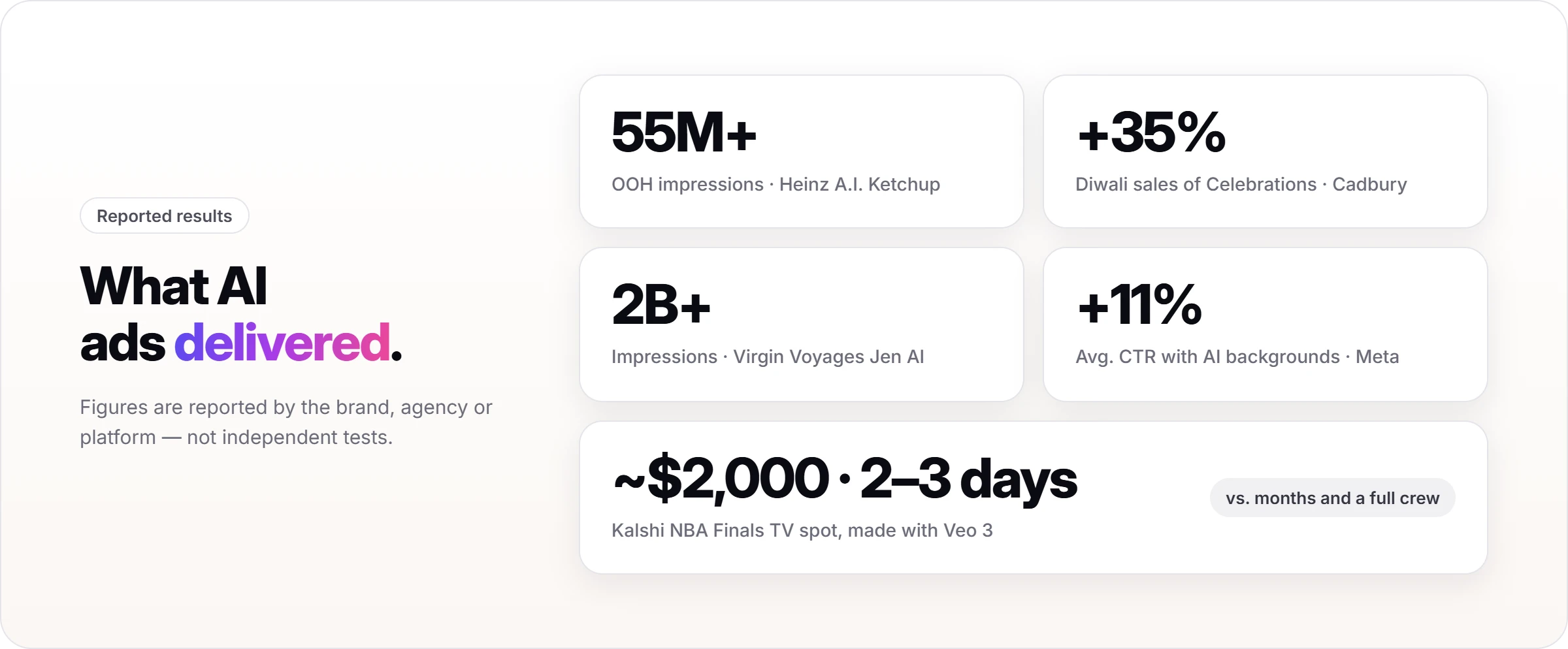
- Cost and speed are the clearest gains: Kalshi's AI-made NBA Finals spot reportedly cost about $2,000 and took two to three days.
- For ecommerce brands, the practical version of these campaigns is smaller: more variations of an ad structure that already works, in every ratio, without a reshoot.
How AI is used in advertising today?
AI in advertising is not one thing. The examples in this article fall into five jobs, and most real campaigns combine two or three of them.
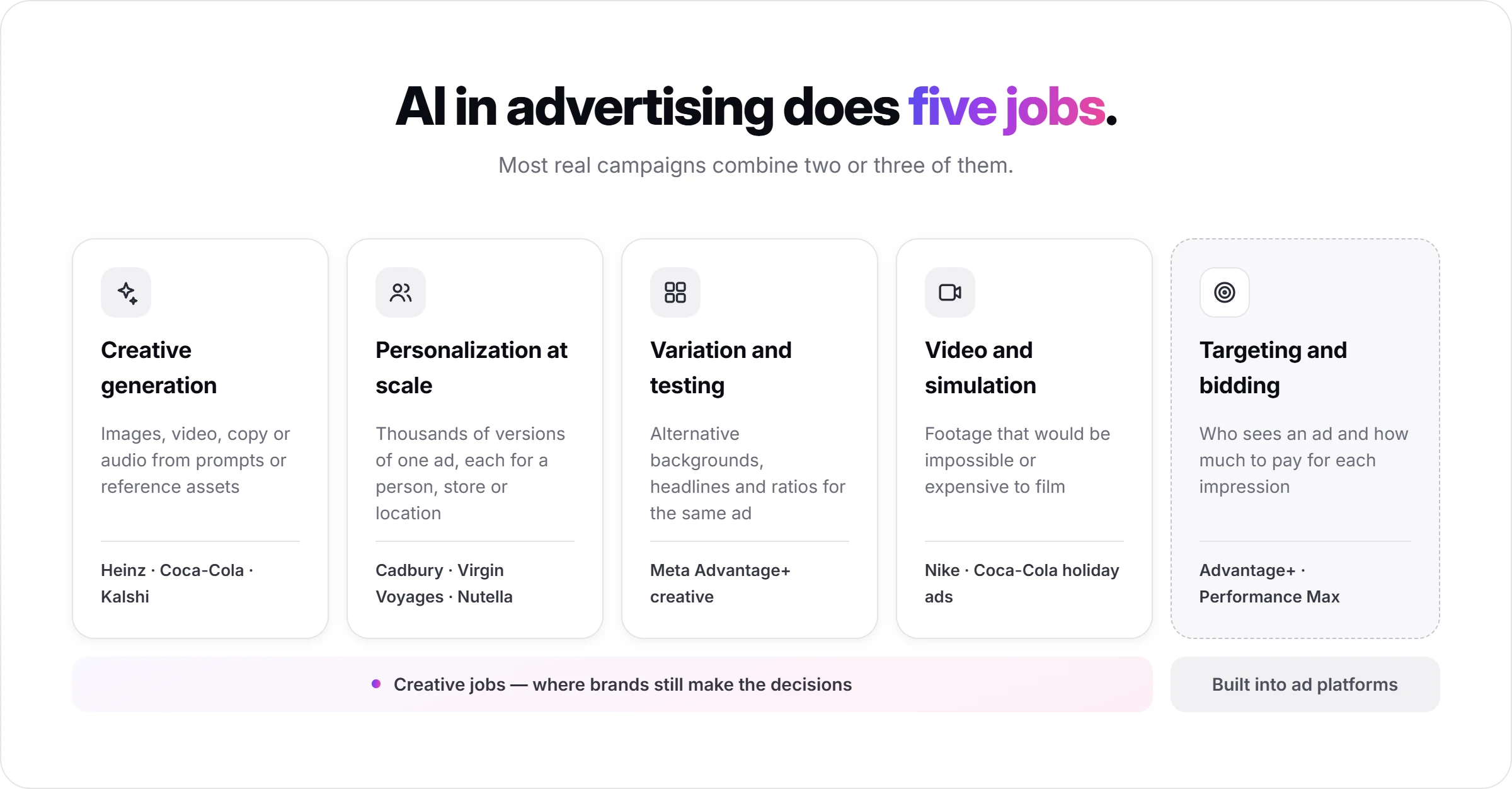
Targeting and bidding are now built into the major ad platforms, so most advertisers already use that kind of AI without choosing to. The creative jobs - generation, personalization, variations and video - are where brands still make the decisions, and where the examples below differ most.
10 famous AI in advertising examples from major brands
1. Heinz "A.I. Ketchup" (2022)
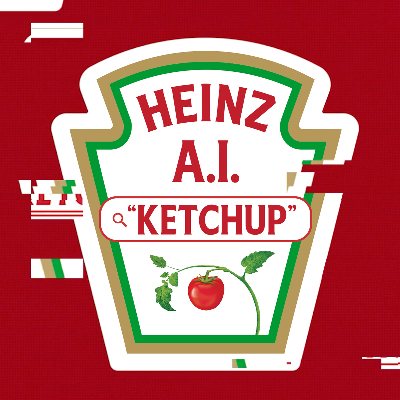
Heinz A.I. Ketchup key visual. Image: Heinz / Rethink
What AI did: Heinz and its agency Rethink asked an image generator to draw "ketchup" in different styles. The results kept looking like a Heinz bottle, so the campaign turned that output into the message: even AI thinks ketchup means Heinz. Fans were then invited to submit their own prompts and share the results.
Reported result: The campaign won a Clio Gold in 2023. Its Cannes Lions entry reports more than 55 million impressions from the out-of-home boards alone, plus coverage in major business and tech outlets.
What an ecommerce brand can borrow: The AI output was proof of a brand claim, not decoration. If your product owns a category cue - a shape, a color, a ritual - an AI-made image that shows it can carry the message by itself.
2. Nutella Unica: 7 million unique jars (2017)
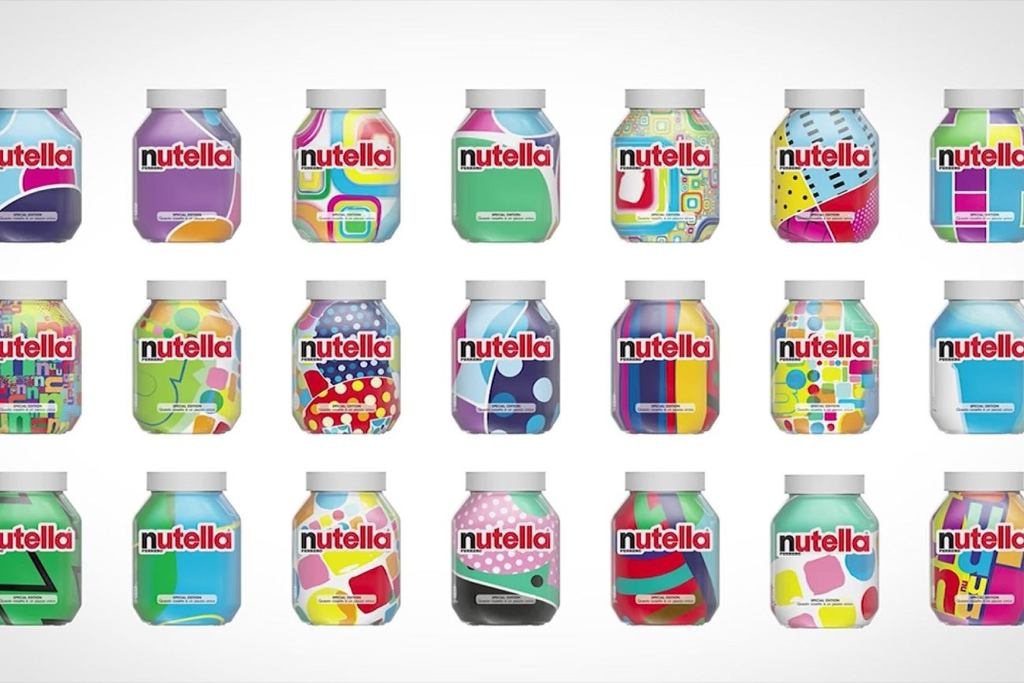
Nutella Unica jars, each with a one-off label. Image: Ferrero / Ogilvy Italia
What AI did: Ferrero and Ogilvy Italia used an algorithm to combine dozens of patterns and colors into 7 million different label designs, so no two jars in the limited edition looked alike.
Reported result: Trade press reported that the jars sold out in Italy within about a month, and the idea was later rolled out in other European markets.
What an ecommerce brand can borrow: Generated variety can be the product story itself. A limited drop where each buyer gets a different design is a hook that a static product shot cannot match.
3. Cadbury "Not Just a Cadbury Ad" (2021)
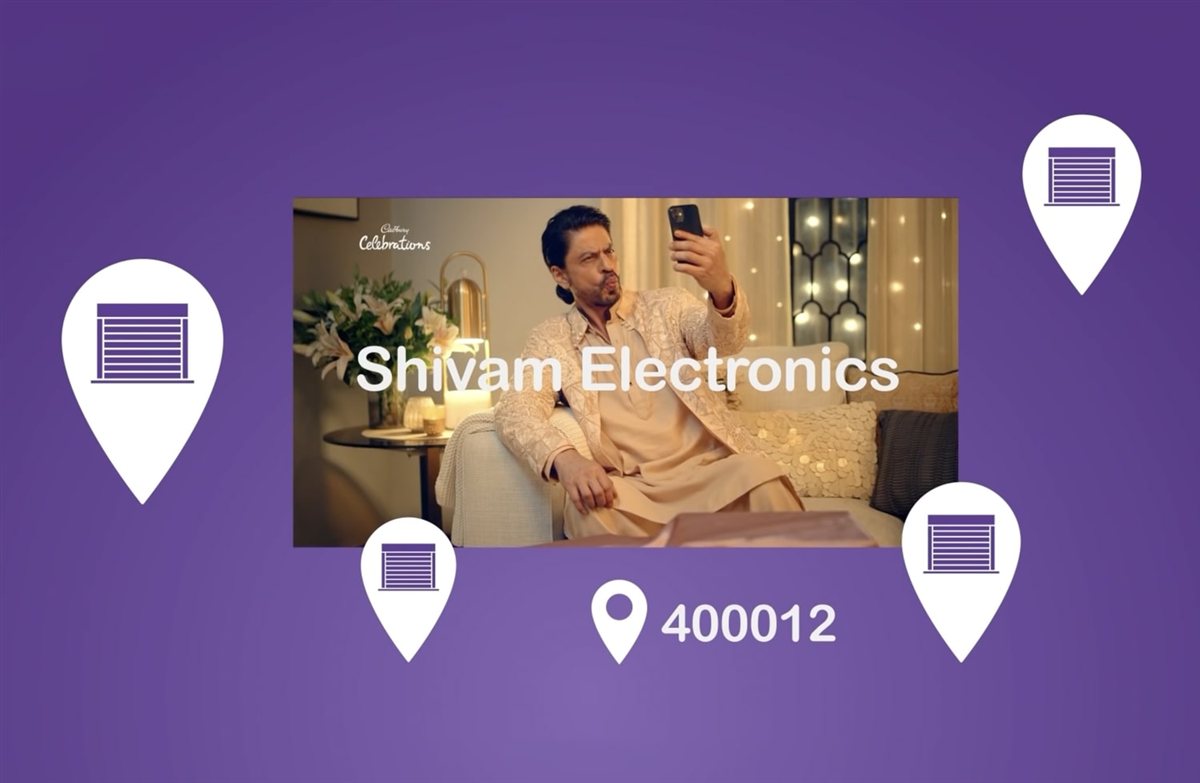
A local store name inserted into the Cadbury ad. Image: Mondelez India / Ogilvy
What AI did: Cadbury India and Ogilvy used AI to recreate actor Shah Rukh Khan's face and voice, then let small local shops generate a personalized ad in which he named their store. Store owners built their ad on a microsite and shared it on social media and WhatsApp.
Reported result: WARC ranked the campaign the most effective in the world in its 2023 Effective 100, and Campaign India reported a 35% rise in sales of Cadbury Celebrations during Diwali.
What an ecommerce brand can borrow: The AI served a generous idea - support local shops - so the technology never became the story. Personalization works best when the viewer gets something from it.
4. Virgin Voyages "Jen AI" (2023)
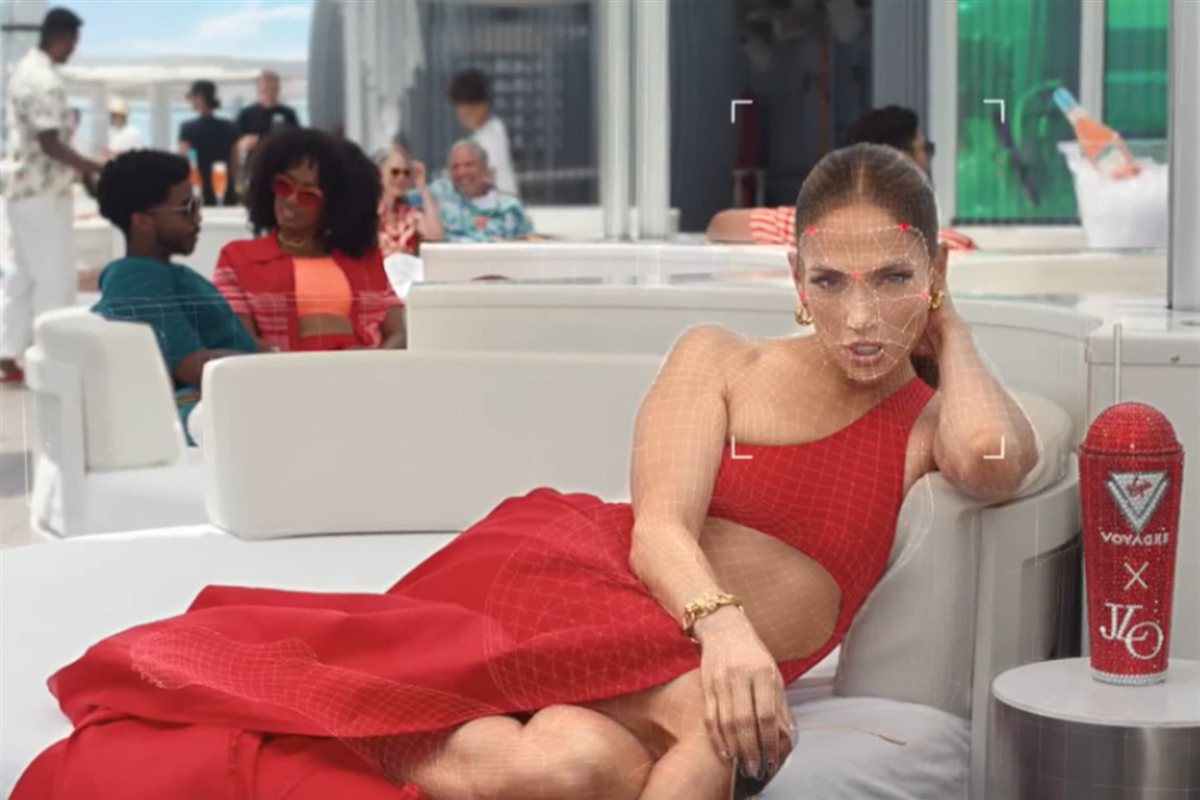
Jen AI campaign still with the face-mapping overlay. Image: Virgin Voyages / VML
What AI did: With Jennifer Lopez's permission, Virgin Voyages and VML built a tool that generated a personalized video invitation from an AI version of her. Users answered a few questions about the trip, then sent the finished video to friends and family.
Reported result: The agency's case study reports more than 2 billion impressions and over 25,000 personalized invitations created. These figures are self-reported.
What an ecommerce brand can borrow: The ad was built to be shared. When the output is personal and made for one recipient, the audience does the distribution.
5. Coca-Cola "Create Real Magic" (2023)
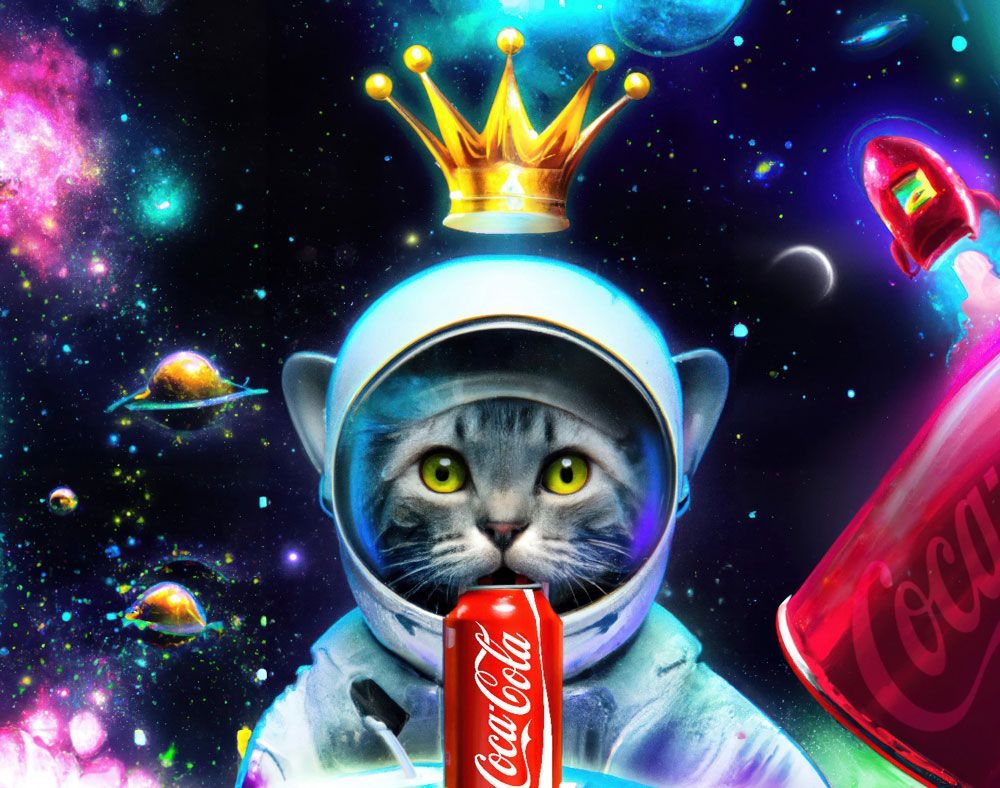
AI artwork from the Create Real Magic platform. Image: The Coca-Cola Company
What AI did: Coca-Cola opened a platform built on GPT-4 and DALL-E that let fans make artwork from its archive of brand assets - the bottle, the script logo, classic holiday characters. Selected works ran on billboards in New York's Times Square and in London.
Reported result: The program expanded into AI holiday cards later in 2023, which Coca-Cola rolled out across many markets.
What an ecommerce brand can borrow: Coca-Cola gave AI its own brand codes to work from instead of a blank prompt. The outputs stayed recognizable because the inputs were.
6. Nike "Never Done Evolving" (2022)
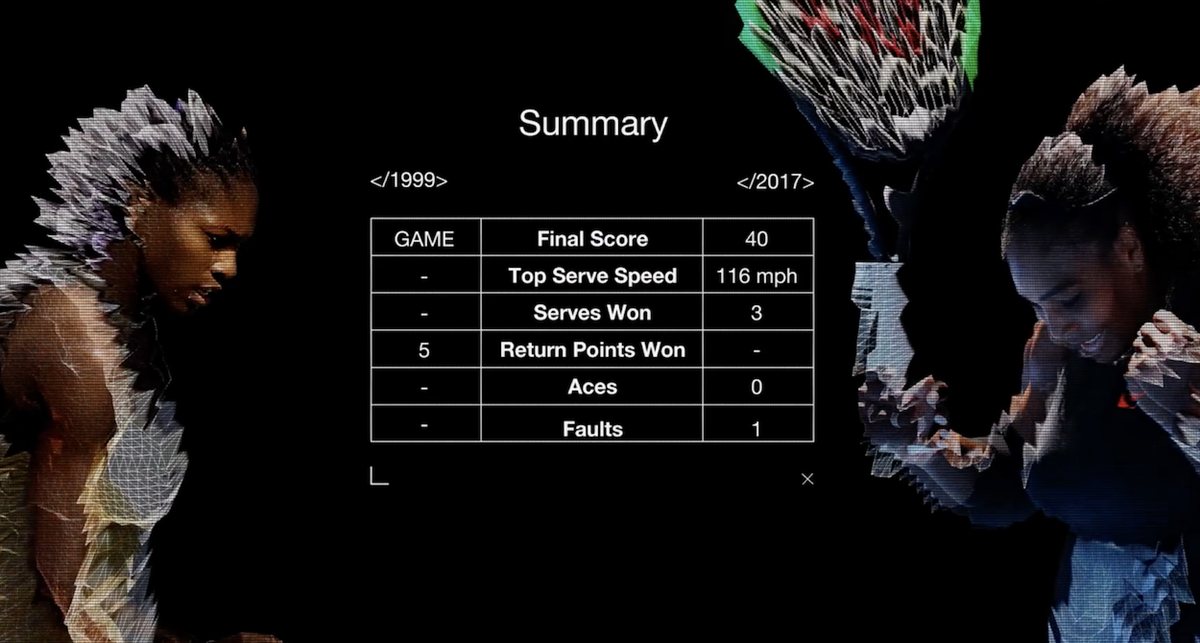
1999 and 2017 Serena Williams with simulated match stats. Image: Nike / AKQA
What AI did: For Nike's 50th anniversary, AKQA trained models on archive footage of Serena Williams in 1999 and in 2017, then simulated a match between the two versions of her. The team ran more than 130,000 simulated games to build it.
Reported result: The final aired on YouTube and drew 1.7 million viewers. It won the Digital Craft Grand Prix at Cannes Lions 2023.
What an ecommerce brand can borrow: AI made a "what if" visible that no camera could film. For a product brand, the smaller version is showing a result over time - week one versus month three - that is hard to stage in a single shoot.
7. H&M digital twins (2025)
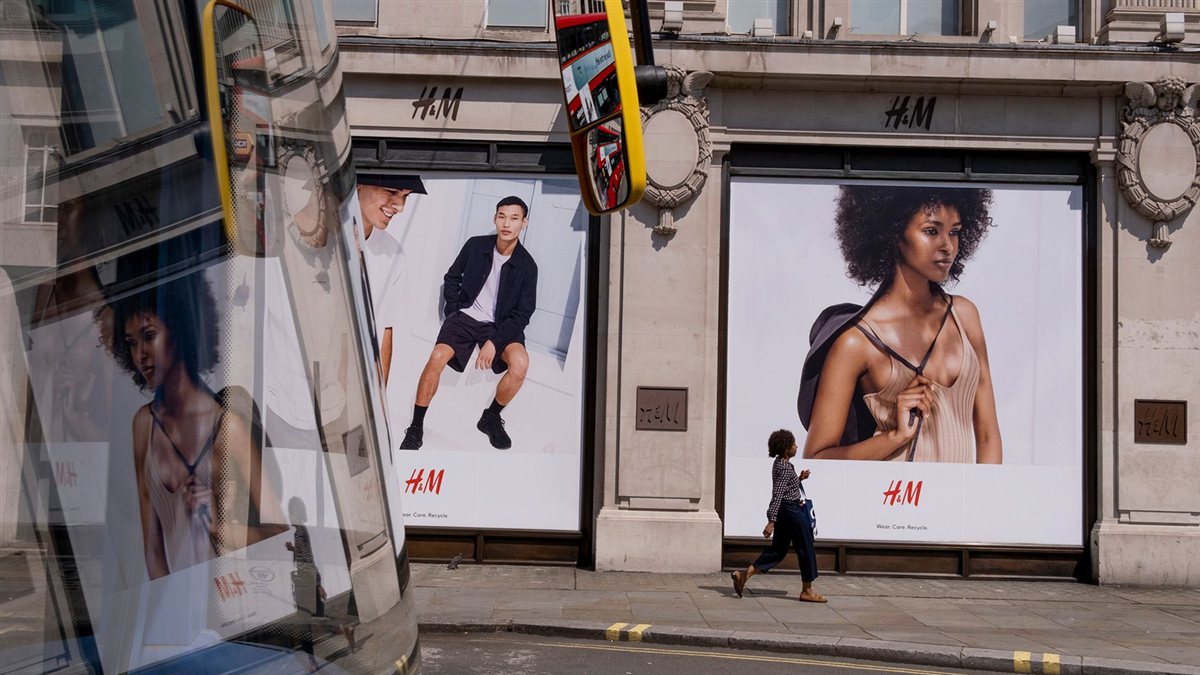
H&M campaign posters in London - the kind of imagery the digital twins are planned for. Image: H&M
What AI did: H&M announced plans to create AI "digital twins" of 30 real models for use in social posts and ad campaigns. The models keep the rights to their twin and can license it to other brands, and H&M said the images would carry a watermark showing they are AI-generated.
Reported result: The plan drew public criticism from model and actor unions over pay and protections, even with the consent and rights terms in place.
What an ecommerce brand can borrow: AI-generated people are the most sensitive use of AI in ads. If you use AI models or avatars, being open about it is the starting point, and audiences will still be quick to judge.
8. Kalshi NBA Finals ad (2025)
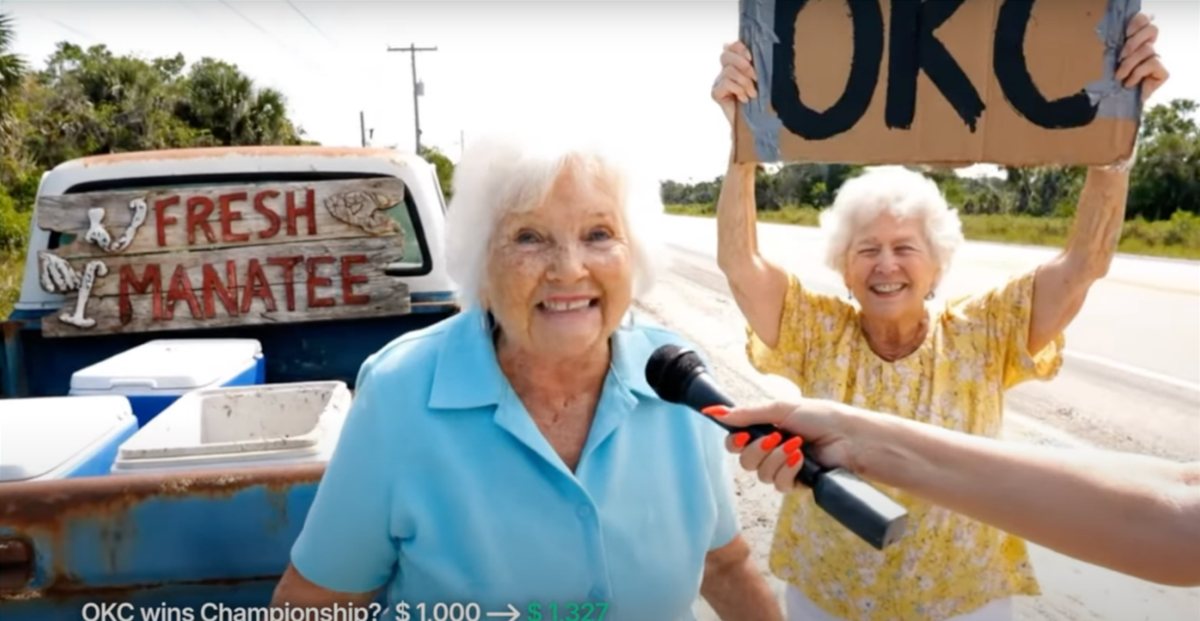
An AI-generated scene from the Kalshi spot. Image: Kalshi
What AI did: A filmmaker produced a fast-paced, deliberately absurd spot for the prediction market Kalshi using Google's Veo 3 video model and Gemini for scripting. Reports describe roughly 300 to 400 generations to get about 15 usable clips.
Reported result: The ad aired during the 2025 NBA Finals. The creator said it cost about $2,000 and took two to three days, compared with the typical TV spot that takes months and a large crew.
What an ecommerce brand can borrow: The style suited the tool. Chaotic, surreal scenes hide the small inconsistencies AI video still produces, which made the AI a fit for the brief rather than a compromise.
9. Meta generative backgrounds in Advantage+ (2023-2024)
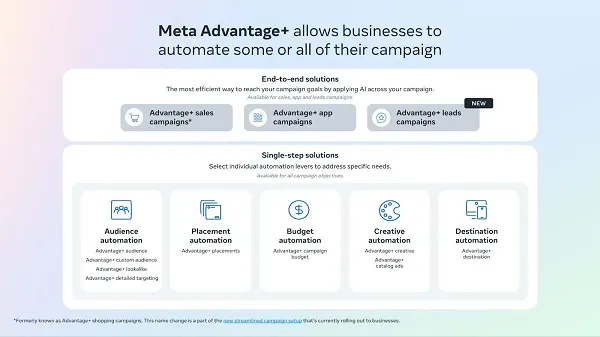
Meta's Advantage+ automation options, including creative. Image: Meta
What AI did: Meta added generative AI tools to Advantage+ creative, including background generation from a product image, image expansion to fit more placements, and alternative text variations.
Reported result: Meta said campaigns using AI background generation saw an 11% higher click-through rate on average. This is Meta's own figure, with no published methodology.
What an ecommerce brand can borrow: This is the most common form of AI in advertising for small brands - variations of one ad, made automatically. The limit is that the variations stay close to the original, so they help less when the core ad structure is the problem.
10. Coca-Cola "Holidays Are Coming" AI remake (2024 and 2025)
A frame from the 2025 AI-made holiday ad. Image: The Coca-Cola Company
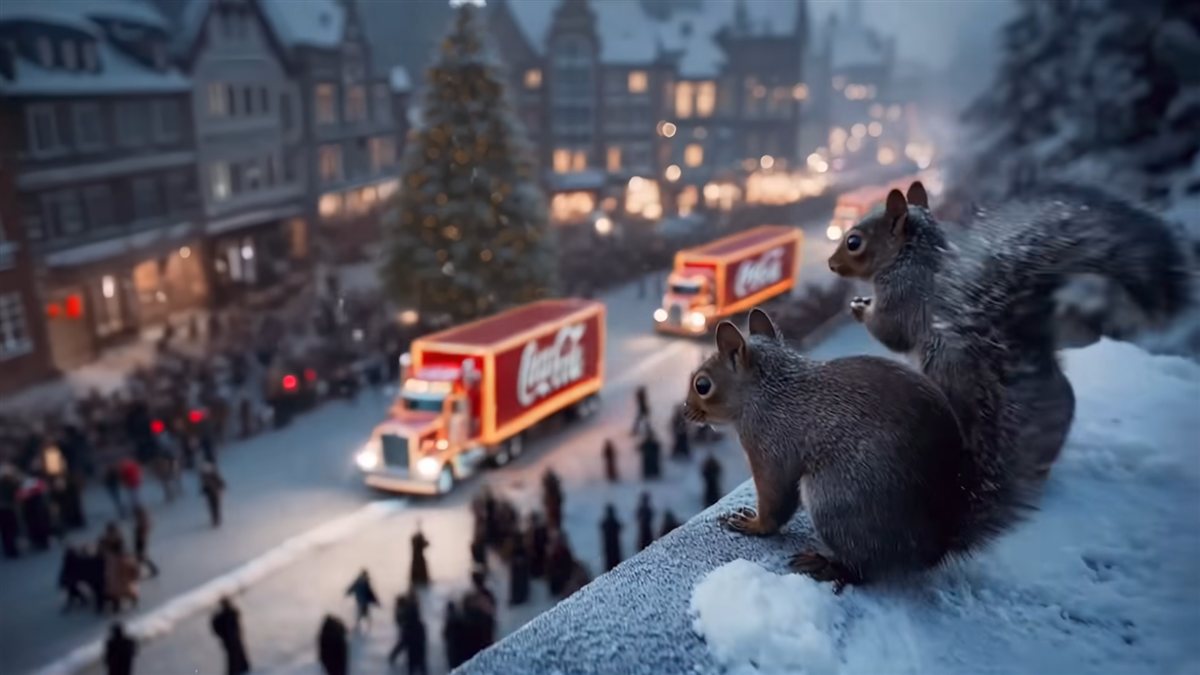
What AI did: Coca-Cola remade its classic holiday truck ad with AI-generated footage in 2024, then released a new AI-made version in 2025 with animated animals and winter scenes.
Reported result: Both versions drew heavy criticism online for faces that lacked expression and a feeling of low effort around an ad people had an emotional attachment to. Coca-Cola kept the approach for a second year anyway.
What an ecommerce brand can borrow: Heritage creative is where AI gets judged hardest. Remaking something an audience loves with AI invites comparison to the original, and the comparison is rarely kind.
AI advertising examples that backfired, and what they got wrong
The criticism of AI ads follows a pattern. Audiences rarely object to AI as such. They object when the result looks cheaper than what the brand used to make, or when AI replaces people in a way that feels careless.
Svedka's AI-generated Super Bowl LX spot. Image: Svedka
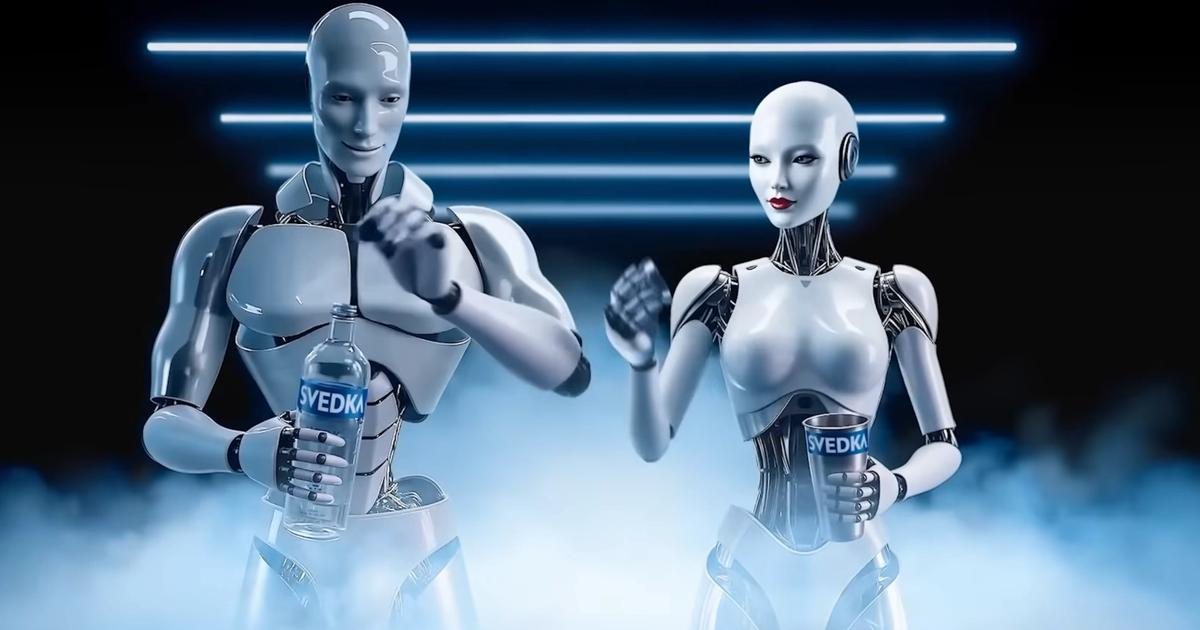
Svedka at Super Bowl LX (2026). Svedka revived its "fembot" character in what was described as the first primarily AI-generated Super Bowl ad. A CBS News expert panel graded it a D, and much of the coverage focused on the AI itself rather than the vodka.
A frame from the Toys R Us brand film made largely with Sora. Image: Toys R Us
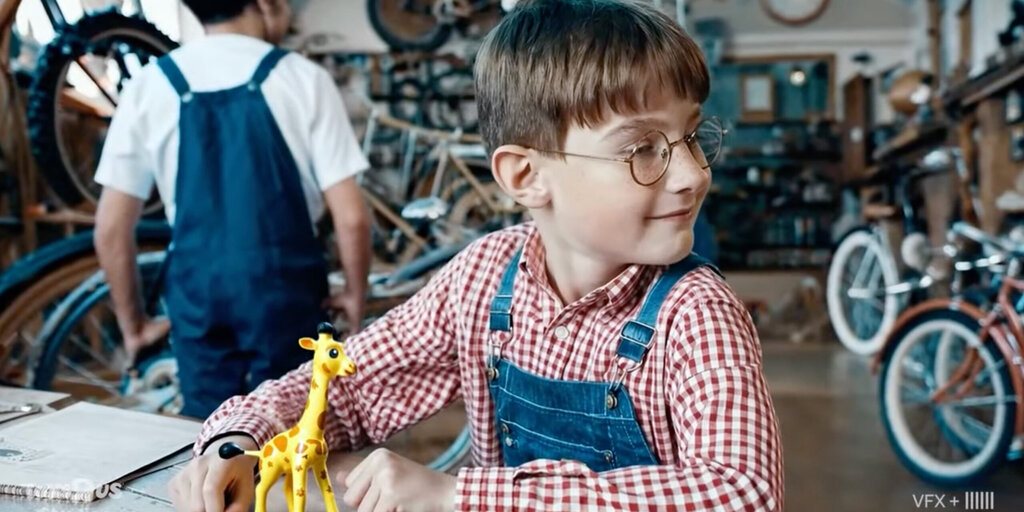
Toys "R" Us brand film (2024). The brand premiered a one-minute origin story made largely with OpenAI's Sora video model at Cannes Lions. The director said the model got them "80 to 85 percent of the way there," with corrective visual effects for the rest. Critics pointed to inconsistent faces and hands from scene to scene.
Guess and Valentino (2025). Guess ran AI-generated models in a Vogue print ad, and Valentino posted AI visuals for a handbag. Both drew comments calling the work cheap or lazy, a reaction that hits luxury hardest - Promer AI's breakdown of AI ad creative for luxury brands covers why premium audiences penalize AI imagery more.
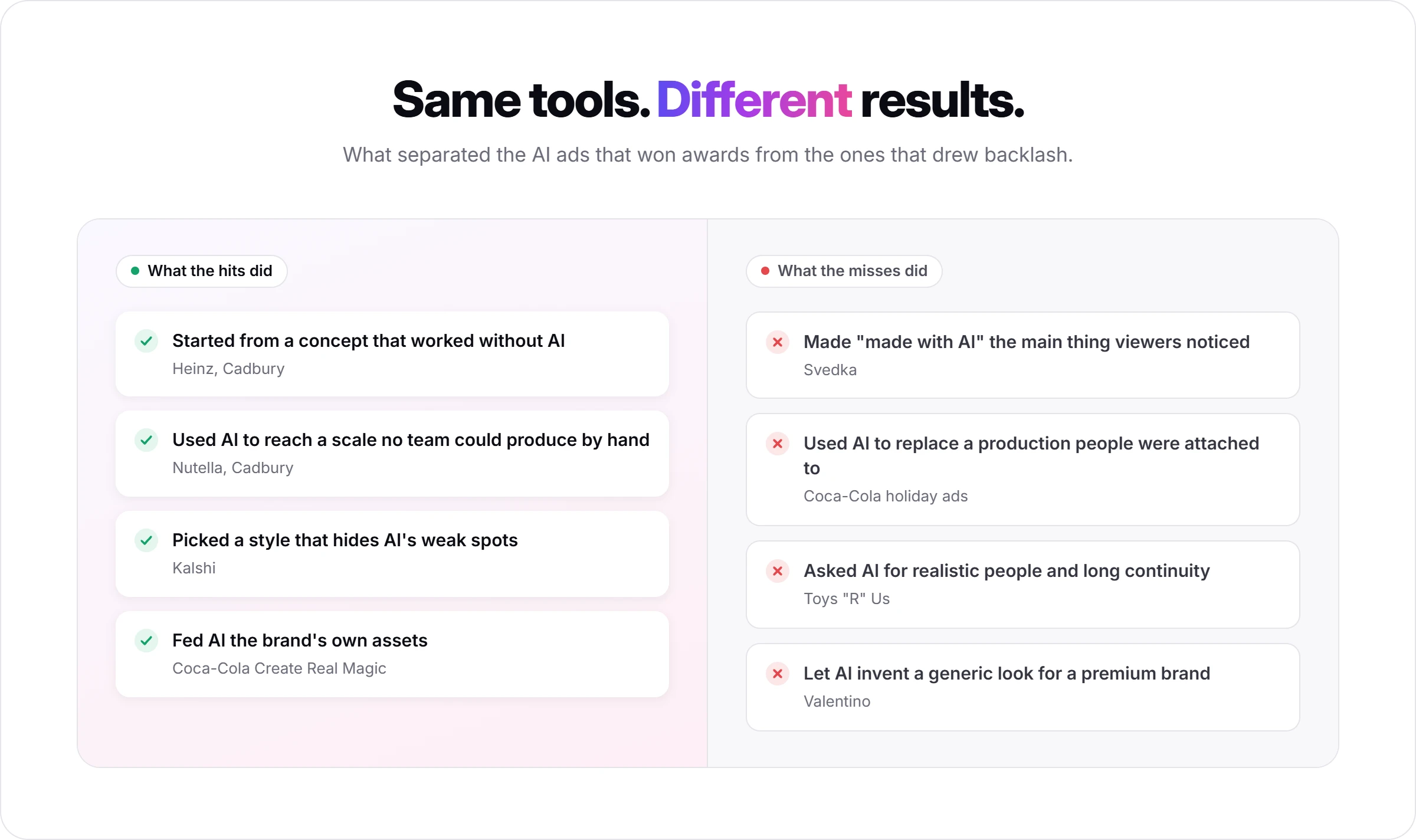
| What the hits did | What the misses did |
|---|---|
| Started from a concept that worked without AI (Heinz, Cadbury) | Made "made with AI" the main thing viewers noticed (Svedka) |
| Used AI to reach a scale no team could produce by hand (Nutella, Cadbury) | Used AI to replace a production people were attached to (Coca-Cola) |
| Picked a style that hides AI's weak spots (Kalshi) |
8 AI ad creative examples for ecommerce brands, by niche
The campaigns above had agency budgets, celebrity deals and months of planning. The ads below are the everyday version: real ecommerce ad creatives from Promer AI's ad library, chosen because each one has a clear structure that AI can rebuild with a different product.
These are not presented as AI-made ads. They are references - proven layouts you can recreate with your own product images, copy and brand colors. Each one lists its platform, ratio and hook type first, and a "Try AI Ad Clone" button sits under every creative.
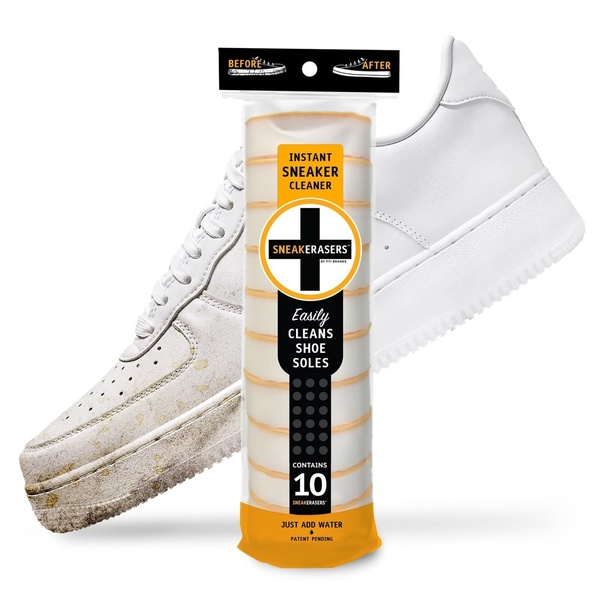
1. Sneakerasers Instant Before-and-After (Shoe Care)
Platform: Facebook, Instagram | Ratio: 1:1 | Hook type: Before-and-after proof
A white sneaker is split down the middle, dirty on the left and clean on the right, with the cleaner pack standing upright between the two halves. "Before" and "After" labels sit on the pack's header card, so the comparison reads without any headline.
Winning ingredients:
- The product physically divides the before from the after, so it reads as the cause of the change
- One sneaker shown twice keeps lighting and angle identical, which makes the result believable
- Copy lives on the packaging, so the frame needs no extra text
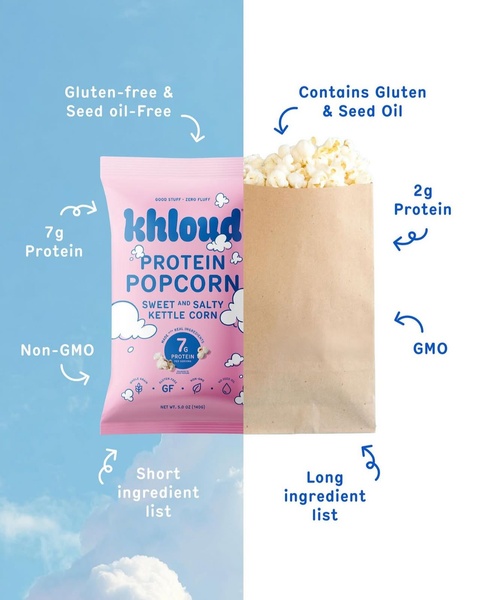
2. Khloud Protein Popcorn Us vs. Them (Snacks)
Platform: Instagram, Facebook | Ratio: 4:5 | Hook type: Direct comparison
A split screen puts a pink branded bag against a sky-blue background on the left and a plain brown paper bag of popcorn on the right. Hand-drawn arrows label each side: "7g Protein," "Non-GMO" and "Short ingredient list" against "2g Protein," "GMO" and "Long ingredient list."
Winning ingredients:
- The "them" side is a generic bag, not a named competitor, which keeps the ad compliant and friendly
- Three matched claims per side make the comparison scannable in a second
- Bright branded colors against brown paper do the persuading before anyone reads the arrows
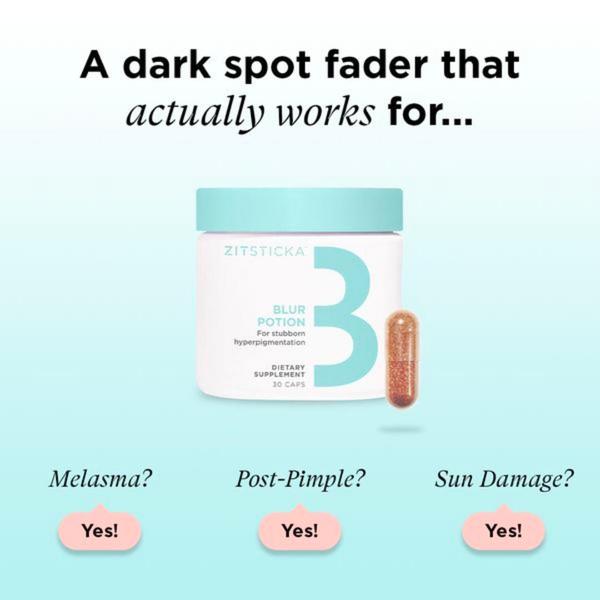
3. ZitSticka "Actually Works For…" Q&A (Skin Supplements)
Platform: Instagram Feed, Facebook Feed | Ratio: 1:1 | Hook type: Problem-solution Q&A
A supplement jar and a single capsule float on a pale aqua gradient under the headline "A dark spot fader that actually works for…" Three concerns sit below in italic serif - "Melasma?", "Post-Pimple?", "Sun Damage?" - each answered by a pink "Yes!" bubble.
Winning ingredients:
- Naming three specific conditions lets each buyer find their own problem in the ad
- The repeated "Yes!" turns three claims into one rhythm the eye follows left to right
- The open-ended headline creates a small question the layout answers immediately
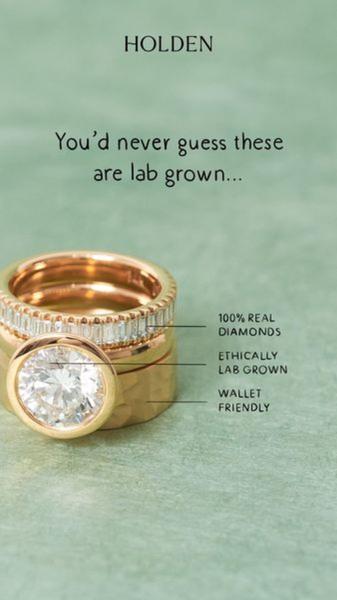
4. Holden Lab-Grown Diamond Callouts (Jewelry)
Platform: Instagram Stories, TikTok | Ratio: 9:16 | Hook type: Objection-handling callouts
A stack of gold rings with a large bezel-set diamond sits on sage green fabric, under the line "You'd never guess these are lab grown…" Three thin leader lines point to "100% real diamonds," "Ethically lab grown" and "Wallet friendly."
Winning ingredients:
- The headline names the buyer's doubt about lab-grown stones before they can raise it
- Callouts point at the product instead of floating as badges, so each claim feels tied to something real
- A muted sage background keeps a value message looking premium
5. "Smile, Burglar!" RV Camera Statistic (Home Security)
Platform: Facebook, Instagram | Ratio: 1:1 | Hook type: Statistic-led urgency
A white security camera is mounted on the dark side of an RV at night, lit like a film still. The bold headline "SMILE, BURGLAR!" sits over a single line of proof: "3 in 4 RV break-ins happen when no one's inside."

Winning ingredients:
- The headline speaks to the burglar, which reframes a fear-based ad with humor
- One statistic gives the reason to buy without a feature list
- A dark frame with white type keeps the camera and the copy as the only bright elements
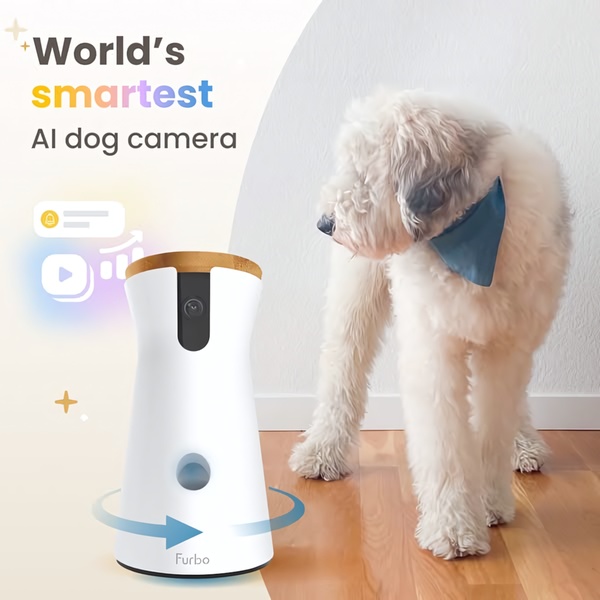
6. Furbo "World's Smartest AI Dog Camera" (Pet Tech)
Platform: Instagram, Facebook | Ratio: 1:1 | Hook type: Bold category claim
A white dog camera with a wooden top sits on a wooden floor beside a shaggy white dog, with a curved arrow at its base showing that it rotates. The headline "World's smartest AI dog camera" uses a gradient on "smartest," and small notification and video icons float beside the device.
Winning ingredients:
- The dog in frame shows who the product is for without a lifestyle scene
- Small UI icons hint at app features that a product photo alone cannot show
- A rotation arrow explains the main mechanic in one graphic
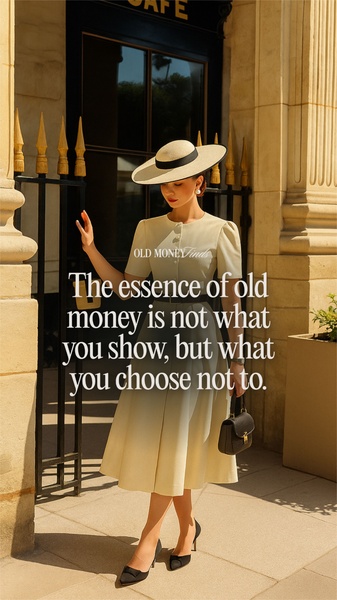
7. Quiet Luxury Dress Editorial Quote (Womenswear)
Platform: Instagram Stories, TikTok | Ratio: 9:16 | Hook type: Philosophical statement
A woman in a cream dress, wide-brimmed hat and black slingbacks stands at a gilded gate outside a stone café, in hard afternoon sun. The serif overlay reads: "The essence of old money is not what you show, but what you choose not to."
Winning ingredients:
- The quote sells an identity, so the dress becomes the way to join it
- Cream, black and stone tones match the "quiet" message the copy describes
- A full 9:16 frame works as a Stories ad and as a saveable post
8. Organic Living Room Sofa Mood Shot (Furniture)
Platform: Instagram, Pinterest | Ratio: 2:3 | Hook type: Environmental mood
A white bouclé sofa with a rounded, pebble-like shape sits against a dark wood-paneled wall, next to a live-edge wood coffee table and a small indoor tree. Low side light catches the texture of the fabric, and the frame carries no text.

Winning ingredients:
- Soft bouclé against rough wood makes the sofa's texture the focus
- Directional light gives the scene a time of day, which helps buyers picture it at home
- No copy at all suits Pinterest, where the image itself is the search result
How to turn these AI in advertising examples into your own ads
The big-brand examples and the ecommerce examples share one lesson: the strongest AI ads start from something that already works - a brand asset, a proven layout, a clear concept - and use AI to produce more of it. Starting from a blank prompt is where AI output tends to look generic.
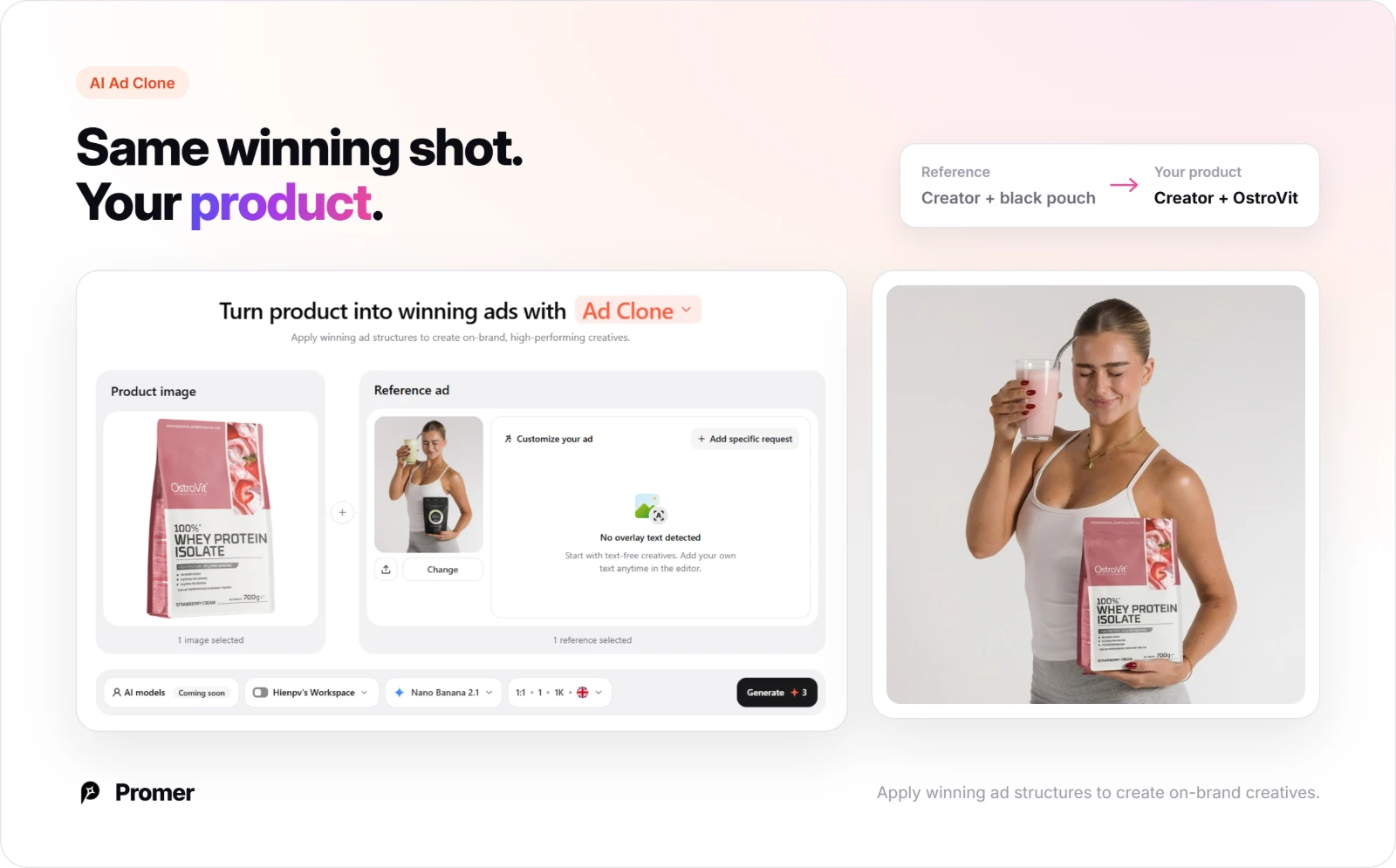
Promer AI, an AI advertisement generator built for ecommerce, follows that order. It reads your product first and builds the ad from a reference or a concept, not from an empty canvas.
Promer AI's AI Ad Clone is the most direct way to use the 8 ecommerce examples above. Pick your product, choose a reference creative, and the AI keeps the reference's structure while swapping in your product, with a suggested headline, body text and CTA you can edit. The "Add specific request" field is where you set rules such as "keep the split-screen layout, no competitor names."
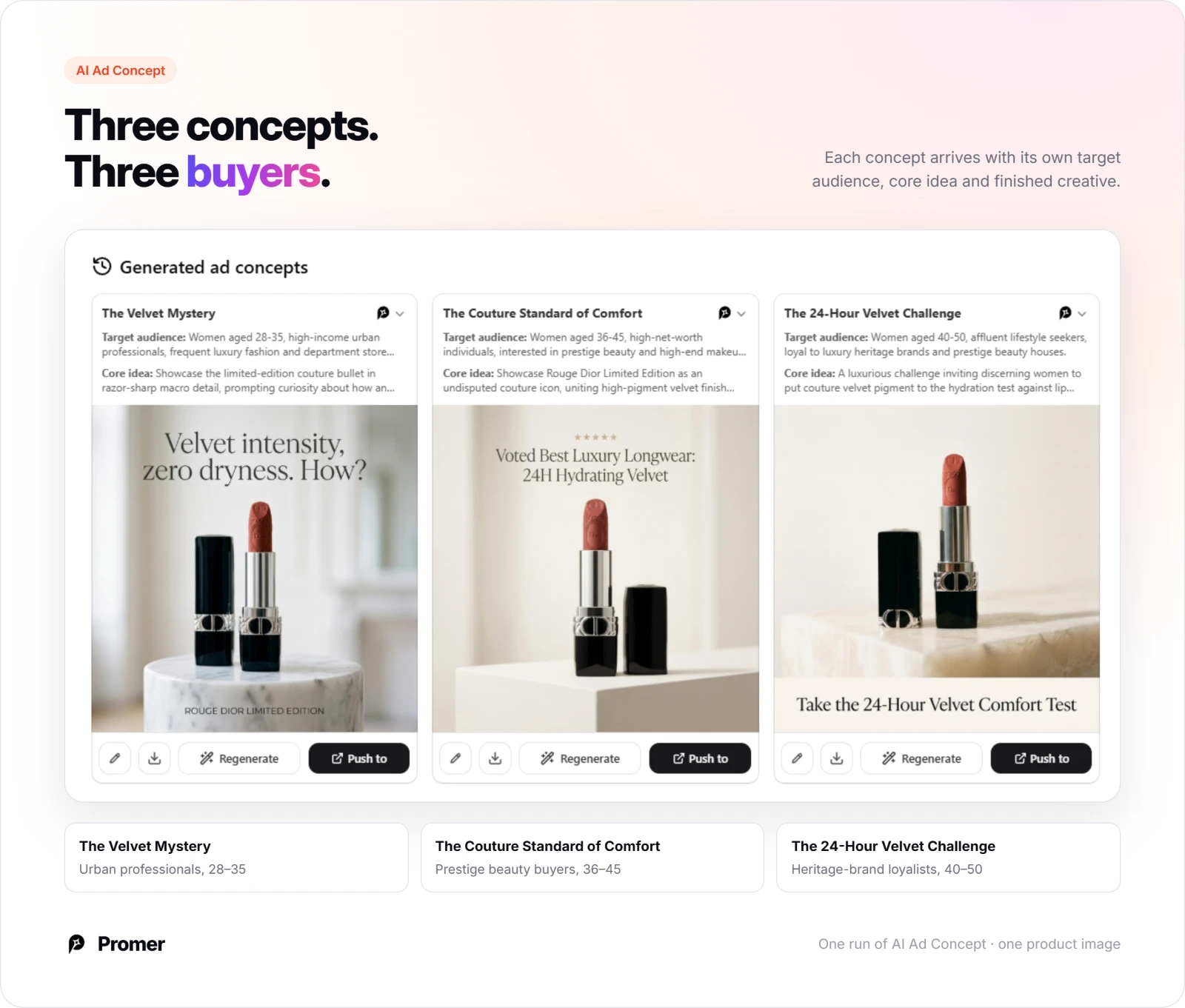
If you want new angles rather than a copy of one reference, Promer AI's AI Ad Concept reads your product into four editable fields - product highlights, ideal customer, pain point and customer need - then generates several concepts, each with its own audience and core idea. This is the step the Heinz and Cadbury examples did by hand: deciding the idea before producing the creative.
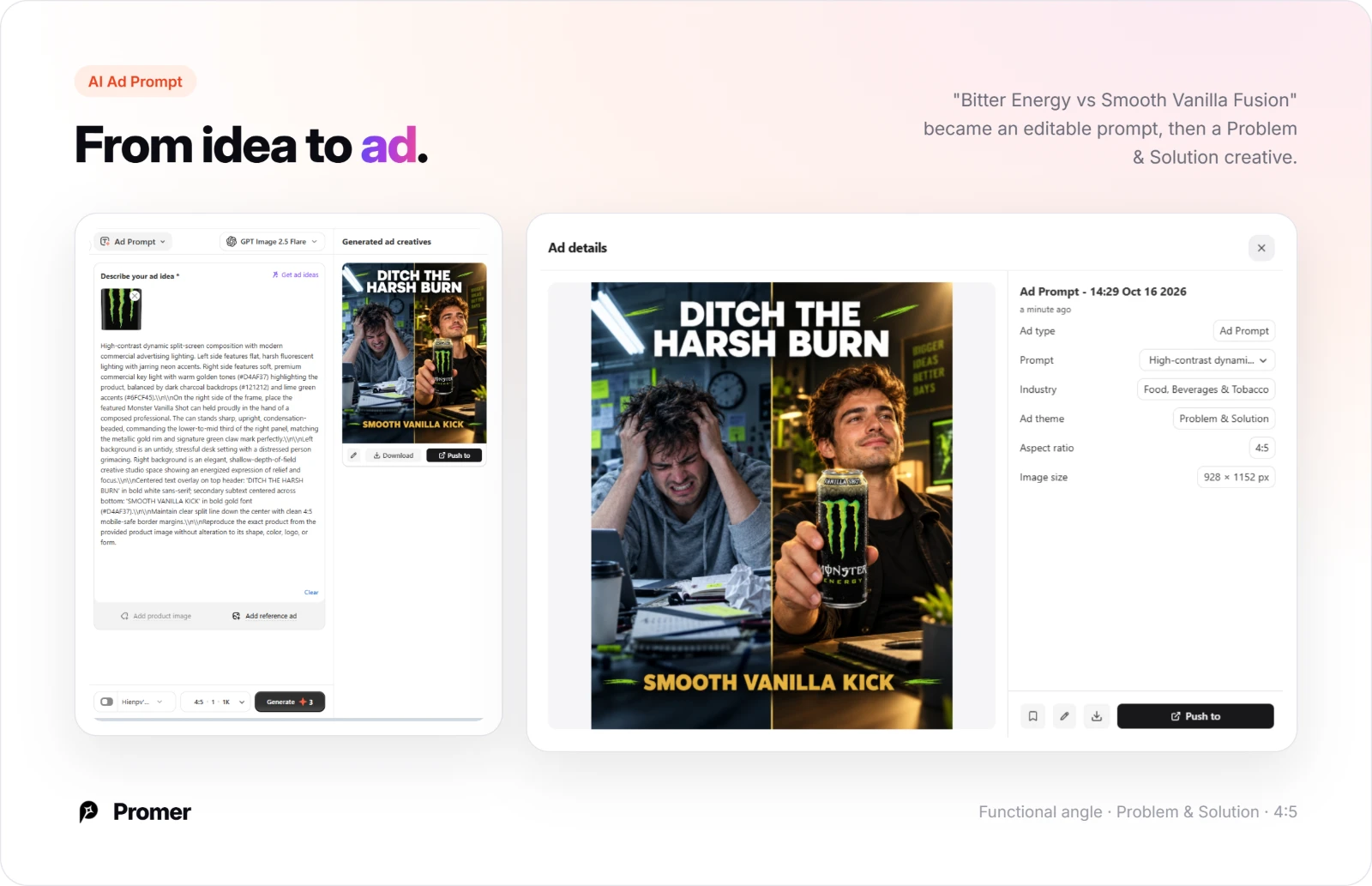
When you would rather describe the scene yourself, AI Ad Prompt suggests ad ideas tagged Functional, Emotional or Symbolic, each with a message and a visual direction, and turns the one you pick into a detailed prompt and a finished creative.
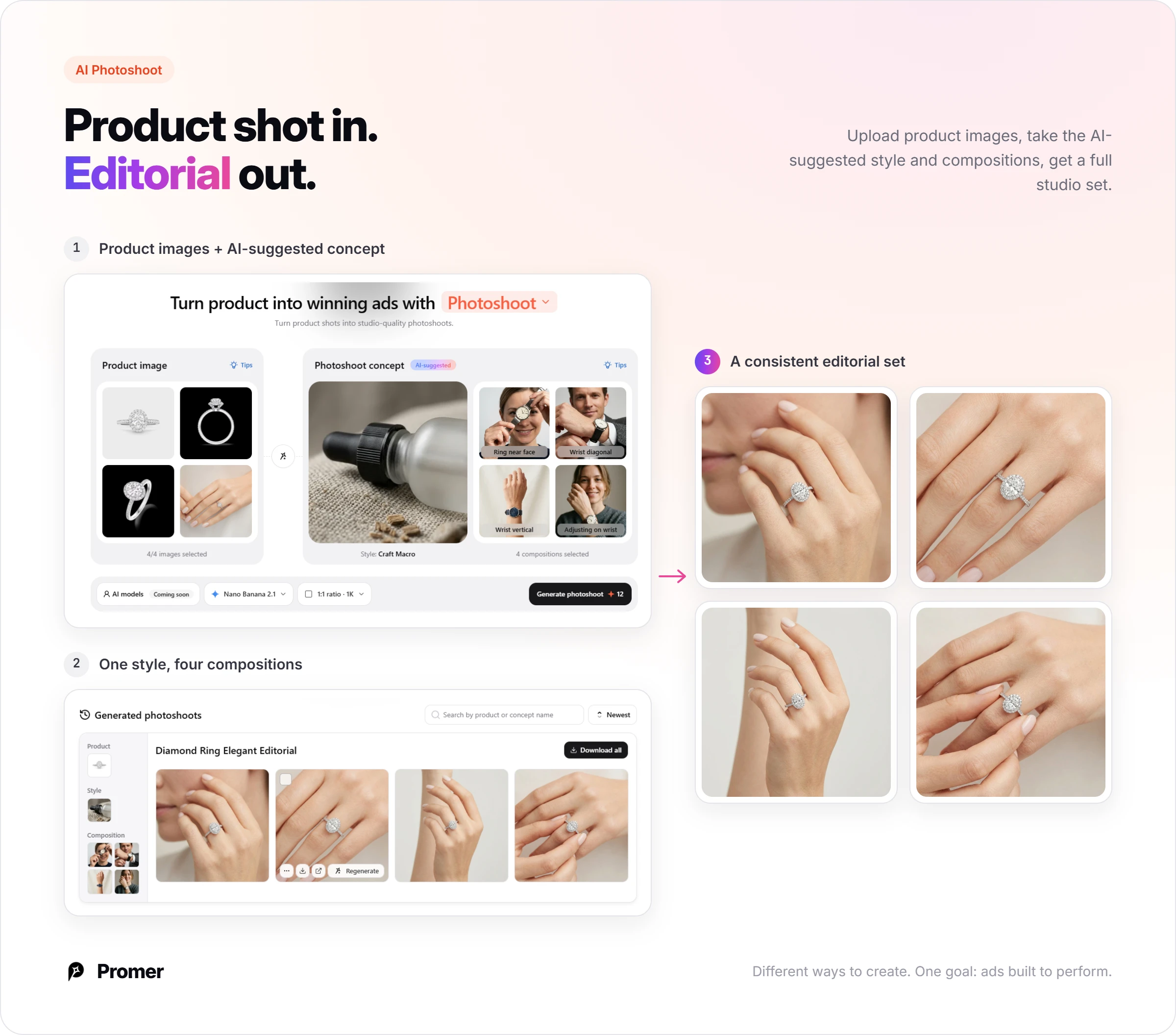
For products without good imagery yet, AI Photoshoot takes plain product photos, suggests a style and compositions, and returns a consistent set of shots you can use as ad inputs.
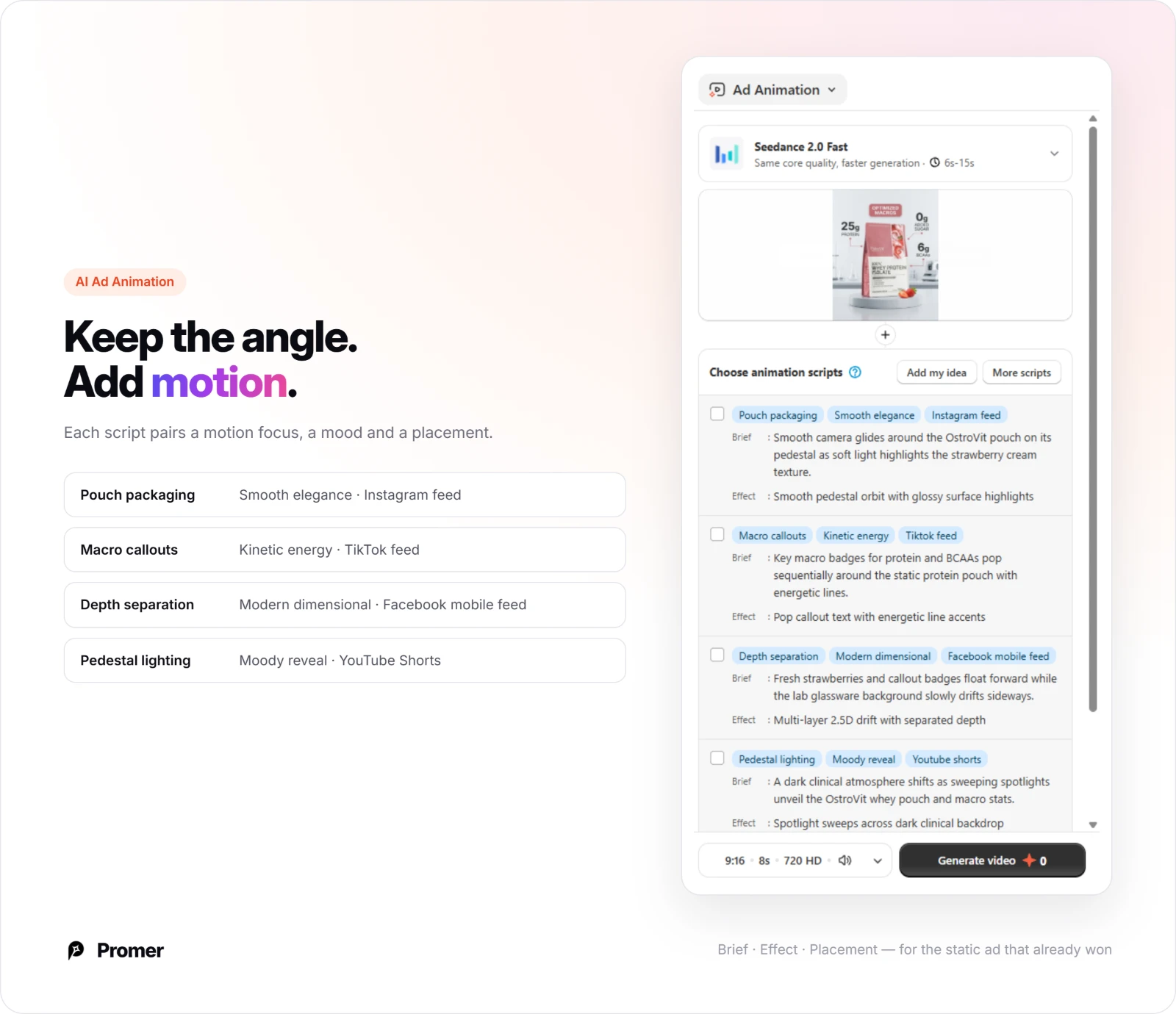
Once a static ad wins, AI Ad Animation turns it into a short video for Reels, Stories and TikTok, with script options tagged by motion, mood and placement - the small-brand version of the video examples above, without a shoot.
For creator-style video, AI UGC Ads suggests angles, hooks and formats from your product images, then writes a scene-by-scene script with voiceover. These videos use AI avatars, so the H&M lesson applies: be open about it, and keep them to social placements where the format is expected.
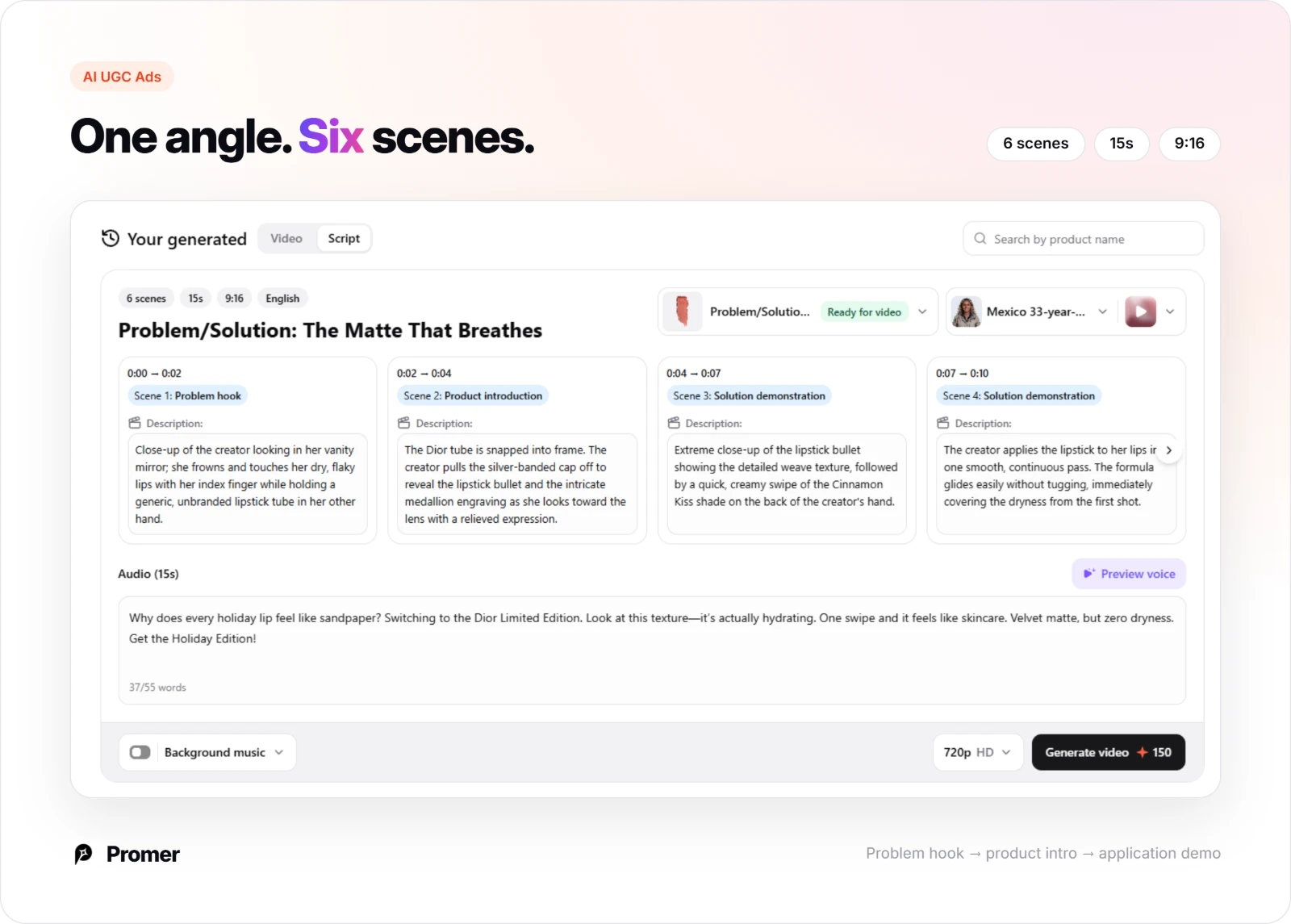
Review every generated creative before it runs. AI-generated ads can contain mistakes, so check product details, text, logos and any claims against the real product - the same flaws that drew criticism for Toys "R" Us and Coca-Cola show up in small-brand ads too.
Common mistakes brands make with AI in advertising
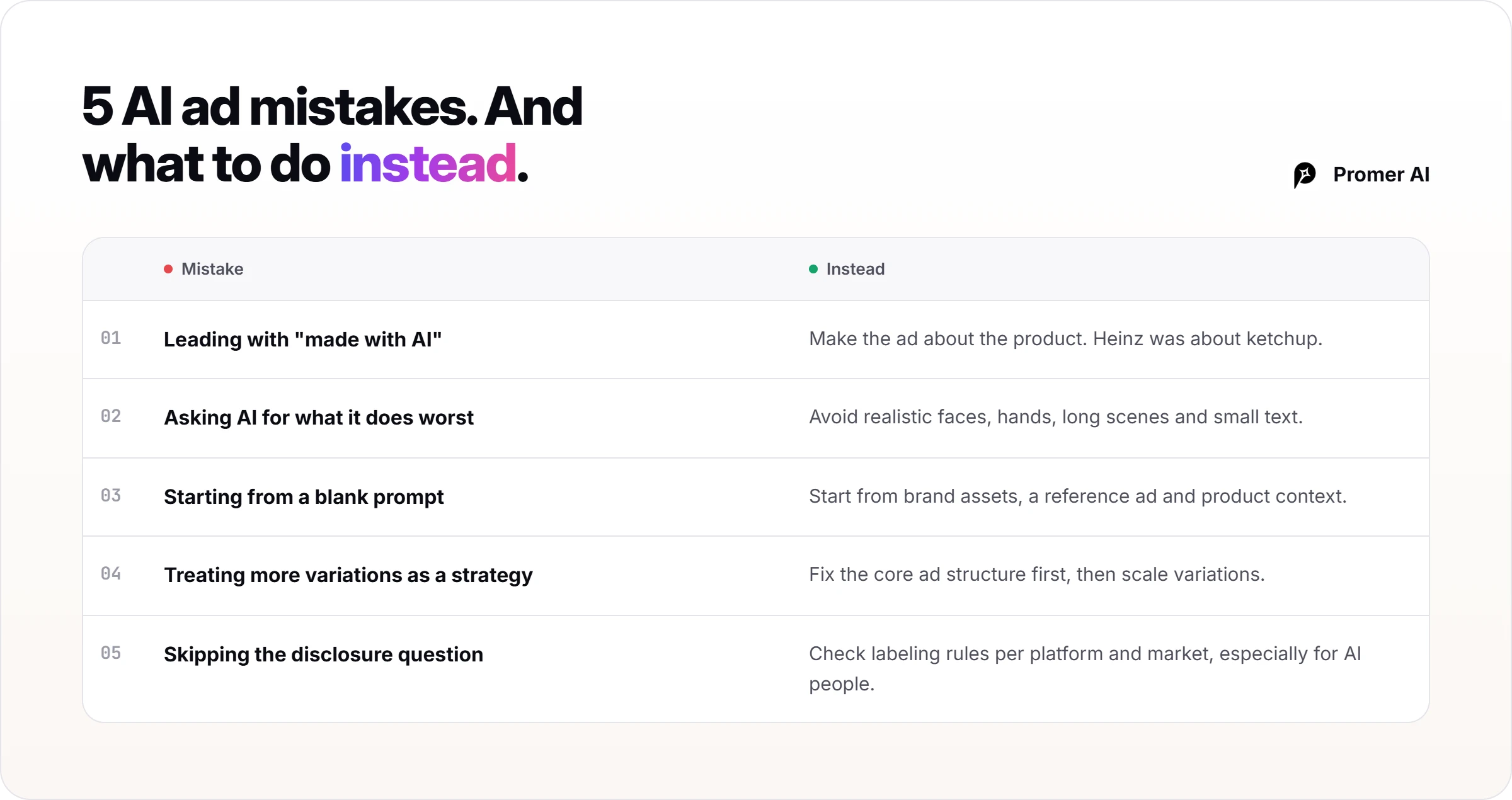
Leading with "made with AI." When the technology is the headline, viewers judge the technology. Heinz and Cadbury used AI heavily, and their ads were about ketchup and local shops.
Asking AI for what it does worst. Realistic faces, hands, long scenes with the same character, and small text are still where AI output breaks most often. Kalshi chose a style where those flaws did not matter; Toys "R" Us chose one where they did.
Starting from a blank prompt. A prompt with no brand assets, no reference and no product context produces a generic look. Coca-Cola's fan platform worked because every output started from the brand's own archive.
Treating more variations as a strategy. Ten background swaps of one weak ad are still one weak ad. Platform tools like Meta's generative backgrounds help most once the core structure is already working.
Skipping the disclosure question. Platform rules and local regulations on labeling AI content vary and keep changing. Check current requirements for each placement and market, especially for AI-generated people.
FAQs about AI in advertising examples
How is AI used in advertising?
AI is used to generate creative, personalize ads at scale, produce variations, make video, and handle targeting and bidding. Most brands already use AI targeting and bidding through Meta and Google without choosing to. The creative uses are where brands make active decisions, and results depend heavily on the concept the AI is asked to execute.
What is the most famous AI ad?
Heinz "A.I. Ketchup," Nike "Never Done Evolving" and Cadbury's Shah Rukh Khan ad are the most-cited examples. Each won major awards: a Clio Gold for Heinz, the Cannes Lions Digital Craft Grand Prix for Nike, and the top spot in WARC's 2023 Effective 100 for Cadbury. Coca-Cola's AI holiday ads are also widely known, mostly because of the criticism they drew.
Do AI-generated ads perform better than traditional ads?
Not automatically. AI mainly lowers the cost and time of producing creative, as in the Kalshi example, which lets brands test more ideas. Performance still depends on the idea, the product and the audience, and most published results come from the brands or agencies themselves rather than independent tests.
Should brands disclose AI in their ads?
Disclosure is the safer default, especially for AI-generated people. H&M committed to watermarking its digital twin images, and some platforms label AI content automatically. Rules differ by platform and market, so check current requirements before running AI-generated creative.
Can small ecommerce brands use AI in advertising the same way big brands do?
The principle carries over, the scale does not. A small brand will not license a celebrity likeness, but it can start from a proven ad structure, recreate it with its own product, and produce variations for every ratio and placement. That is the practical version of what Coca-Cola did with its archive.
What are examples of AI in digital advertising beyond creative?
Meta Advantage+ and Google Performance Max use AI to choose audiences, placements and bids automatically. Recommendation systems, like the ones that pick which product appears in a dynamic catalog ad, are another common example. These run in the background of most paid social and search campaigns today.
Summary
The ai in advertising examples that held up - Heinz, Nutella, Cadbury, Nike, Kalshi - had a clear idea first and used AI to make it bigger, faster or more personal. The ones that drew backlash put AI in front of the idea, or used it to replace craft that audiences cared about.
For an ecommerce brand, the useful version is smaller and repeatable: start from a structure that already works, rebuild it with your own product, check every detail, and produce the variations each placement needs.
Sources
- Cannes Lions, "Heinz A.I. Ketchup" campaign entry, and Clio Awards 2023 - accessed 2026-10-30
- Dezeen, "Algorithm designs seven million different jars of Nutella," June 2017 - accessed 2026-10-30
- Campaign India, "WARC 100: Shah Rukh Khan reigns supreme in the most effective campaign for 2023" - accessed 2026-10-30
- WPP, "VML: Virgin Voyages' Jen AI" case study - accessed 2026-10-30
- The Coca-Cola Company, "Coca-Cola invites digital artists to Create Real Magic using new AI platform," March 2023 - accessed 2026-10-30
- Adweek, "Nike's AI Serena Williams match wins Grand Prix in Digital Craft at Cannes," June 2023 - accessed 2026-10-30
- CNN via ABC7, "Fashion giant H&M plans to use AI clones of its human models. Not everyone is happy," 2025 - accessed 2026-10-30
- NPR, "An AI video ad is making a splash. Is it the future of advertising?" June 2025 - accessed 2026-10-30
- Social Media Today, Meta Advantage+ generative AI creative tools overview - accessed 2026-10-30
- TechRadar, "Coca-Cola faces backlash again for missing the spirit of the holidays with another AI-slop ad," 2025 - accessed 2026-10-30
- Semafor, "First entirely AI-generated ad hits the Super Bowl," February 2026, and CBS News, best and worst Super Bowl commercials 2026 - accessed 2026-10-30
- Decrypt, "Toys'R'Us ad made with AI ignites controversy," June 2024 - accessed 2026-10-30