A testimonial ad puts a real customer's words at the center of the creative, so the proof does the selling instead of the brand.
A testimonial ad is a paid ad built around a customer review, quote, rating or story, usually shown next to the product. The strongest testimonial ads quote one specific result in the customer's own words and make the product easy to recognize in the same frame.
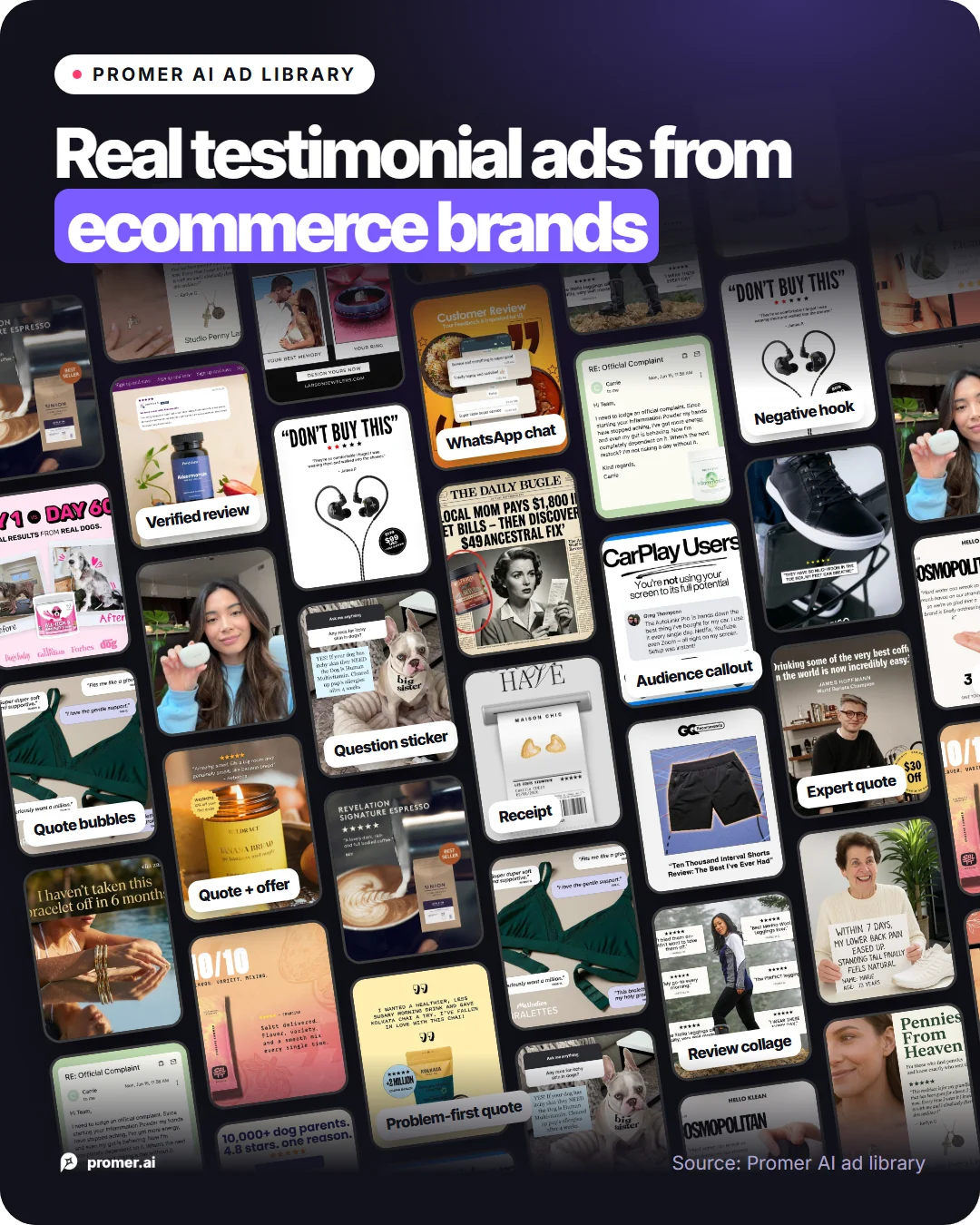
The 27 testimonial ad examples below are real ecommerce ads from the Promer AI ad library, covering supplements, pet care, jewelry, apparel, shoes, food, coffee, home and electronics.
Each one lists its platform, ratio and format, then explains why the layout works and how to reuse it with an AI ad maker.
Testimonial ads come in six main formats:
Format
What carries the proof
Best for
Single quote
One short review next to the product
Any product, cold traffic
Quote as headline
The review is the biggest text
Emotional or surprising reviews
Screenshot style
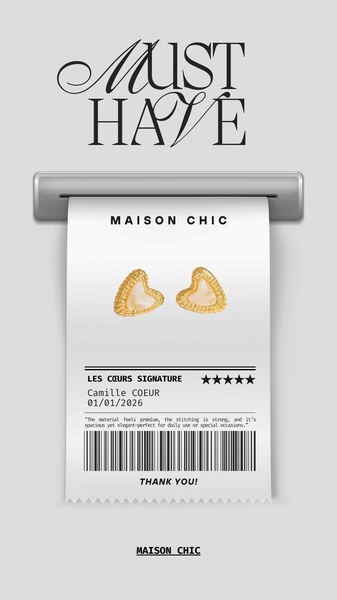
A chat, email, sticker or receipt
Feed ads that should look native
Multi-review
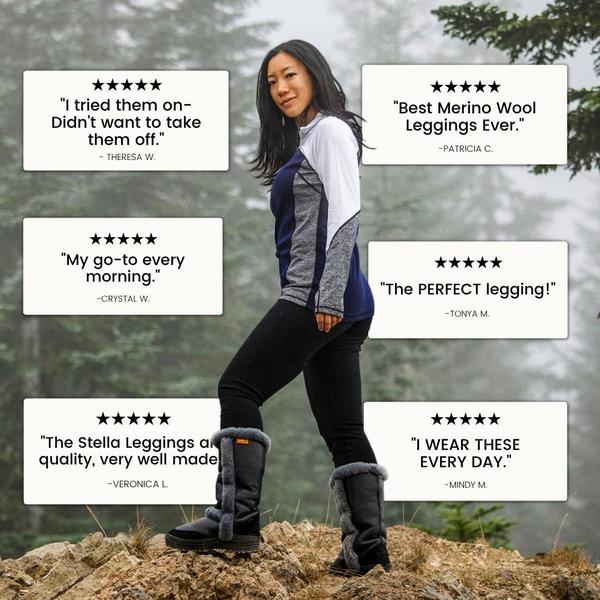
3-6 reviews or a customer count
Apparel and repeat-purchase products
Before and after
A visible result over time
Pet, home and cleaning products
Press or expert
A magazine, expert or newspaper
Premium and skeptical categories
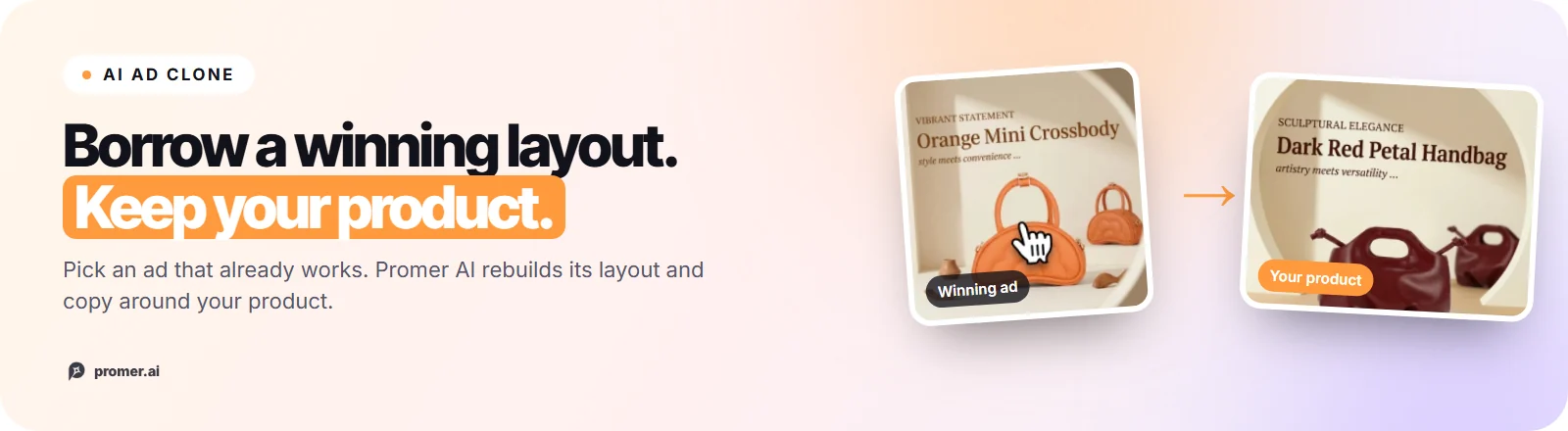
Found a testimonial layout you like? Promer AI's AI Ad Clone keeps the structure of a reference ad and rebuilds it around your product, your review and your brand colors.
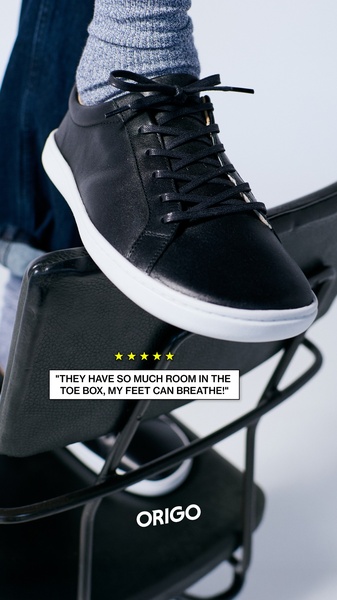
Specific beats glowing: "My feet can breathe" sells more than "Love these shoes!"
Add a timeframe: "After 4 weeks" or "in 6 months" turns praise into a believable result.
Keep the product in frame: Every strong example shows the product next to the quote.
Match the format to the placement: 1:1 or 4:5 for the feed, 9:16 for Stories, Reels and TikTok.
Only use real reviews: The FTC's 2024 rule bans fake and AI-invented testimonials.
Why Do Testimonial Ads Work?
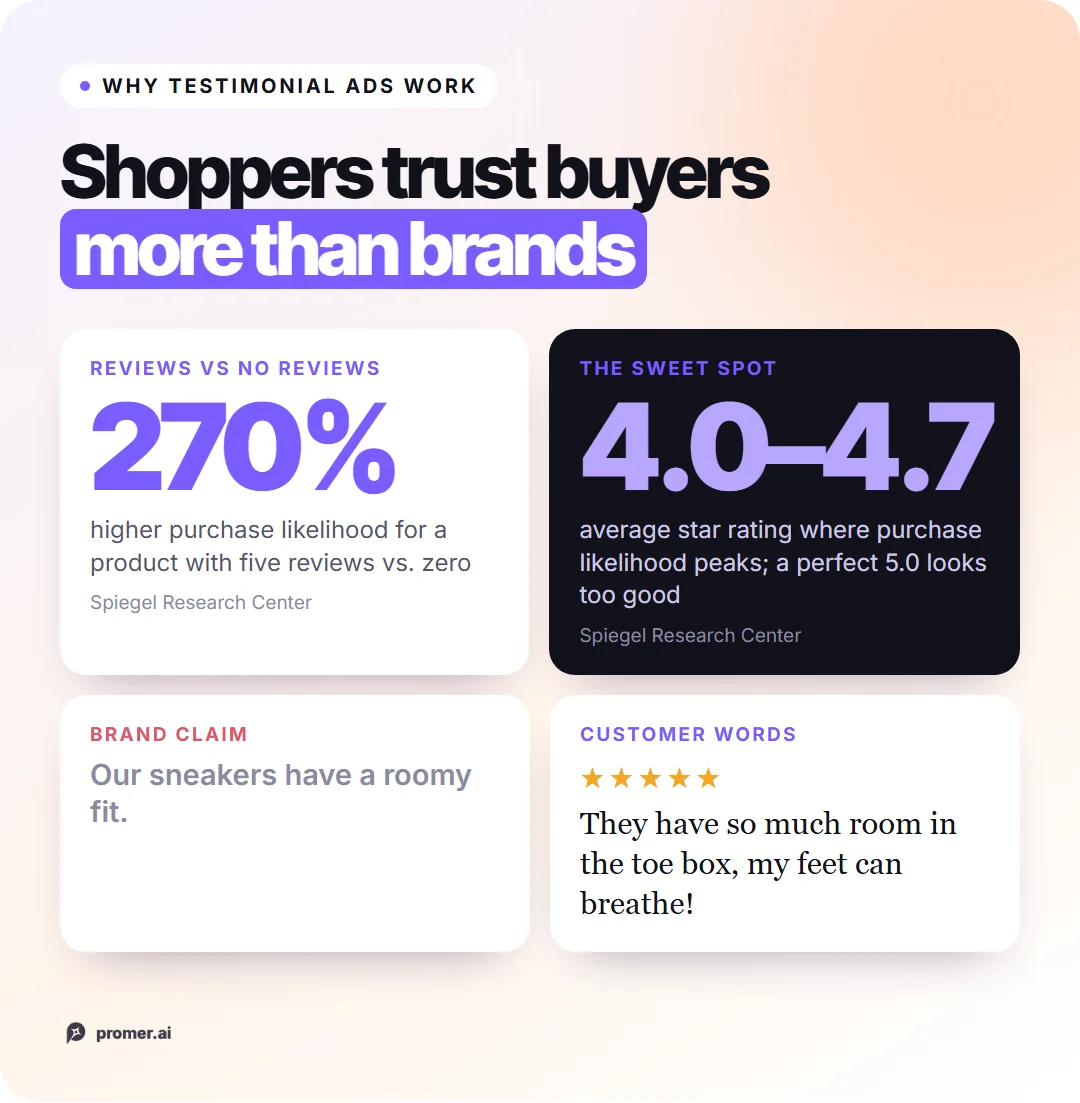
Testimonial ads work because shoppers trust other buyers more than they trust a brand's own claims.
According to Northwestern University's Spiegel Research Center, a product with five reviews is 270% more likely to be purchased than a product with no reviews.
The same Spiegel research found that purchase likelihood peaks at an average rating between 4.0 and 4.7 stars, because a perfect 5.0 can look too good to be true.
A testimonial ad moves that review proof out of the product page and into the first thing a shopper sees in the feed.
Testimonial ads also solve a creative problem: A real review often contains a better hook than anything a marketer would write, because it uses the words buyers actually use.
Note: Testimonial ads and UGC ads overlap but are not the same. A testimonial ad can be a static quote card with no creator at all, while a UGC ad is a creator-style video that may or may not quote a customer.
What Goes Into a Testimonial Ad?
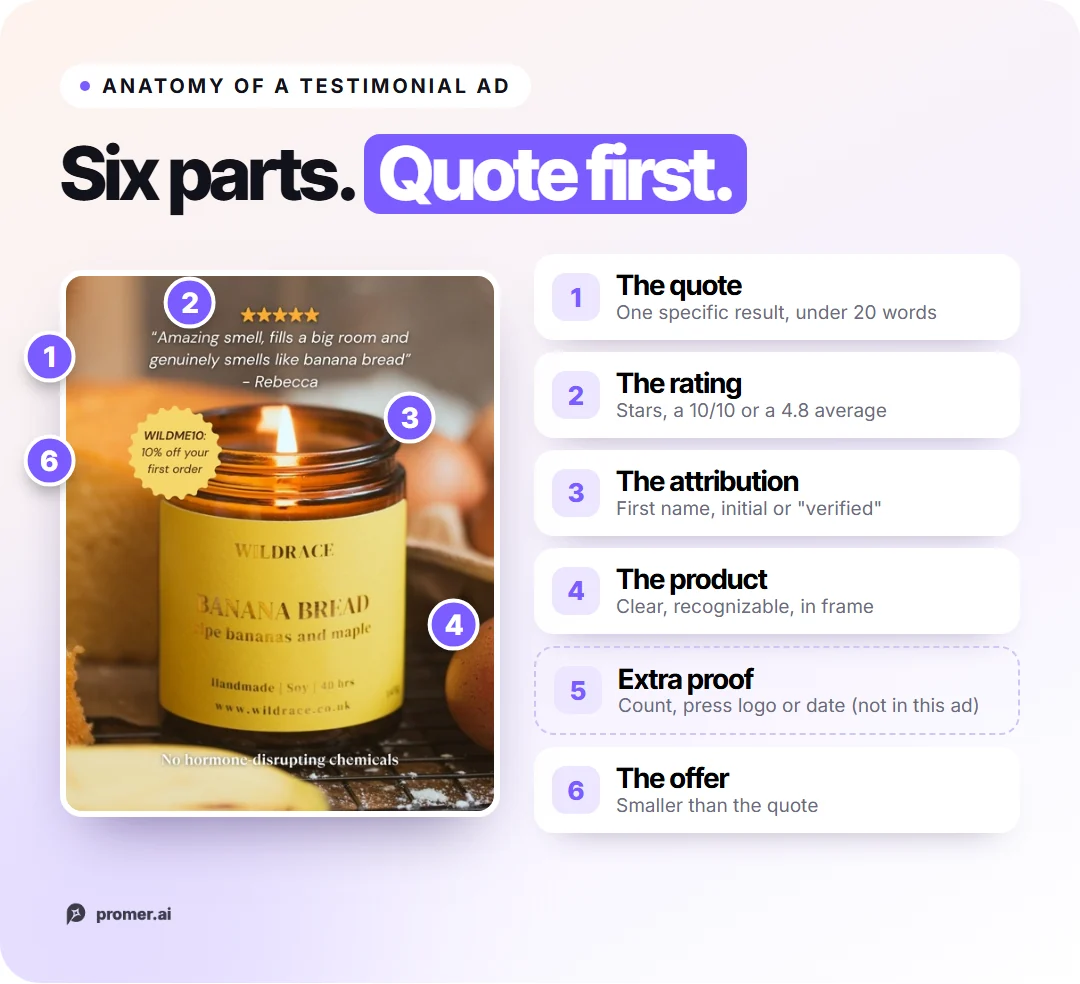
A testimonial ad has six parts, and the best examples below use four or five of them, never all six at full size.
The quote: One specific result in the customer's words, ideally under 20 words.
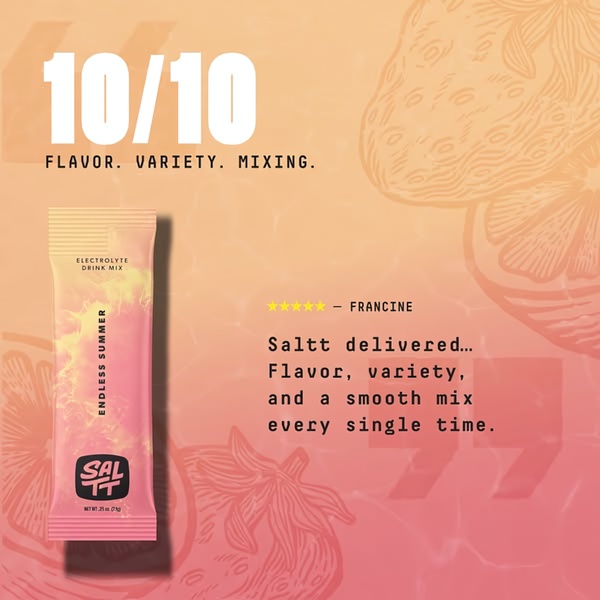
The rating: Stars, a score like 10/10, or an average like 4.8.
The attribution: A first name, initial, age or "verified customer" label.
The product: A clear shot, so the review attaches to something the viewer can recognize.
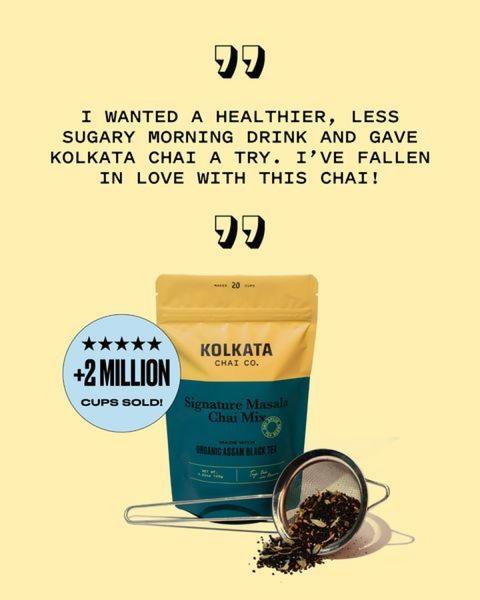
Extra proof: A customer count, press logo, date or before-and-after photo.
The offer: A discount or CTA, kept smaller than the quote.
Ratio decides how much of that fits on screen.
Placement
Ratio
Testimonial layout that fits
Facebook and Instagram feed
1:1 or 4:5
Quote card, review grid, screenshot
Stories, Reels and TikTok
9:16
Short quote over a full-bleed product shot, creator video
Carousel
1:1 or 4:5 per card
One review per card, offer on the last card
Most testimonial ads run on Meta, so an AI Facebook ad generator that exports 1:1, 4:5 and 9:16 versions of one design saves a full round of resizing.
Single-Quote Testimonial Ad Examples
A single-quote testimonial ad pairs one short customer review with one clear product shot, which makes it the easiest format to test first.
Every example in this article can be rebuilt for your own product with Promer AI's AI Ad Clone, which keeps the layout and swaps in your product, review and brand colors.
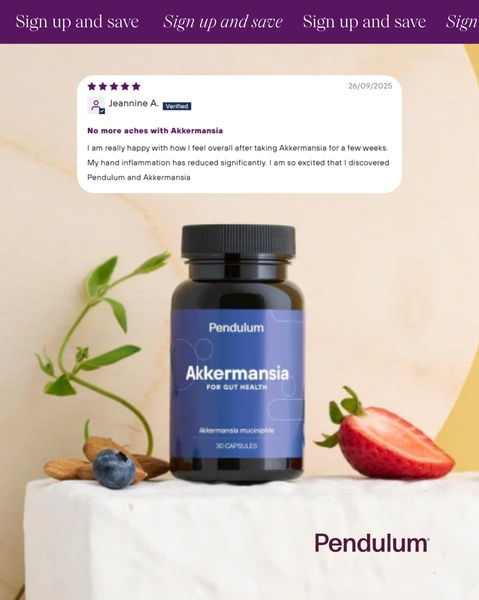
1. Verified review card above the bottle (gut health supplement)
A five-star quote, "Amazing smell, fills a big room and genuinely smells like banana bread," floats above a lit candle, with a 10% first-order code in a round sticker.
Why it works:
The review describes the smell, the one thing a photo cannot show.
The offer stays inside a small sticker, so the quote remains the hook.
Warm amber light matches the scent the customer describes.
Reuse it: Pick a review that describes a sense the photo can't show: smell, taste, texture or sound.
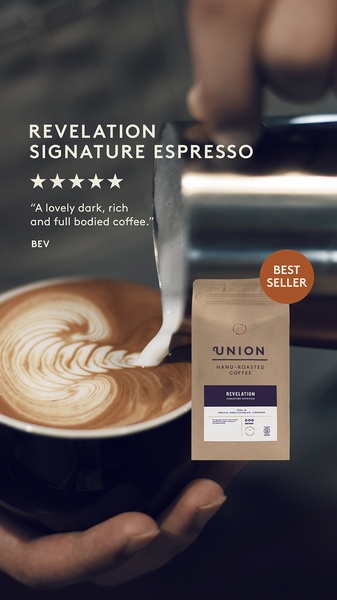
Five stars and a short "lovely dark, rich and full bodied coffee" review sit over a macro shot of a latte pour, with the bag and a "Best seller" badge below.
Why it works:
The taste words in the review match what the image shows.
The vertical layout leads the eye from stars to quote to bag.
The best-seller badge adds a second layer of proof.
Reuse it: For food and drink, put the review over the most appetizing moment, not over the pack shot.
Testimonial Ad Examples Where the Quote Is the Headline
A quote-as-headline testimonial ad makes the customer's sentence the biggest text in the frame, which works when the review is emotional, funny or surprising.
The format follows the single-hook principle explained in the guide to what makes a winning ad: One message, sized to be read first.
8. Six-month wear test as the headline (gold bracelets)
The quote "I love that I can carry a memory with me everywhere like the day I proposed to my wife" sits over two photos labeled "Your best memory" and "Your ring."
Why it works:
The quote sells personalization better than any feature list.
The captions turn the review into an instruction for the buyer.
The "Design yours now" button continues the same story.
Reuse it: For personalized products, quote the reason the customer bought, not the product quality.
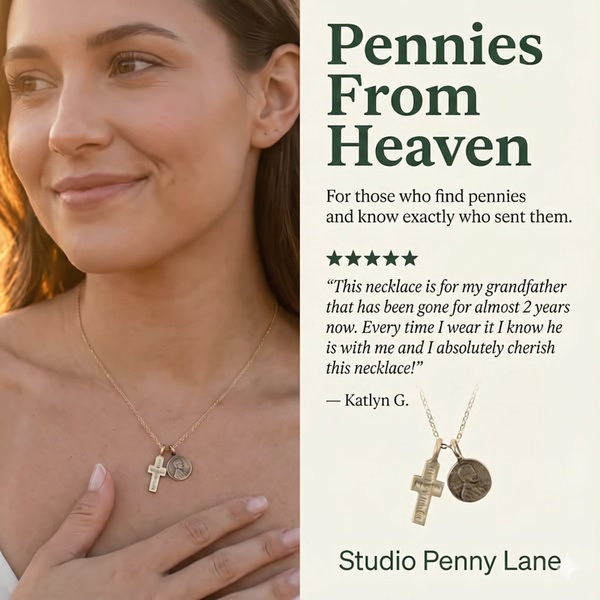
12. Gift-story review under an emotional headline (commemorative necklace)
Platform: Facebook, Instagram | Ratio: 1:1 | Format: Long review and headline
A model wears a coin pendant on the left, while the right side carries the headline "Pennies From Heaven," a one-line audience callout and a long five-star review about a grandfather.
Why it works:
A long review works here because every word adds emotion.
The headline speaks to a belief the audience already holds.
The product appears twice: Worn and as a cutout.
Reuse it: Long quotes need a quiet background and serif type to stay readable.
A screenshot-style testimonial ad shows a review inside a familiar interface, such as a chat, email, Instagram sticker or receipt, so the ad looks like proof someone forwarded.
Screenshot formats feel unpolished on purpose, which helps them blend into a feed full of posts from friends.
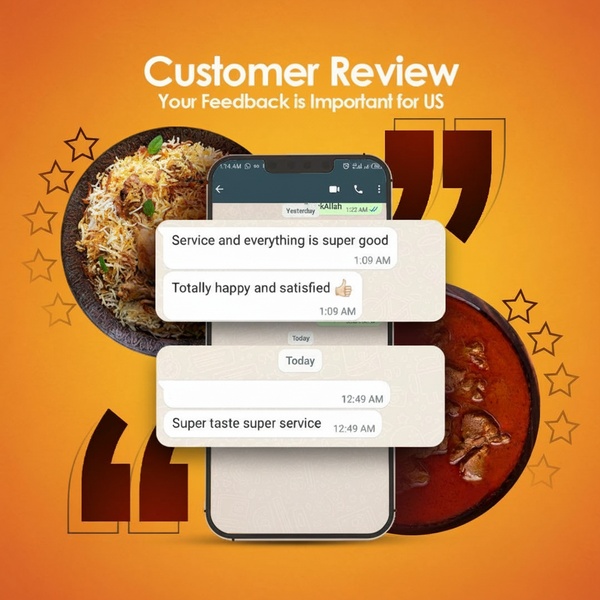
A phone mockup shows three short WhatsApp messages, such as "Service and everything is super good" and "Super taste super service," over a biryani bowl on orange.
Why it works:
Chat bubbles feel unfiltered, even though the brand chose them.
Timestamps make the messages look recent and real.
Short messages stay readable at feed size.
Reuse it: Screenshot real customer messages (with permission) instead of retyping them.
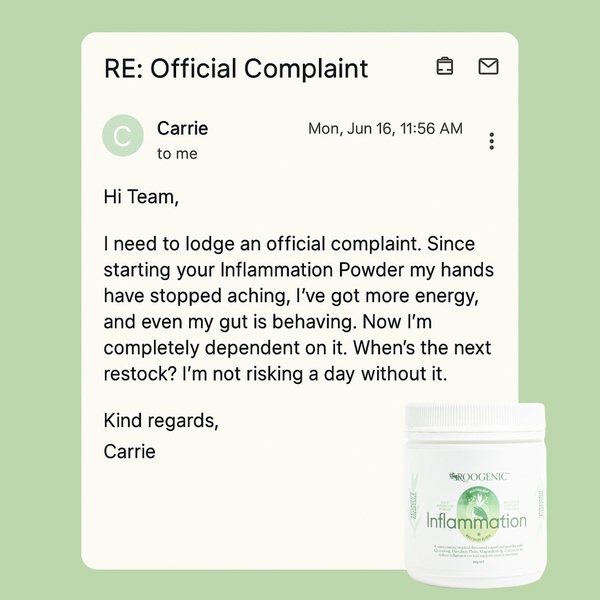
An email card with the subject "RE: Official Complaint" turns into praise: The customer's hands stopped aching, she has more energy, and she asks "When's the next restock?"
Why it works:
The subject line creates tension before the praise.
The body flips the complaint into a result.
"When's the next restock?" proves repeat purchase.
Reuse it: Use a support email or DM that ended well; the twist is the hook.
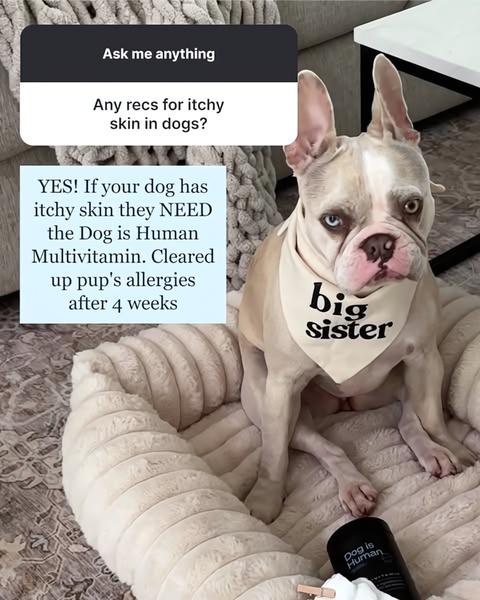
An "Ask me anything" sticker asks "Any recs for itchy skin in dogs?" and a caption box answers that the multivitamin "cleared up pup's allergies after 4 weeks."
Why it works:
The question is exactly what the target buyer types into search.
The answer gives a result and a timeframe.
The sticker looks native to Instagram Stories.
Reuse it: Turn the questions in your comments and DMs into the sticker, then answer with a review. An AI Instagram ad generator can lay out the sticker style in 4:5 and 9:16.
The headline "That's what she says!" sits next to a review card with the customer's photo, the name Eleanor F. and five stars, layered over a phone showing the product.
Why it works:
A real face next to the quote raises trust.
The playful headline keeps the tone light.
The card mimics an app review, a format shoppers already trust.
Reuse it: Ask happy customers for a photo when you ask for permission to use their review.
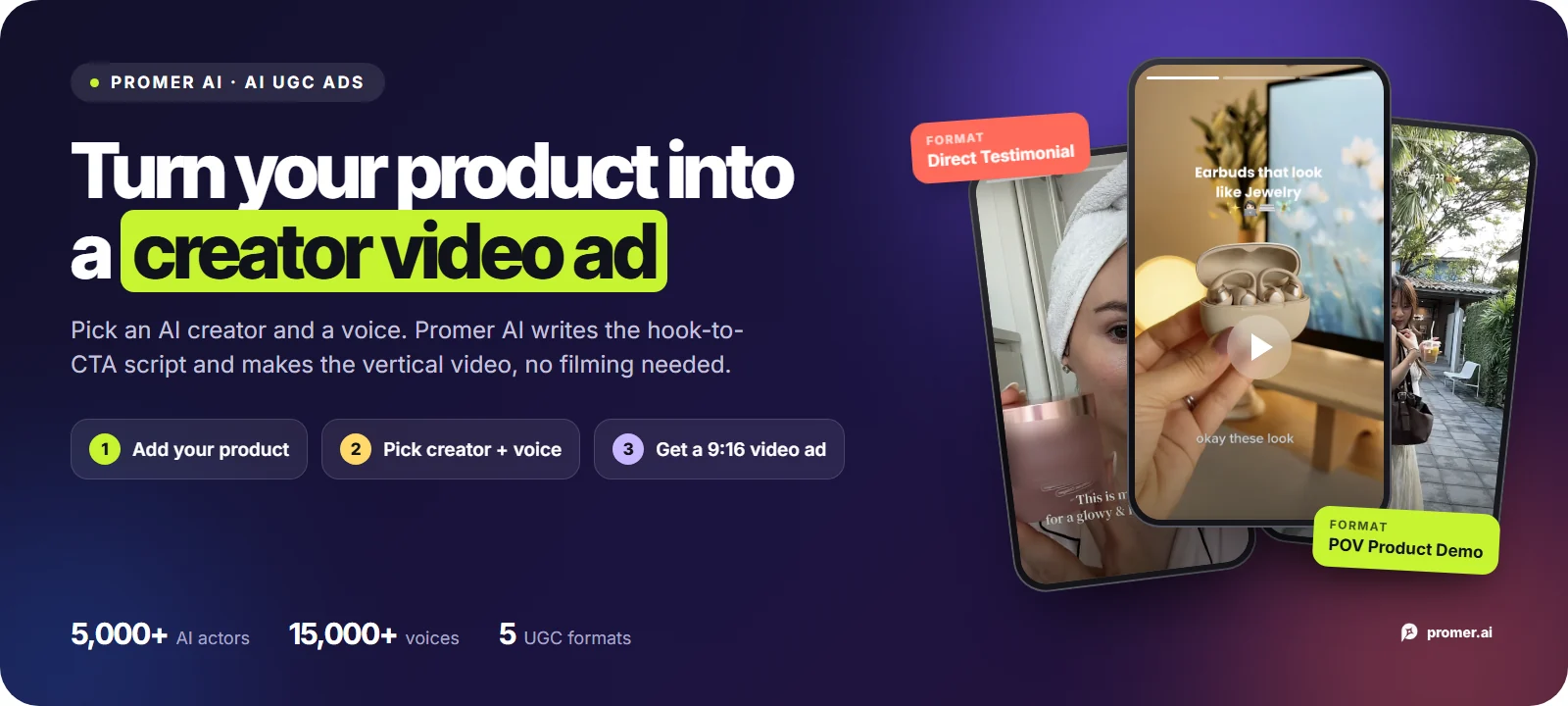
No creator for a video testimonial? Promer AI's AI UGC Ads has Direct Testimonial and Voiceover Product Review formats that turn a product photo and your customer's words into a 9:16 creator-style video.
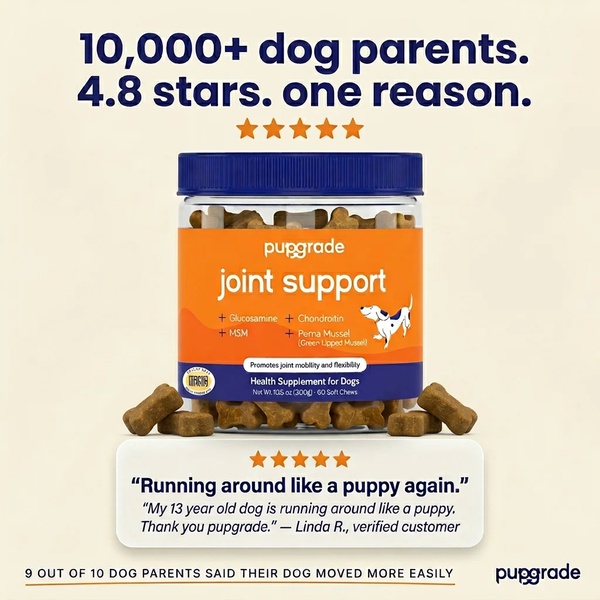
"10,000+ dog parents. 4.8 stars. One reason." heads the ad, followed by the jar, the quote "Running around like a puppy again" from a verified customer, and a footer stat.
Why it works:
The count gives volume and the quote gives a face.
A 4.8 average looks more believable than a perfect 5.0.
The footer stat adds a third layer without crowding the frame.
Reuse it: Only use a count or average you can prove from your store data.
Pro tip: A count like "10,000+ customers" is a claim, not a review. Keep the number in your order or review data so you can back it up if Meta or a customer asks.
Before-and-After Testimonial Ad Examples
A before-and-after testimonial ad shows the customer's result next to their starting point, so the viewer sees the proof instead of reading it.
The format needs care: Meta's advertising standards restrict before-and-after images for weight loss and other health and appearance claims, which is why the two examples below use a pet and a handwritten sign.
22. Day 1 vs Day 60 polaroids (dog itch treats)
Platform: Facebook, Instagram | Ratio: 1:1 | Format: Before and after
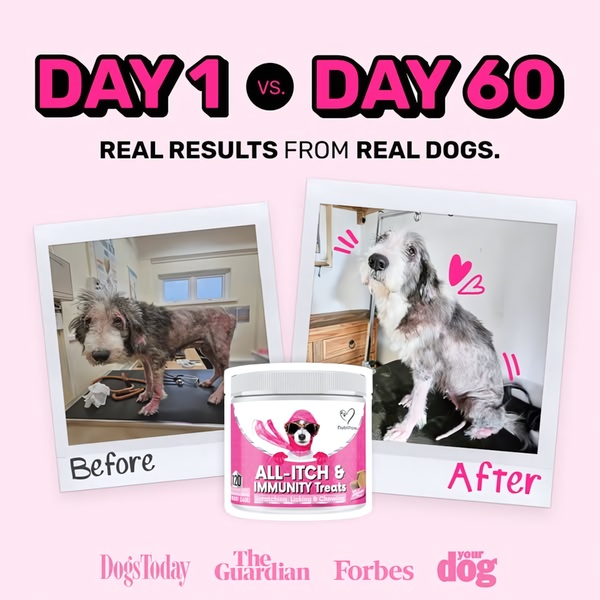
Two polaroid photos of the same dog are labeled "Before" and "After," under the headline "Day 1 vs Day 60: Real results from real dogs," with press logos along the bottom.
Why it works:
The same subject in both photos makes the change obvious.
"Day 60" sets an honest timeline.
Press logos add a second proof layer under the photos.
Reuse it: Use customer photos taken in the same spot and light, and state the real time between them.
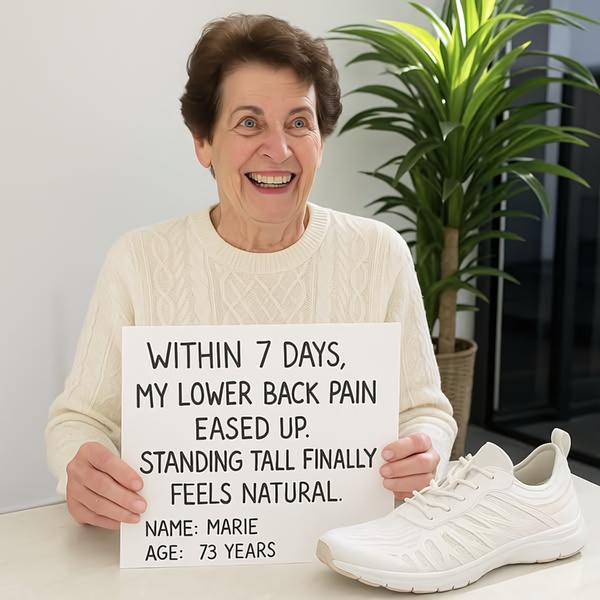
A smiling 73-year-old woman holds a sign that reads "Within 7 days, my lower back pain eased up" with her name and age, while the white sneaker sits beside her.
Why it works:
Handwriting feels personal and unscripted.
Name and age let older buyers see themselves.
The product stays in the frame next to the person.
Reuse it: Keep the result modest and true for that customer, and avoid medical promises in your own copy.
A press or expert testimonial ad quotes a magazine, an industry expert or a news-style story, so the proof comes from an authority instead of an everyday buyer.
Authority quotes work well for premium products and skeptical categories, where one trusted name outweighs many anonymous reviews.
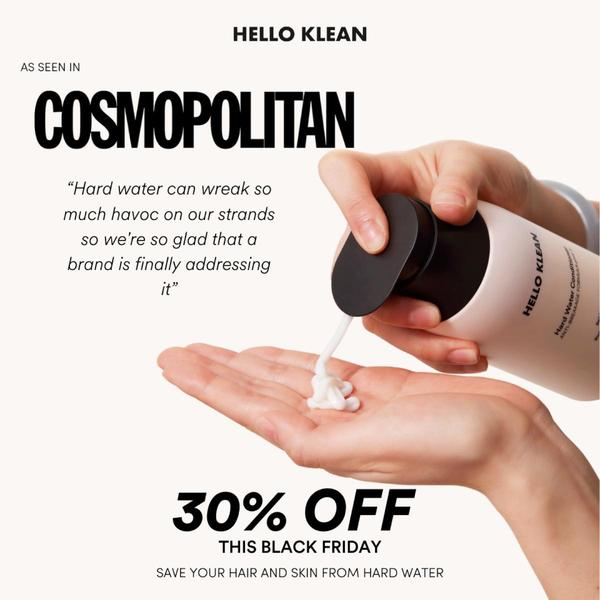
24. "As seen in" magazine quote (hard water conditioner)
A large magazine logo sits under "As seen in," followed by an italic quote about hard water damage, a hand holding the conditioner and a Black Friday "30% off."
Why it works:
The press quote names the exact problem the product solves.
The offer sits below the proof, not above it.
One logo does more than a row of small ones.
Reuse it: If you have one strong press mention, give it the whole ad.
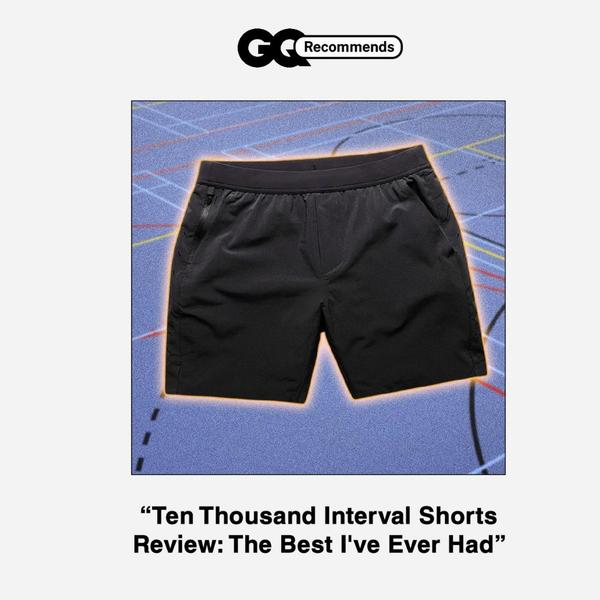
A men's magazine "Recommends" badge sits at the top, the shorts glow in a framed product shot, and the headline quotes the review title: "The best I've ever had."
Why it works:
The badge borrows trust from a publication readers know.
The quoted review title works as a headline.
A clean product shot keeps the focus on the shorts.
Reuse it: Quote the headline of a press review, not a line buried in the article.
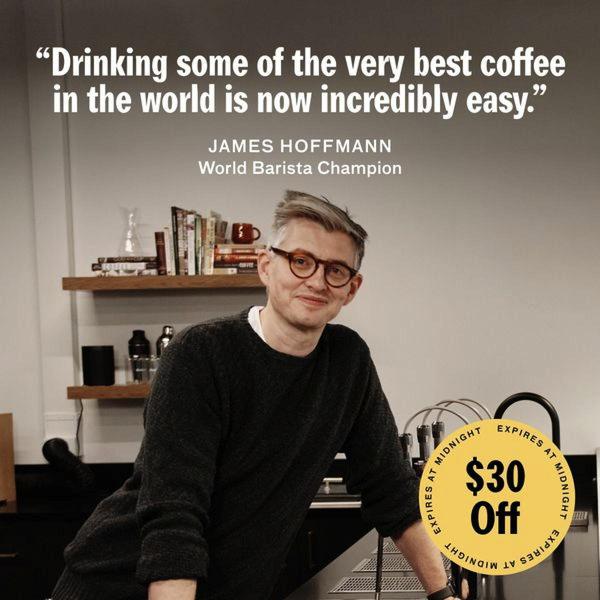
A world barista champion's quote, "Drinking some of the very best coffee in the world is now incredibly easy," sits over his portrait with his name and title, next to a "$30 off, expires at midnight" badge.
Why it works:
The title under the name explains why the quote matters.
The quote answers the main objection: Ease of use.
The deadline badge adds urgency without hiding the face.
Reuse it: Put the expert's credential directly under their name, every time.
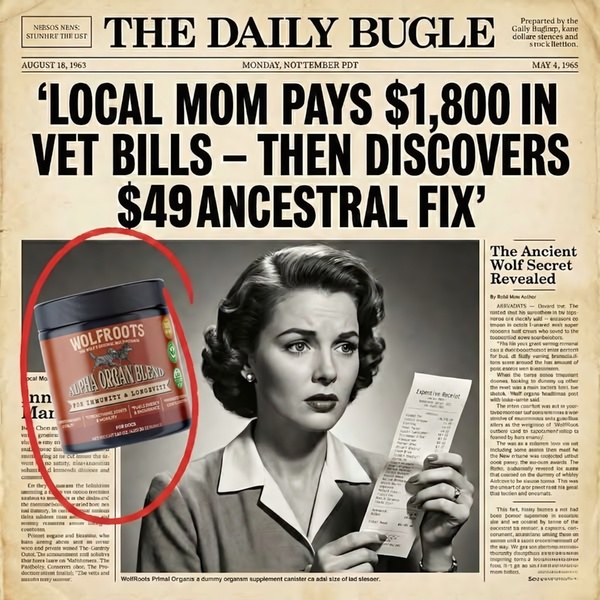
Platform: Facebook, Instagram | Ratio: 1:1 | Format: Editorial story
A 1960s-style front page reads "Local mom pays $1,800 in vet bills, then discovers $49 ancestral fix," with a red circle drawn around the supplement jar.
Why it works:
The headline tells a customer story with a clear cost contrast.
The sepia page stands out in a colorful feed.
The red circle points straight at the product.
Reuse it: Use an invented masthead, never a real newspaper's name, and keep the story true to a real customer.
Watch out: News-style ads can look like fake news if they imitate a real outlet or invent a story. Meta can reject ads that use misleading formats, so keep the masthead fictional and the claim real.
How to Pick a Review That Sells?
A review that sells names one specific result, gives a timeframe, and answers a doubt the buyer already has.
Use this checklist when you scan your store reviews, support emails and comments:
A specific result: "My feet can breathe" beats "Great shoes."
A timeframe: "After 4 weeks" or "in 6 months" makes the result believable.
An objection answered: Fit for shoes, taste for supplements, smell for candles.
The customer's own words: Keep slang, emojis and exclamation marks.
Under 20 words: Trim with "..." but never change the meaning.
A real name or initial: "Linda R., verified customer" beats "Happy customer."
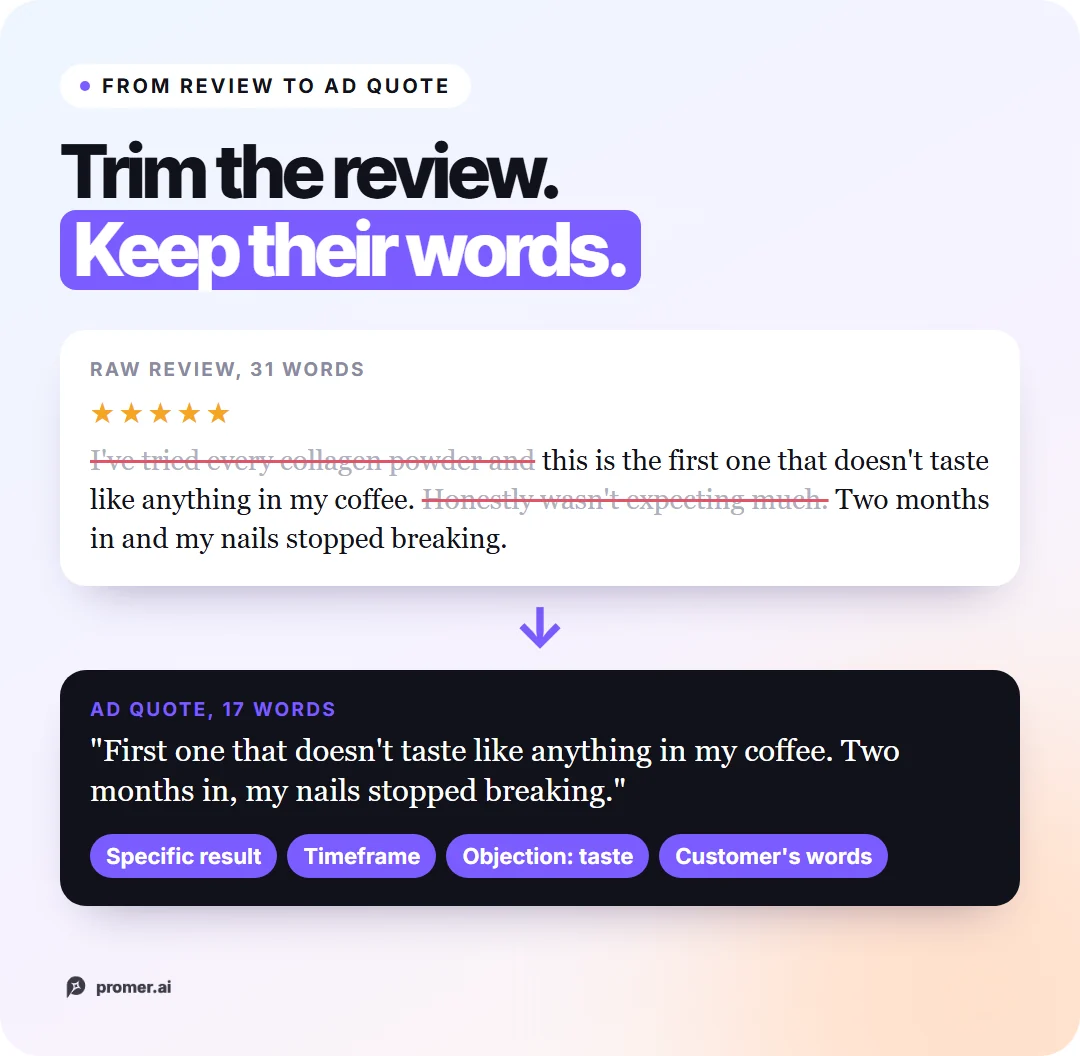
For example, the 31-word review "I've tried every collagen powder and this is the first one that doesn't taste like anything in my coffee. Honestly wasn't expecting much. Two months in and my nails stopped breaking" becomes a 17-word ad quote that keeps the result, the timeframe and the taste objection.
Test three to five different quotes in the same layout, then keep the winner; the guide to ad creative testing explains how to set up that test.
How to Make a Testimonial Ad With AI?
AI can build the layout, product visuals and video for a testimonial ad in minutes, while the words still come from real customers.
Promer AI offers three ways to do it:
Start from a winning layout: Use any example above as the reference in AI Ad Clone, upload your product and paste your customer review.
Generate new concepts: In Promer AI's AI Ad Concept, choose the Testimonial creative theme to get several testimonial-led concepts with headlines and overlay text for your product.
Make a video: In AI UGC Ads, pick the Direct Testimonial or Voiceover Product Review format, choose an AI actor and voice, and edit the script so it uses your customer's real words.
Watch out: An AI actor reading a script is not a customer. Don't present an AI-generated person as a real buyer; use the AI actor to deliver real review quotes, or frame the video as a product review rather than a personal testimonial.
Testimonial Ad Rules: What the FTC and Meta Allow
Testimonial ads in the US must follow the FTC's rule on consumer reviews and testimonials, which took effect on October 21, 2024, and Meta's advertising standards.
The FTC rule bans these practices:
Fake testimonials: Reviews from people who don't exist, including AI-generated reviewers, or that misrepresent the reviewer's experience.
Bought reviews: Paying or rewarding customers for reviews that must be positive.
Hidden insider reviews: Reviews from employees or relatives without disclosing the connection.
Suppressed reviews: Threatening or pressuring customers to remove negative reviews.
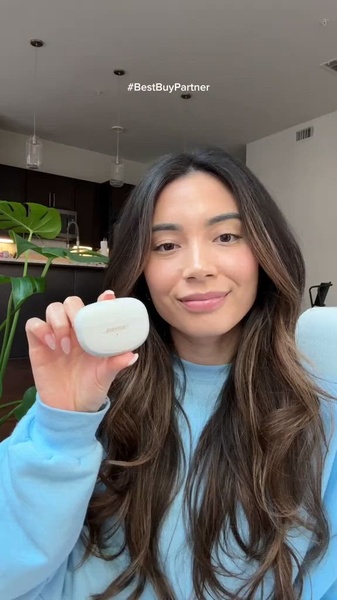
The FTC's Endorsement Guides add that paid creators and partners must disclose the relationship, which is why the creator video example carries a partner tag.
Meta's advertising standards add restrictions on before-and-after images and on claims about weight loss, health and appearance, so supplement, beauty and fitness brands should keep results modest and avoid body comparisons.
Always ask the customer for permission before using their name, photo or words in a paid ad.
Common Testimonial Ad Mistakes
The most common testimonial ad mistake is using vague praise that could describe any product.
Vague quotes: "Amazing product!" gives the viewer nothing to believe.
A missing product: A quote with no product in frame builds trust for nobody.
Too much text: More than five reviews in one image turns into a wall.
A perfect 5.0 everywhere: A 4.6 to 4.8 average often looks more honest.
The offer above the proof: Lead with the review, then the discount.
Edited words: Rewriting a review into marketing copy makes it sound fake and can mislead.
FAQ
What is the difference between a testimonial ad and a UGC ad?
A testimonial ad is built around a customer's review, rating or story, and can be a static image with no person in it. A UGC ad is creator-style content, usually a video, that may or may not quote a real customer.
What is the best format for a testimonial ad?
The single-quote format is the best first test because it needs only one review and one product photo. Once a quote wins, try the same quote as a headline, a screenshot or a video.
How long should a testimonial quote be in an ad?
A testimonial quote in a static ad should stay under about 20 words so it reads at feed size. Longer quotes can work when the story is emotional and the background is quiet, like the commemorative necklace example.
Can I use AI to make testimonial ads?
AI can design the layout, product shots and video for a testimonial ad, but the testimonial itself must come from a real customer. The FTC rule that took effect in October 2024 bans AI-generated fake reviews.
Do I need permission to use a customer review in an ad?
Ask for permission before using a customer's name, photo or words in a paid ad, even if the review is public on your store. Written consent also protects you if the customer later asks you to remove it.
Which ratio should I use for testimonial ads?
Use 1:1 or 4:5 for Facebook and Instagram feed placements and 9:16 for Stories, Reels and TikTok. Keep the quote inside the center of a 9:16 frame so app buttons don't cover it.
Sources
Federal Trade Commission, final rule banning fake reviews and testimonials (2024): https://www.ftc.gov/news-events/news/press-releases/2024/08/federal-trade-commission-announces-final-rule-banning-fake-reviews-testimonials
Federal Trade Commission, Guides Concerning the Use of Endorsements and Testimonials in Advertising: https://www.ftc.gov/legal-library/browse/rules/guides-concerning-use-endorsements-testimonials-advertising
Spiegel Research Center, How Online Reviews Influence Sales: https://spiegel.medill.northwestern.edu/how-online-reviews-influence-sales/
Meta Advertising Standards: https://transparency.meta.com/policies/ad-standards/
Nana Phan has 16 years of experience across marketing, ecommerce, and SaaS, including running her own dropshipping business and nearly 8 years at FireGroup working on products for online merchants. Her experience spans both selling online and building software for the people behind those businesses.
As Head of Growth at Promer AI, she works across customer research, product, and marketing. She writes about ecommerce growth, ad creative, and practical applications of AI, informed by firsthand experience and conversations with merchants about the challenges they face.
You may also like
25+ Testimonial Ad Examples for Ecommerce Brands
Real testimonial ad examples from ecommerce brands, why each layout works, and how to turn your own customer reviews into ads that build trust and sell.