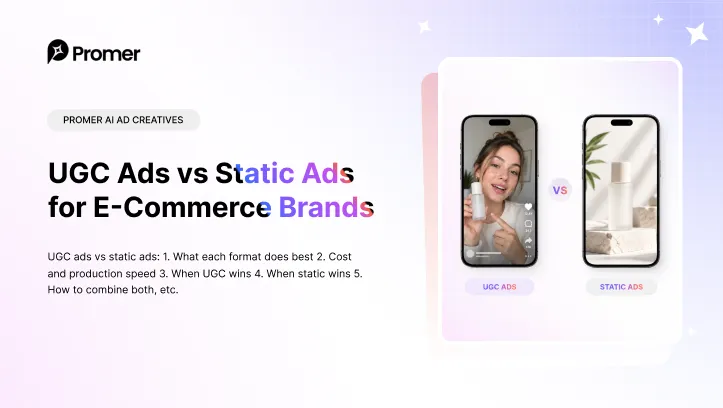
Learn how to make ads for dropshipping products - static and video - and adapt each creative by channel: Shopify, Meta, Pinterest, and TikTok.
Most dropshipping stores lose money on ads before they lose money on anything else, and the real question isn't what to spend - it's how to make ads for dropshipping products that hold up past the first test.
The fastest fix is not a bigger budget - it is a repeatable process for turning one product into multiple channel-ready creatives.
This article covers how to make ads for dropshipping products using two creative formats - static and video - and how to adapt the same product into the different ratios and styles each distribution channel actually rewards.
Dropshippers test dozens of products a month, and hand-designing a new ad set for each one does not scale.
Key Takeaways
Dropshipping ads come in two formats: static image ads and video ads, and most winning campaigns eventually need both.
Each distribution channel - Meta, TikTok, Pinterest, Google Shopping - rewards a different ratio and creative style. The same product photo cannot be reused unchanged across all four.
Promer AI builds the static ad from your product page using AI Ad Concept and AI Ad Clone, then AI Ad Animation turns that static creative into a short video for Stories, Reels, or TikTok.
Test more than one creative angle per product before judging a product dead - a single static image gives you nothing to compare against.
What You Need Before Starting?
You need a product URL (Amazon, Shopify, or any store page works) or a clear product photo. Promer AI reads a product URL directly and pulls the product image, name, description, and price automatically - no manual data entry.
If you are uploading an image instead of a URL, use a clear, high-resolution shot with the full product in frame and a clean background. Blurry or cluttered source images produce weaker ad concepts, since the AI is analyzing what is actually in the photo.
Decide upfront which channel you are advertising on first. Meta and Google Shopping call for a different visual approach than Pinterest or TikTok, and knowing the primary channel changes which ratio and style you generate first.
Step 1: Turn the Product Into a Creative Direction
Static ads for dropshipping start with a creative angle, not a design. Promer's AI Ad Concept feature reads the product page and generates an analysis layer - product highlights, ideal customer, pain point, and need - before it generates a single image.
From that analysis, you pick a creative theme (Before & After, Feature & Benefit, Offer & Sale, Problem & Solution, and others) and a mood (Urgency, Eye-catching, Storytelling). The output is several concept directions, each with its own target audience and core idea, so you are choosing between real angles instead of staring at a blank canvas.
This step matters most for dropshipping specifically because product testing means testing angles, not just products. A kitchen gadget might win on "Feature & Benefit" for one audience and "Problem & Solution" for another - you will not know which until you have both to test.
Step 2: Clone a Winning Structure Instead of Starting Blank
If you already know what works in your niche - from a competitor ad, a saved reference, or Promer's own Winning ads library of 6,000+ top-performing ads - AI Ad Clone recreates that structure with your own product.
You select your product, then select the reference ad. AI analyzes both and auto-suggests a headline, body text, and CTA, all editable individually. This is the faster path for dropshippers who have already identified a proven format in their niche and just need it applied to a new SKU.
The difference between AI Ad Clone and AI Ad Concept is direction versus recreation. AI Ad Concept helps you find an angle when you do not have one yet. AI Ad Clone applies a structure you already trust.
Step 3: Adapt the Static Ad by Distribution Channel
This is the step most dropshippers skip, and it is the one that quietly wastes the most spend. Each dropshipping sales channel rewards a different creative shape, not just a different targeting setup.
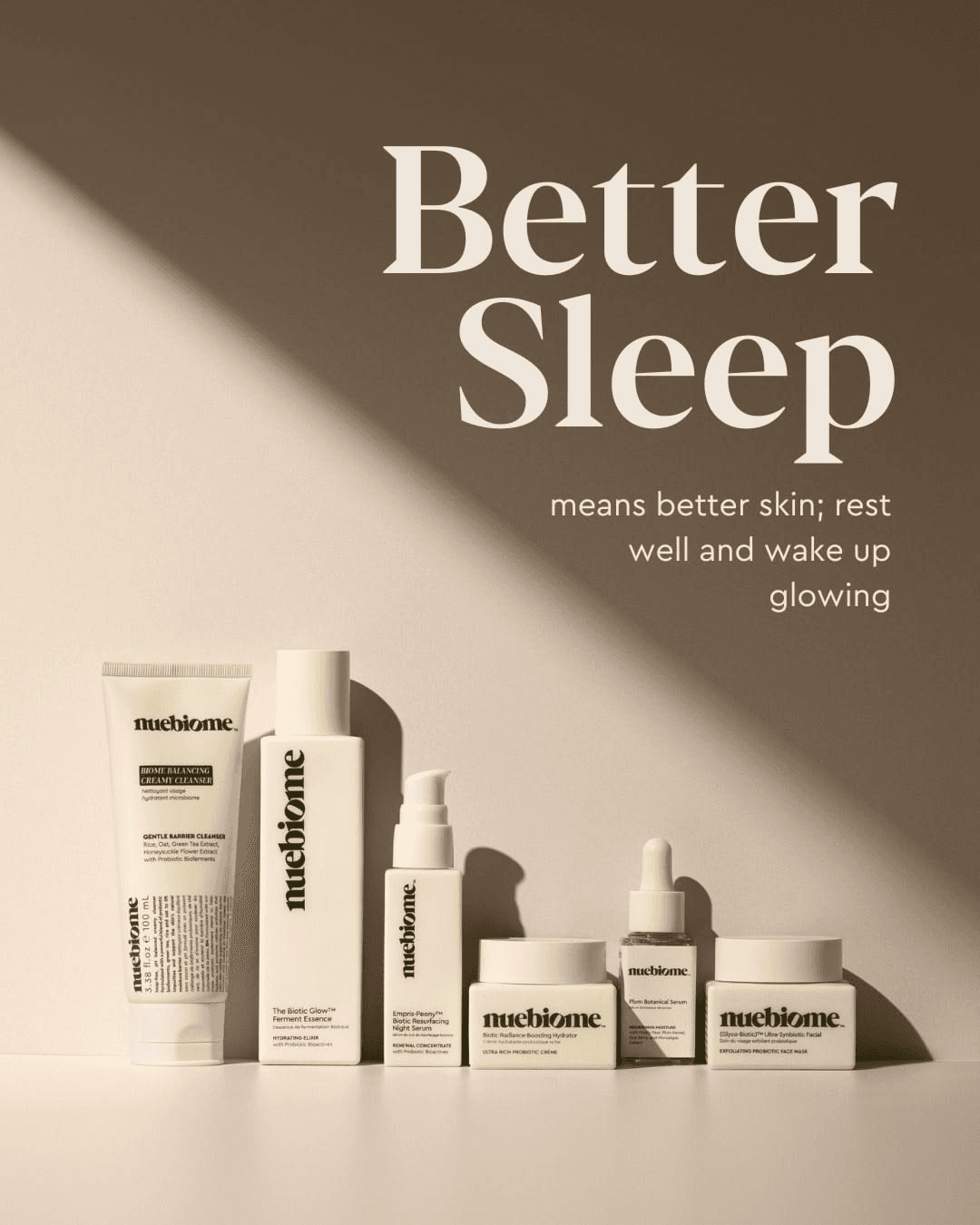
Meta (Facebook and Instagram) feed placements use a 1:1 or 4:5 ratio, with the product shown clearly and early Promer's AI Instagram ad maker outputs creatives pre-sized to this ratio automatically.. Stories and Reels placements need 9:16 instead - a feed-shaped image gets cropped or bordered with black bars if reused as-is.
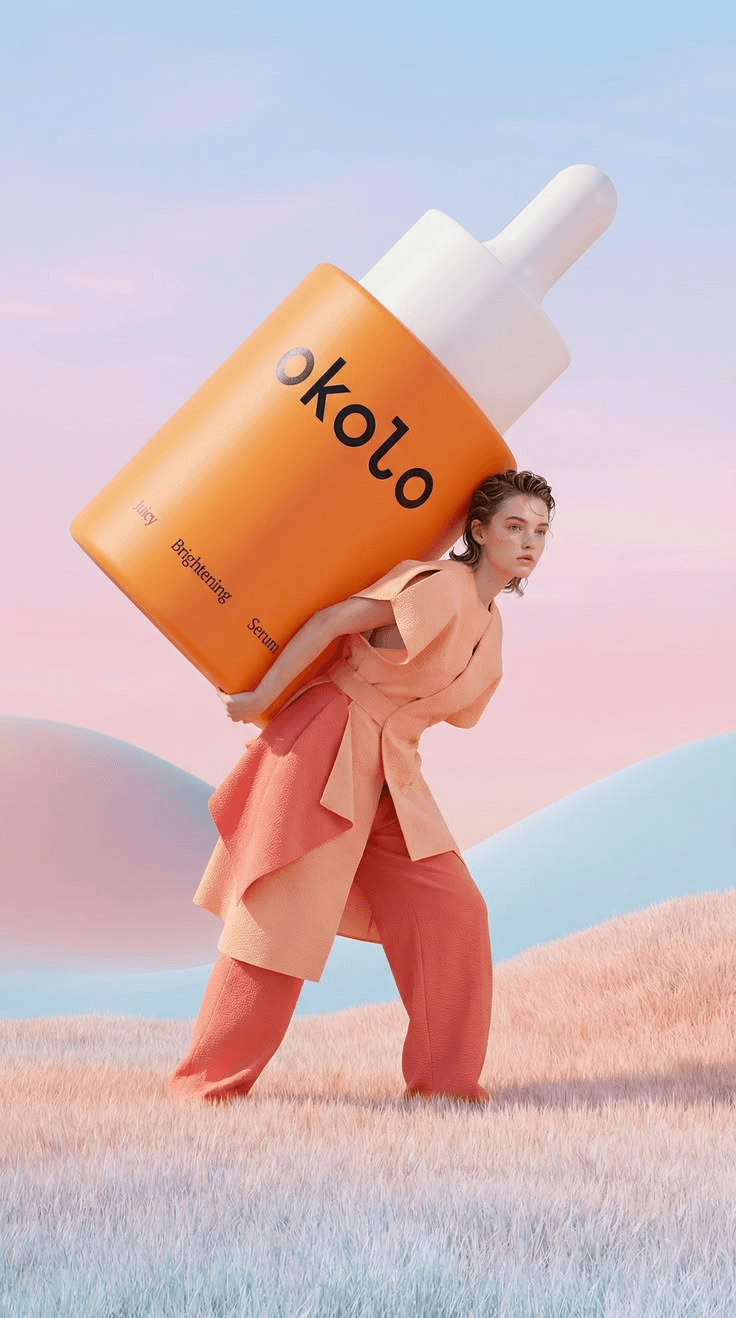
Pinterest runs on a different visual grammar. Pinterest's own creative guidance calls for a vertical 2:3 ratio and recommends keeping the product visibly the focus while showing it in a realistic setting, rather than a plain cutout shot or an abstract lifestyle image that doesn't showcase the product (Pinterest Business, n.d.). Promer AI doesn't generate a native 2:3 preset today, so a Pinterest version typically means exporting and cropping an existing 4:5 or 9:16 creative - worth checking the current ratio list in-app before assuming it's covered automatically.
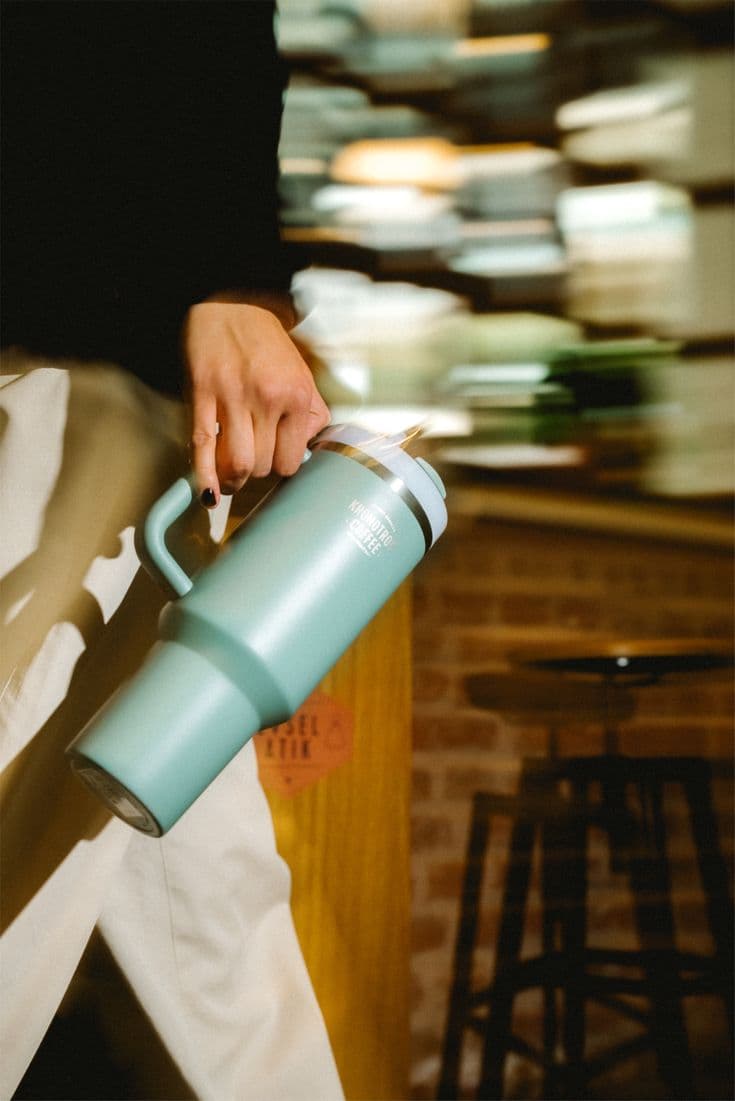
TikTok placements are 9:16 by default and favor a rawer, less polished look than Meta feed ads. A highly designed static ad can look out of place next to organic TikTok content.
Google Shopping and Display use 16:9 or 1.91:1, and the image needs to work with less overlay text since the platform adds its own price and title elements around the creative.
Promer AI generates in the platform-ready ratios each of these channels needs (1:1, 4:5, 9:16, 16:9, 1.91:1, and more) directly from the same product analysis, so the ratio changes without redoing the creative direction from scratch. You are adapting one winning angle across channels, not designing four separate ads.
Step 4: Turn the Static Ad Into a Video Ad
Once a static creative is working - or even before you know if it will - turning it into a short video ad extends its reach into Stories, Reels, and TikTok placements where video is the default format. If you're weighing whether a product needs a video ad at all, static vs video ads breaks down when each format actually earns its cost.
AI Ad Animation takes a static creative you already generated (or an uploaded image) and turns it into an 8-second video using AI-suggested animation scripts. Each script suggestion includes a tag, a brief, and an effect, so you are picking from real motion directions rather than guessing what movement fits the product.
Ratio matters here too. 9:16 or 16:9 source images animate cleanly; 1:1 or 4:5 images can end up with black bars in a vertical video placement, so it helps to plan the ratio before generating the animation, not after. For a fuller video-specific workflow - hooks, scripting, and dropshipping-specific pacing - see how to make video ads for dropshipping.
What Good Output Looks Like?
A finished dropshipping ad set, done well, is not one image. It is one product analysis (highlights, ideal customer, pain point, need) expressed as several creative variations, each generated in the ratio its target channel actually uses, with at least one static-to-video pairing if you are running Stories, Reels, or TikTok placements.
The headline, body text, and CTA should read specific to the product, not generic ("Save 20% today" instead of a vague "Shop now"). If the overlay text could apply to any product in your store, the concept step was skipped or rushed.
Common Mistakes When Creating Ads For Dropshipping Products
The most common mistake is reusing one square image across every channel. A 1:1 Meta feed image cropped into a Pinterest 2:3 slot loses the top and bottom of the product shot, and the same image squeezed into TikTok's 9:16 leaves visible bars on both sides.
The second common mistake is testing only one creative angle per product and treating a single result as the final verdict. A single static image gives you nothing to compare against, so a weak result could be the angle, the audience, or the offer - there's no way to isolate which.
The third mistake is treating video as optional. Short-form video placements (Reels, TikTok, Stories) now carry a meaningful share of dropshipping ad spend, and a store running static-only creative is not present in those placements at all.
Summary
How to make ads for dropshipping products comes down to 3 repeatable moves: turn the product into a creative direction (or clone a structure you already trust), adapt that creative into the ratio each channel actually rewards, and extend the static winners into short video for the placements where video is the default. The workflow, not the individual ad, is what needs to scale.
FAQs About How to Make Ads for Dropshipping Products
Do I need different ads for every dropshipping platform, or can I reuse one creative?
You need the same core creative direction adapted into different ratios, not four unrelated ads. Meta feed wants 1:1/4:5, Stories/Reels/TikTok want 9:16, Pinterest wants 2:3, and Google Display wants 16:9/1.91:1. Reusing one unadapted image across all of them typically means cropping or black bars on at least two of the four.
Should dropshipping ads be static images or video?
Most winning dropshipping campaigns eventually use both. Static ads are faster to test a new product or angle; video ads extend reach into placements like Reels and TikTok where video is the default and often better-performing format. Starting static and animating the winner is a common, efficient sequence.
How many ad creatives should I test per dropshipping product?
More than one, at minimum - a single creative gives you no comparison point, so a weak result could be the product, the angle, or the audience, and you can't tell which. Exact creative counts vary by budget and platform, so treat this as a floor, not a fixed target.
Does Promer AI guarantee my dropshipping ads will convert?
No. Promer AI builds ad concepts and creatives with stronger performance logic and structure, based on product context and proven formats, but it does not guarantee ROAS or conversion lift. AI-generated creatives should be reviewed before running, and results still depend on product-market fit, offer, and landing page.
Can I make ads for a dropshipping product without a product photo, just a store link?
Yes. Promer AI can start from a product URL - Amazon, Shopify, or any store page - and automatically extracts the product image, name, description, and price. Uploading your own image directly also works if you prefer a specific photo, as long as it is clear and high-resolution.
What's the difference between AI Ad Clone and AI Ad Concept for dropshipping products?
AI Ad Concept helps you find a creative angle when you don't have one yet, generating a product analysis and multiple concept directions to choose from. AI Ad Clone recreates the structure of a specific ad you already trust - your own past winner, a competitor's ad, or one from the Winning ads library - applied to your product.
Do Pinterest ads for dropshipping need a different creative style than Facebook ads?
Yes. Pinterest's own guidance calls for a vertical 2:3 ratio and recommends keeping the product visibly the focus in a realistic setting, rather than a plain cutout shot (Pinterest Business, n.d.), while Meta feed placements are typically more product-forward at 1:1 or 4:5. Promer AI doesn't output a native 2:3 preset yet, so a Pinterest version usually means exporting and cropping an existing creative rather than generating one directly.



![How to Create Instagram Ads with AI? [Static & Video Ads]](https://static.promer.ai/blogs/how-to-create-instagram-ads-with-ai-723-x-423-thumbnail-20260916T033026Z-3c56f1.webp)