Static vs Video Ads: Which Format Should Ecommerce Brands Test First?
Static vs video ads is not a question of which format is always better. Static ads are usually better for fast hook and angle testing, while video ads are usually better for demonstrating motion, use cases, and emotional proof. The stronger choice depends on your product category, creative volume, and how clearly the offer can be explained in one frame.
For ecommerce advertisers, the real decision is not static or video in isolation. The real decision is which format gives your team the fastest path to validated hooks, repeatable concepts, and fresh creative before fatigue hurts performance.
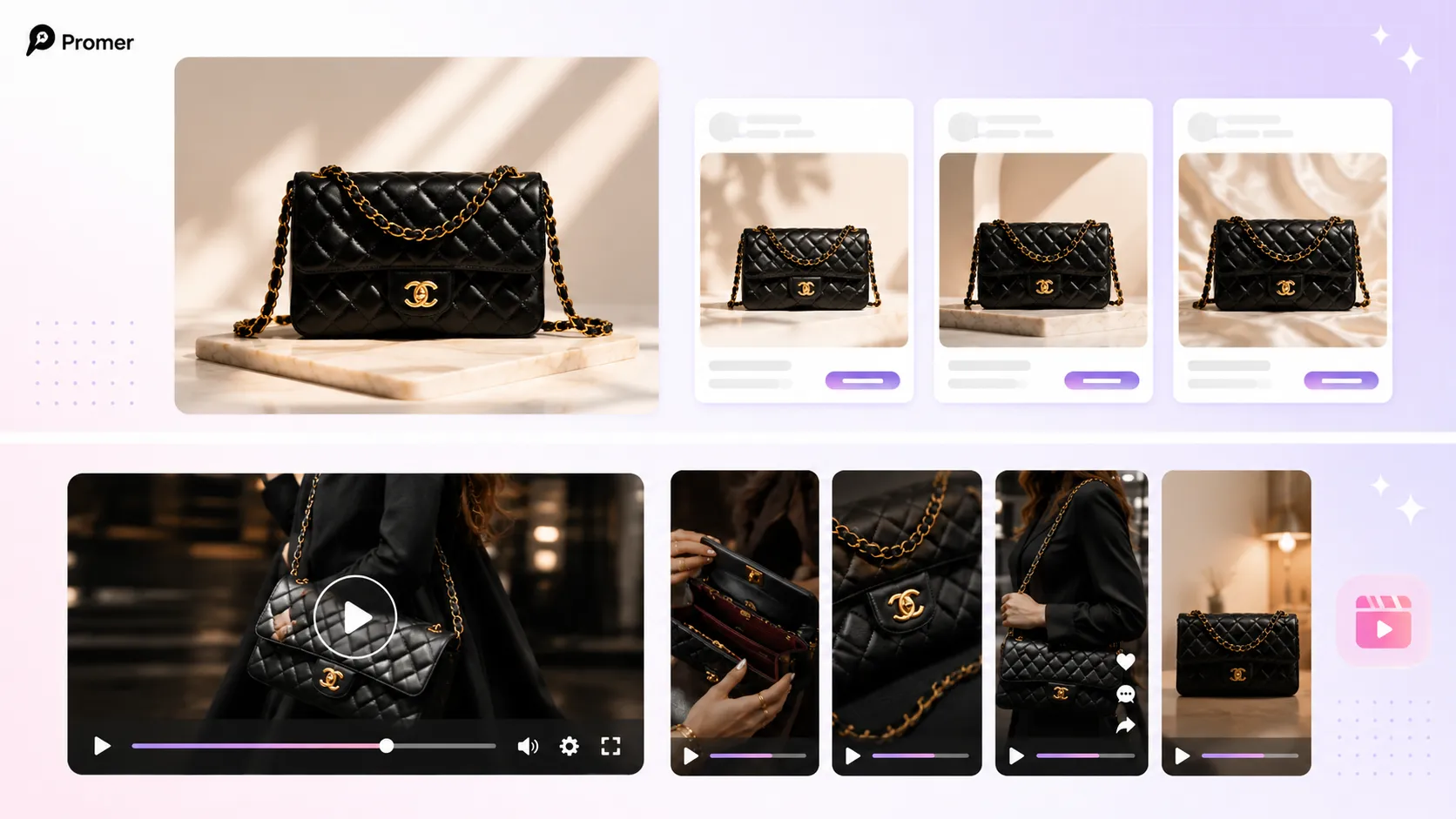
This article breaks down how static and video ads differ in practice, when each format wins, and how to structure a testing workflow that works for both.
Key Takeaways
- Choose static ads first when you need to test hooks, offers, and angles quickly with lower production effort.
- Choose video ads first when your product needs motion, demonstration, or transformation to make the value obvious.
- Static ads help ecommerce teams learn faster because one concept can become many variations with different hooks and visual frames.
- Video ads can carry more context, but weak scripting and slow production can make testing expensive before the core angle is proven.
- The strongest workflow tests static concepts first, then turns validated angles into video scripts and motion-based variations.
Static vs Video Ads: Full Comparison
The table below compares static and video ads from the perspective of an ecommerce team that needs performance learning, not just more assets.
What Are Static Ads?
Static ads are single-frame creatives that communicate one core hook, offer, or product benefit without motion. Static ads usually combine a product image, headline, supporting copy, visual hierarchy, and a call to action.
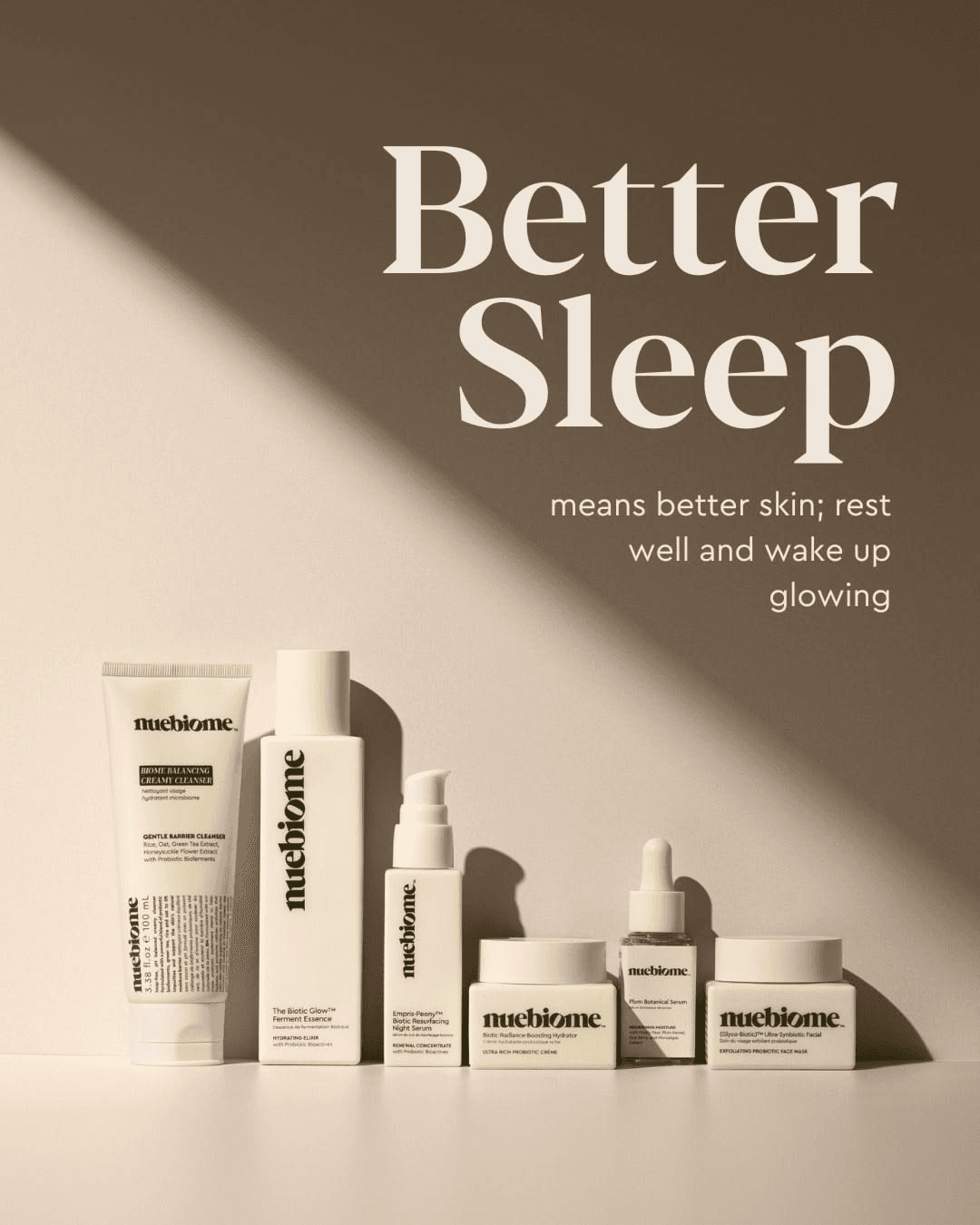
Static ads work well when the offer is easy to understand quickly. A skincare brand can test a benefit-led frame such as "Dry patches after 3 hours?" against an ingredient-led frame such as "Ceramide barrier support" without rebuilding the whole creative system.
The main strength of static ads is testing speed. A performance marketer can create 10 static variations from one product angle by changing the hook, overlay text, product crop, social proof line, or offer framing.
The main weakness of static ads is limited context. A single frame may not show how a product works or why a result is believable. For products that rely on demonstration, static ads often need stronger copy or proof to compensate.
What Are Video Ads?
Video ads are motion-based creatives that use sequence, demonstration, sound, pacing, text overlays, and sometimes people to explain or sell a product. Video ads can be UGC-style, product demo, founder-led, animated, or edited from product footage.
Video ads work well when the product needs to be seen in action. A kitchen gadget, fitness tool, beauty device, or cleaning product benefits from motion because the value becomes more obvious when the viewer sees the product solving a problem.
The main strength of video ads is message depth. A video can open with a pain point, show the product, handle an objection, include proof, and end with an offer in one creative sequence.
The main weakness of video ads is testing complexity. If a video ad wins or loses, the reason may be the hook, first frame, script, person on camera, edit pace, or call to action. Video can produce strong results, but it requires more discipline to learn from tests.
When Static Ads Usually Win?
Static ads usually win when the team needs fast signal on the core creative angle. A static concept makes it easier to test whether the market responds to a specific pain point, benefit, comparison, claim, or visual pattern.
For most ecommerce teams, static ads are most useful at the start of a creative cycle because they reduce production friction. If the team does not yet know whether customers care more about price, convenience, ingredients, results, or social proof, static ads can test those angles quickly.
Static ads are also strong for creative refresh. When a winning ad starts to fatigue, the team can create replacement static ads by changing the headline, offer badge, review snippet, or first visual concept.
Static ads are not automatically cheaper in strategic terms. A poor static ad with generic copy still wastes spend. The advantage appears when each variation is built around a clear hypothesis.
When Video Ads Usually Win?
Video ads usually win when the product benefit is hard to believe without seeing it. Motion can make a product feel more concrete by showing texture, usage, transformation, size, or before-and-after context.
Video can also carry more emotional proof than a static ad. A customer-style clip can show frustration before the product, relief after using it, and a believable reason to try - a sequence that is difficult to compress into one frame.
Video ads are especially useful when the product has a strong demo moment. If the viewer needs to see how a gadget opens, how a formula applies, or how a bundle solves several problems, video can make the value clearer.
Video ads need a stronger creative brief than many teams expect. A video with attractive footage but no clear hook or problem-solution structure can underperform a simple static ad that communicates the offer immediately.
How To Decide Between Static and Video Ads?
Decide between static and video by matching the format to the learning goal, not by assuming one format has better performance. If the goal is to validate an angle, start with static. If the goal is to prove product use or transformation, use video.
A simple decision framework:
- Start with static ads if the offer can be understood in one frame and the team needs to test several hooks quickly.
- Start with video ads if the product needs demonstration, sequence, or emotional proof to be understood.
- Use static ads to find winning hooks before investing in video production.
- Use video ads to expand validated hooks into deeper stories, demos, and objection-handling creatives.
- Use both formats when scaling because different audiences respond to different levels of context.
The team should not ask "Which format is better?" The team should ask "Which format gives us the clearest signal for the question we need answered right now?"
A Practical Testing Workflow For Ecommerce Teams
A strong static vs video testing workflow starts with concept validation. Before producing multiple videos, define the product context, customer pain point, core angle, hook, and visual proof needed for the product.
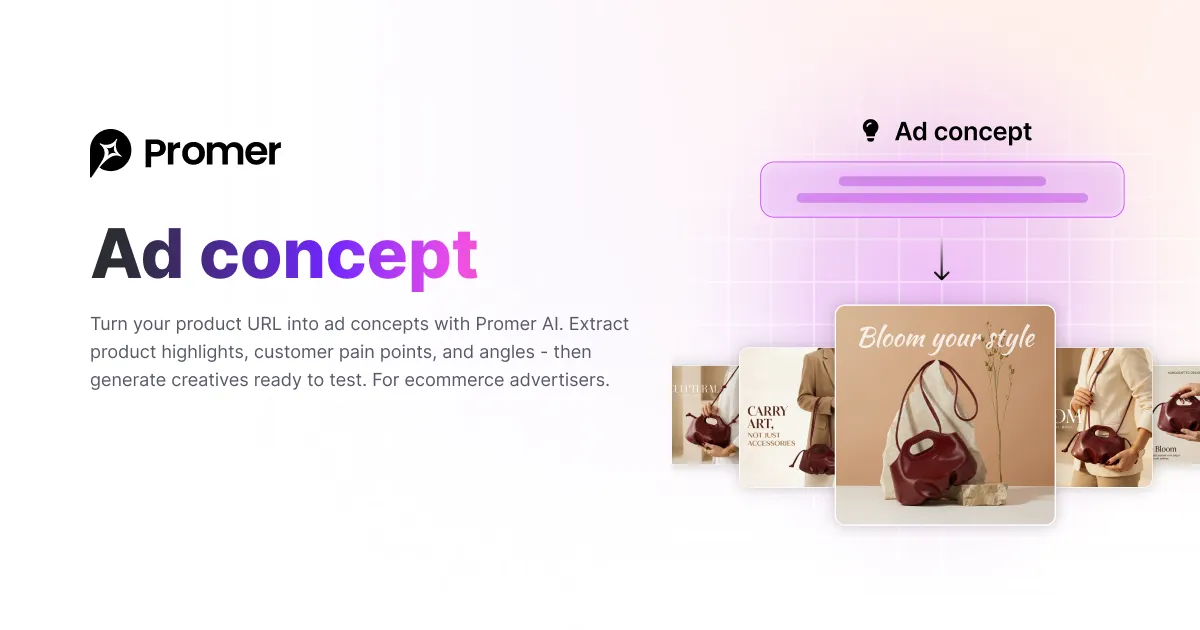
Promer AI is built around this product-context-first workflow. Promer's Ad Concept tool helps ecommerce teams turn a product URL into structured ad concepts - generating product highlights, customer pain points, angles, visual themes, and overlay text before any creative is produced.
- Step 1: Create 5 to 10 static concepts from different hypotheses using Promer's Ad Concept or Ad Clone tools. One concept might test pain-point urgency, another might test social proof, another might test offer clarity.
- Step 2: Identify which static concepts produce useful early signals - stronger click-through rate, lower cost per click, or better thumbstop rate depending on the campaign setup.
- Step 3: Turn the strongest static concepts into video scripts. A validated static hook can become the first 3 seconds of a video, while the rest adds demonstration, objection handling, and proof.
- Step 4: Refresh both formats before fatigue breaks performance. Static ads can be refreshed with new overlays and layouts. Video ads can be refreshed with new openings or reordered proof sequences.
Common Mistakes In Static vs Video Ad Testing
- Comparing one static ad against one video ad is not enough to evaluate a format. Ecommerce teams need multiple concepts per format to understand whether the issue is the format, the angle, or the execution.
- Using video before validating the core hook hides weak strategy. Video production can make an asset feel more complete even when the message is unclear. If the hook is weak, better editing rarely fixes it.
- Making static ads too crowded dilutes the message. A static ad should usually communicate one main idea. If it includes five benefits, three badges, a review, and a discount, the viewer may not know what to notice first.
- Treating video as a design task instead of a sequence is one of the most common reasons video underperforms. A video ad needs an opening hook, context, demonstration, proof, and action. A set of nice product shots does not automatically become a persuasive ad.
- Not planning creative refresh for either format shortens the life of good work. Static ads are usually easier to refresh, while video ads need a repeatable system for new hooks and new proof moments.
How Promer AI Supports Static and Video Ad Planning?
Promer AI fits best before production begins because the biggest creative decisions happen before any asset is designed. Ecommerce teams need to know which product benefit, customer pain, visual theme, and hook should drive the creative - regardless of format.
For static ad planning, Promer's Ad Concept tool turns one product page into multiple concept directions - each with a different hook, overlay text, angle, and target pain point. Teams can review and prioritize concepts before any design work begins.
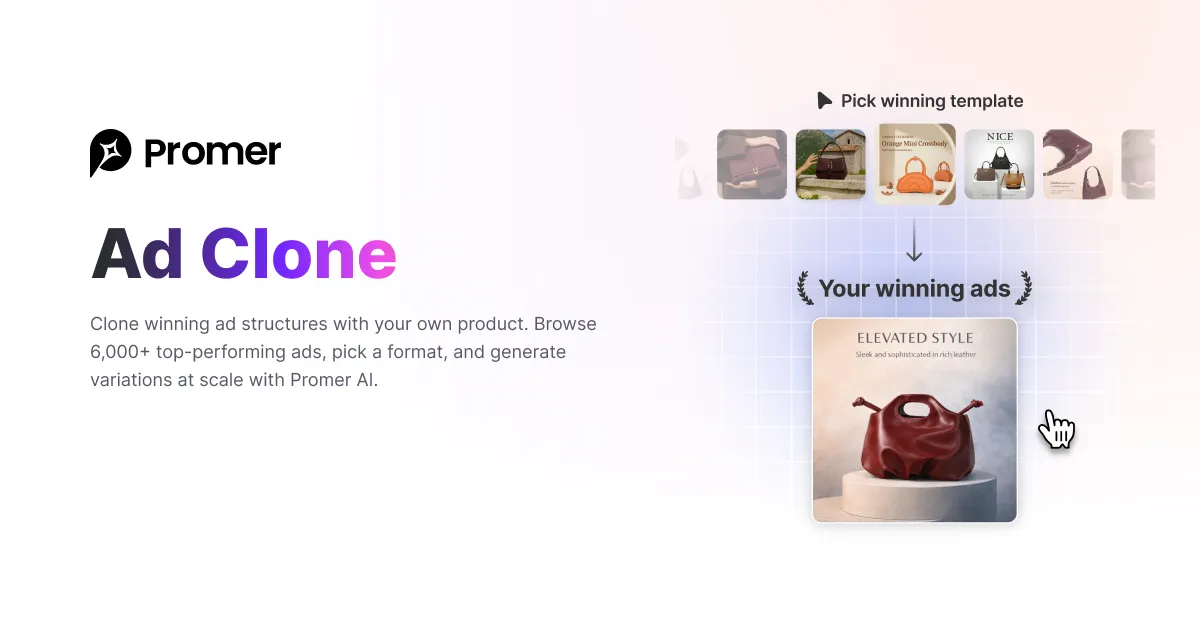
For static ads based on proven market patterns, Promer's Ad Clone tool lets teams adapt an existing high-performing ad structure to their own product. This reduces the risk of starting from a blank creative brief.
For video ad planning, a validated concept from Promer's Ad Concept workflow can become a video opening, product demo sequence, or brief for UGC-style content.
Promer AI helps teams build more structured creative tests, which typically improves the quality of learning and the probability of finding a stronger concept over time - for both static and video formats.
FAQs About Static vs Video Ads
Are static ads better than video ads?
Static ads are better when the goal is fast hook and angle testing. Static ads are easier to produce, easier to vary, and easier to interpret when one message is being tested at a time. Video ads may perform better when the product needs demonstration, proof, or emotional sequence. Results depend on the product category, offer clarity, and how well each variation is structured around a clear hypothesis.
Do video ads always convert better than static ads?
Video ads do not always convert better than static ads. Video can communicate more context, but weak hooks, slow openings, or unclear demos can hurt performance. Results depend on product category, creative quality, audience awareness, and how well each format is tested against a clear angle.
Should ecommerce brands test static ads before video ads?
Most ecommerce brands should test static ads first when the core angle is still unknown. Static testing reveals which hook, pain point, or offer deserves more investment. Once a static concept shows signal, turning that concept into video gives the script a stronger starting point.
When should I use video ads first?
Use video ads first when the product value depends on motion, demonstration, or transformation. Products such as beauty devices, fitness tools, kitchen gadgets, cleaning products, and apparel often benefit from being seen in use. Even then, the video needs a clear hook and structured message - attractive footage without a tested angle rarely outperforms a well-structured static.
How many static and video variations should I test?
A useful first test often includes several static angles and fewer video executions - for example, 5 to 10 static concepts, then the top 1 to 3 angles turned into video. The exact number depends on budget, traffic volume, and campaign structure. The goal is enough concepts to identify a pattern, not enough to exhaust the production budget before any signal appears.
What is creative fatigue and how does it affect static vs video ads?
Creative fatigue happens when an ad's performance drops because the audience has seen it too often. Static ads typically fatigue faster because they have less variation per impression. Video ads may last longer but are harder to refresh quickly. Both formats need a planned refresh cycle - static ads can be refreshed with new overlays and headlines, while video needs new hooks or reordered sequences.
How does Promer AI help with static vs video ad planning?
Promer AI helps ecommerce teams define the creative angle before choosing static or video execution. Promer's Ad Concept tool extracts product highlights, suggests customer pain points, and generates multiple concept directions from a product URL - before any design or filming begins. That structure helps teams avoid generic creative and build more useful tests regardless of format.
Summary
Static vs video ads should be treated as a creative testing decision, not a format debate. Static ads are usually the faster way to validate hooks and angles, while video ads are stronger when the product needs motion, demonstration, or emotional proof.
For most ecommerce teams, the best path is to use static ads to find clear signals, then turn the strongest concepts into video. Promer's Ad Concept and Ad Clone tools support that workflow by helping teams move from product context to structured ad concepts before production begins.
If you want to run this workflow without building from scratch, Promer AI offers a free trial.