11 AI Ad Creative Examples for Car Brands | Promer AI
Category
Blogs
Date
Authored by
NaNa Phan
Summary
11 AI ad creative examples for car brands, broken down by hook, layout, and platform - plus how to recreate each one for your own vehicle brand.
Most automotive ad creative falls into one of two traps: A generic hero shot of the whole car, or a cluttered offer banner with too many claims stacked on top of a vehicle photo.
These 11 examples of ai ad creative for car brands show what a more deliberate approach looks like, across OEM brand awareness, parts, rental, and service businesses.
The AI ad creative that works for car brands treats the vehicle, or one specific part of it, as the hero, and uses a single visual device - a detail shot, a split-screen, a scenic backdrop - to make one point clearly instead of trying to tell the whole product story in one frame. A battery ad that also tries to sell style, price, and trust in one image usually sells none of them well.
This article breaks down 11 real automotive ad creatives across car parts, interiors, batteries, EVs, luxury vehicles, rentals, wheels, sustainability branding, and service businesses, with the platform, ratio, and layout choice that makes each one work. At the end, you'll find how to adapt any of these structures to your own vehicle, part, or service.
Key takeaways
Product Hero shots (clean, minimal text) dominate OEM and brand-awareness creative, while Offer & Sale layouts are reserved for parts, rental, and service businesses.
High-contrast, two-tone palettes (black/white, black/red, black/gold) repeat across luxury and performance positioning.
Detail and macro shots (a rim, a battery, an interior) communicate engineering and craftsmanship without needing a full lifestyle shoot.
Vertical ratios (9:16, 2:3, 3:4, 4:5) dominate mobile-first luxury and lifestyle hero shots, while 1:1 holds for offer-led and service ads.
A single visual metaphor, like a nature silhouette or an interactive UI overlay, can carry a brand position without heavy copy.
What makes AI ad creative work for car brands?
Automotive is a category where the product itself already carries emotional weight, so the creative's job is to isolate one specific reason to pay attention, not to repeat the brand's entire value proposition every time.
The second pattern is matching the visual language to the type of business. A full OEM lineup shot in a scenic backdrop works for brand awareness, but the same shot with a discount badge stapled on top undercuts both the aspiration and the offer. A parts or service business, by contrast, benefits from leading with the offer and using the vehicle as supporting proof.
Promer AI's breakdown of what makes a winning ad covers this same single-hook principle in more depth, if you want the underlying framework beyond automotive specifically.
11 AI ad creative examples for car brands
Each one below lists its platform, ratio, and hook type first, so you can match the layout to your own vehicle, part, or service before you look at the image. A "Try AI Ad Clone" button sits under every creative if you want to jump straight into recreating it.
1. Direct-Offer Sale Creative for Car Parts (Car Parts & Accessories)
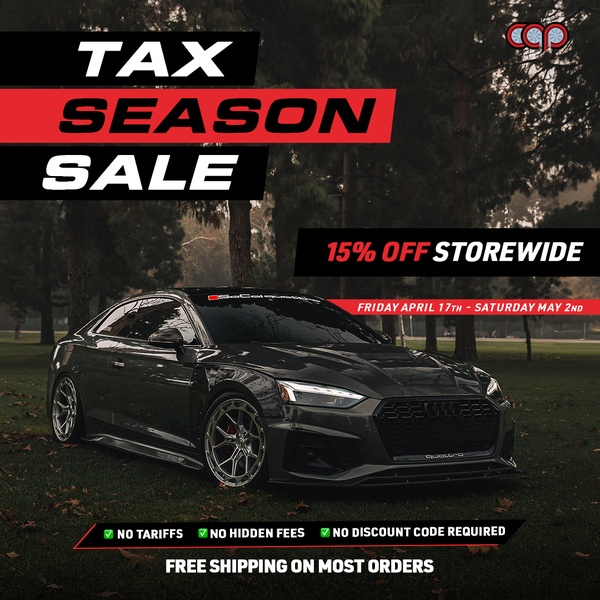
A dark-toned performance vehicle sits behind a bold black-and-red "15% off storewide" callout, built around a tax-season sale window. Checkmark-accented trust markers (no tariffs, no hidden fees) sit underneath to remove common purchase friction.
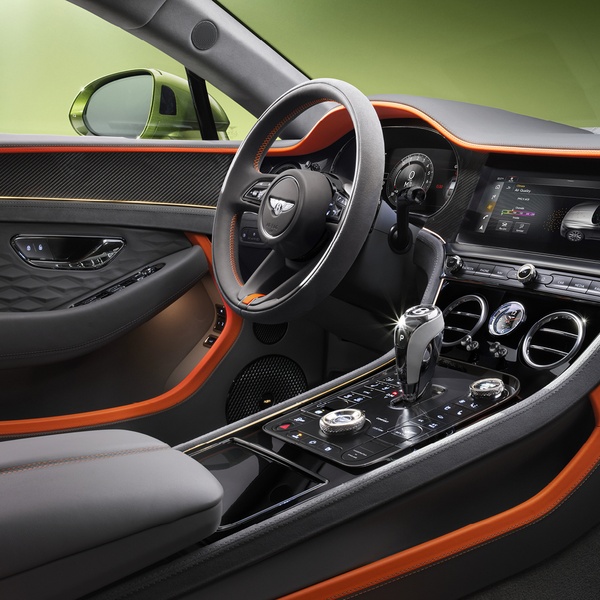
A driver-seat point-of-view shot places the viewer inside the cockpit, with vivid orange stitching and trim against dark, textured materials. The angle creates an immediate sense of ownership instead of showing the interior as a flat catalog photo.
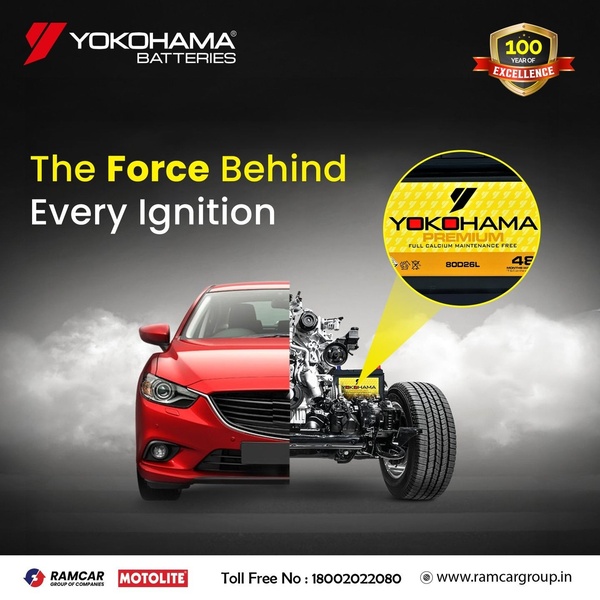
A vertical split divides a red car's exterior from its internal battery components, visually bridging everyday driving with the part that makes it possible. A gold anniversary badge adds a layer of social proof next to the brand's core claim.
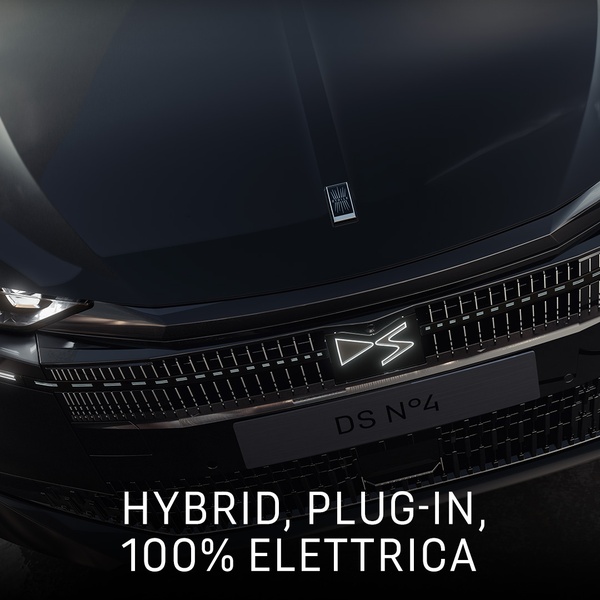
A close, cinematic crop on the front grille and badge isolates the vehicle's design language, with the available powertrain options listed in clean white type. The dark, moody background removes any competing detail.
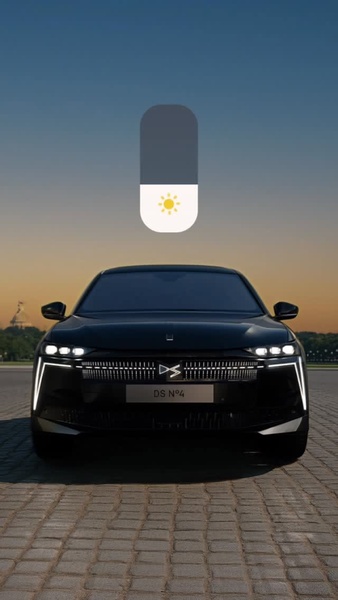
A luxury vehicle sits in a minimalist, dusk-toned environment with a digital light slider overlay, implying the viewer can adjust the car's illumination. The UI element itself is the hook, not the vehicle's full feature list.
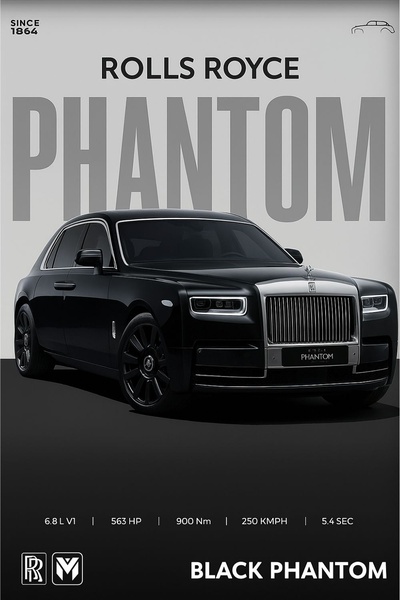
A black vehicle against a light grey background anchors the frame, with bold sans-serif type stating the model name and a single row of technical specs along the bottom. Nothing else competes with the vehicle's silhouette.
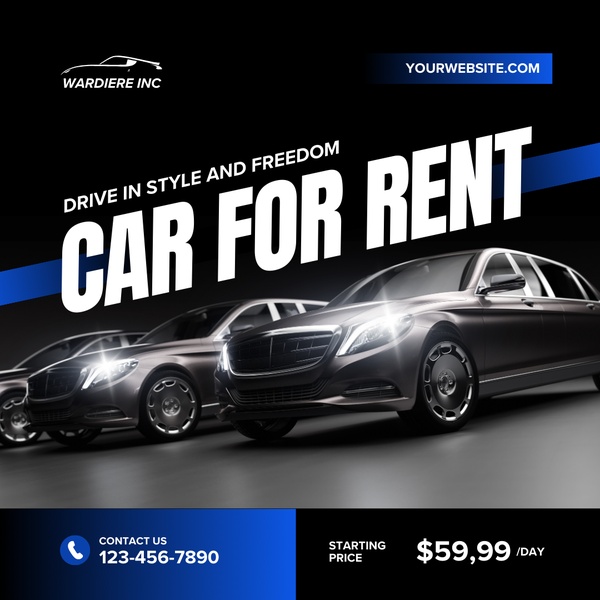
A high-contrast, black-and-blue studio shot of a luxury vehicle pairs an aspirational "style and freedom" message with a specific daily starting price at the bottom. The price removes the guesswork that usually stalls a rental decision.
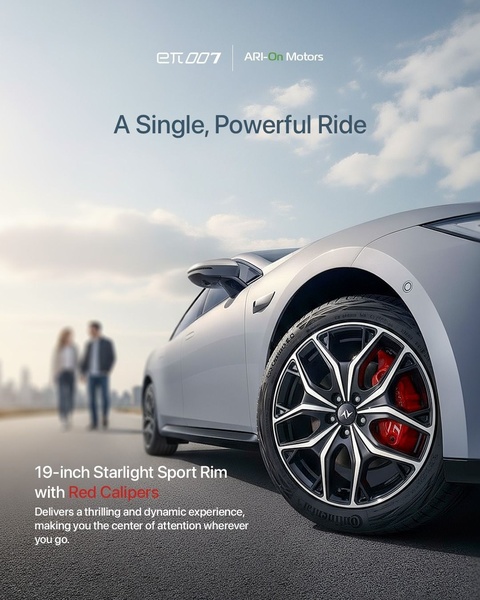
A close-up of a sport rim with vibrant red brake calipers isolates one engineering detail instead of showing the full vehicle. The minimal copy stays out of the product's way, letting the finish and texture do the selling.
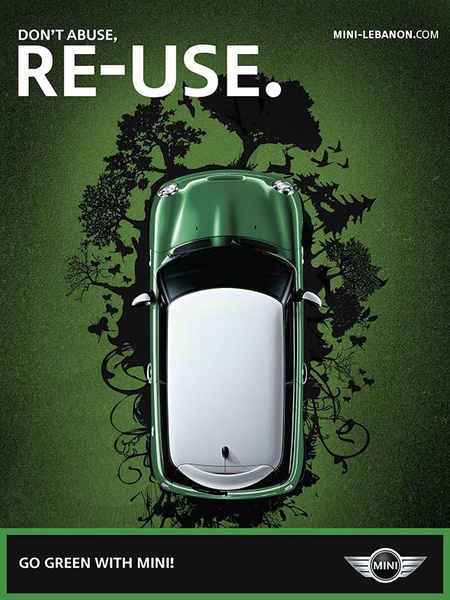
A top-down shot of a vehicle is framed by organic tree and wildlife silhouettes on a dark green background, with bold white type carrying a short "re-use" message. The visual metaphor does the work a paragraph of sustainability copy would otherwise need to do.
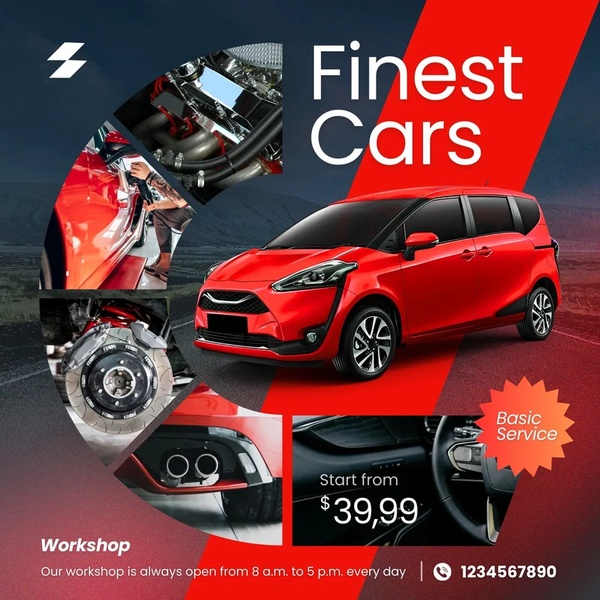
A circular-segment collage shows engine work and undercarriage care around a red vehicle, with a starting price in the bottom corner. The montage format removes guesswork about exactly what service is being offered.
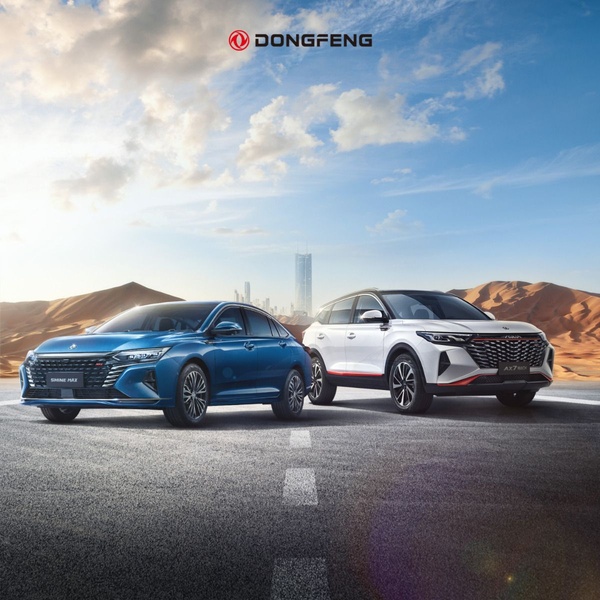
Two vehicles sit on an asphalt road against desert dunes and a clear sky, shot from a low angle that makes both cars look more imposing. The scenic backdrop sells a lifestyle before the viewer reads any copy at all.
A low camera angle that makes both vehicles appear more dominant in the frame
A scenic, uncluttered backdrop that implies scale and freedom without any text doing the work
Contrasting vehicle colors (blue and white) that stand out against the warmer desert tones
How to apply these AI ad creative examples to your own car brand
The layouts above share a structure, not a vehicle. A split-screen anatomy shot, a macro detail, or a scenic hero works the same way whether you sell a full lineup, a single part, or a service, as long as you match the visual language to what you're actually selling.
If you want to browse more real automotive campaigns before building your own, Promer AI's ai ad creative for car brands library groups them by category, hook type, and platform so you can shortlist the structures closest to your product.
Promer AI, an AI ad generator, turns any of these structures into your own ad with two tools, depending on whether you want to start from a specific reference or from a blank scene.
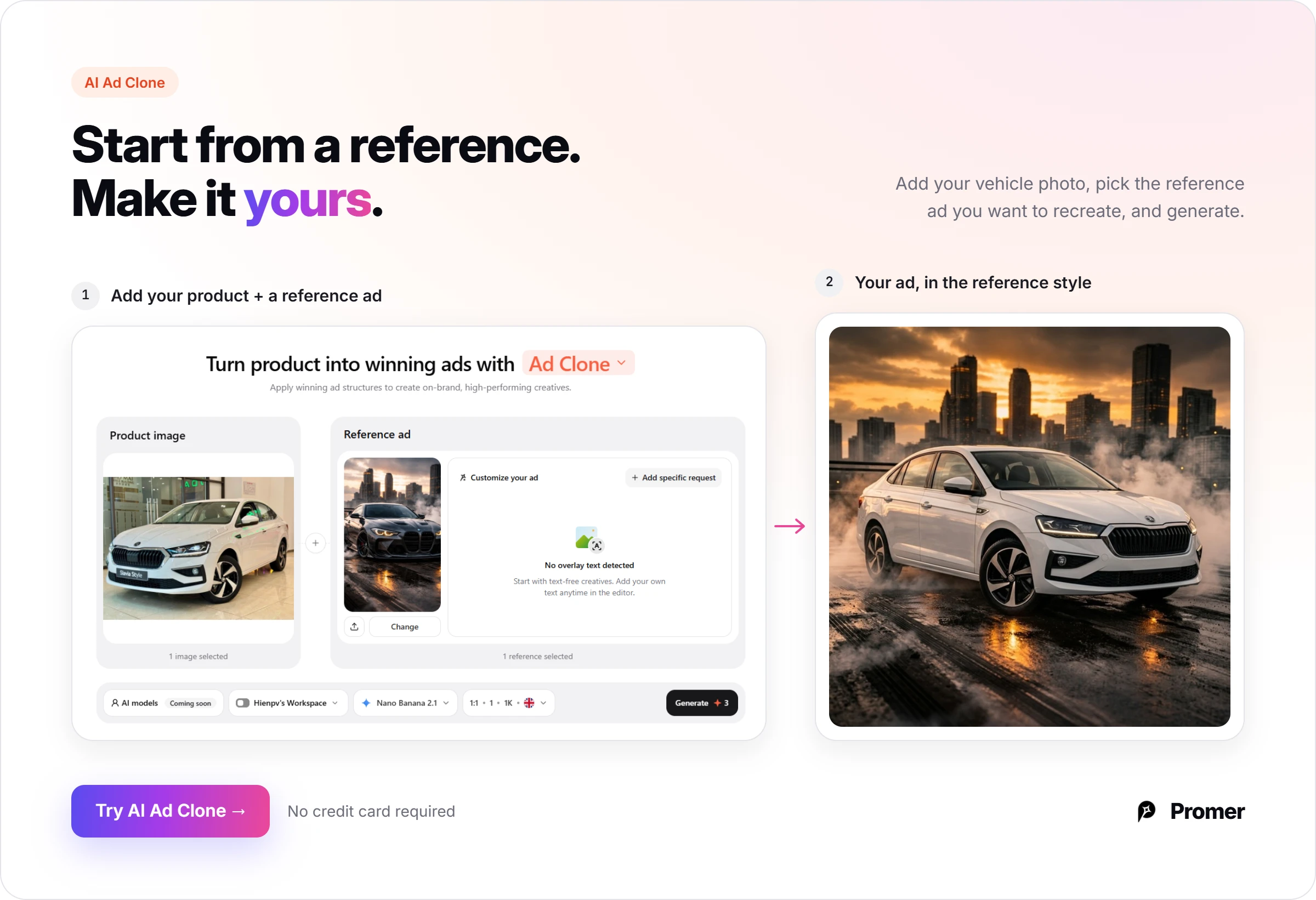
Promer AI's AI Ad Clone is the fastest route to copy one of the 11 structures above exactly: Pick your product, select the reference ad you want to recreate, and the AI suggests a headline, body text, and CTA you can edit individually before generating.
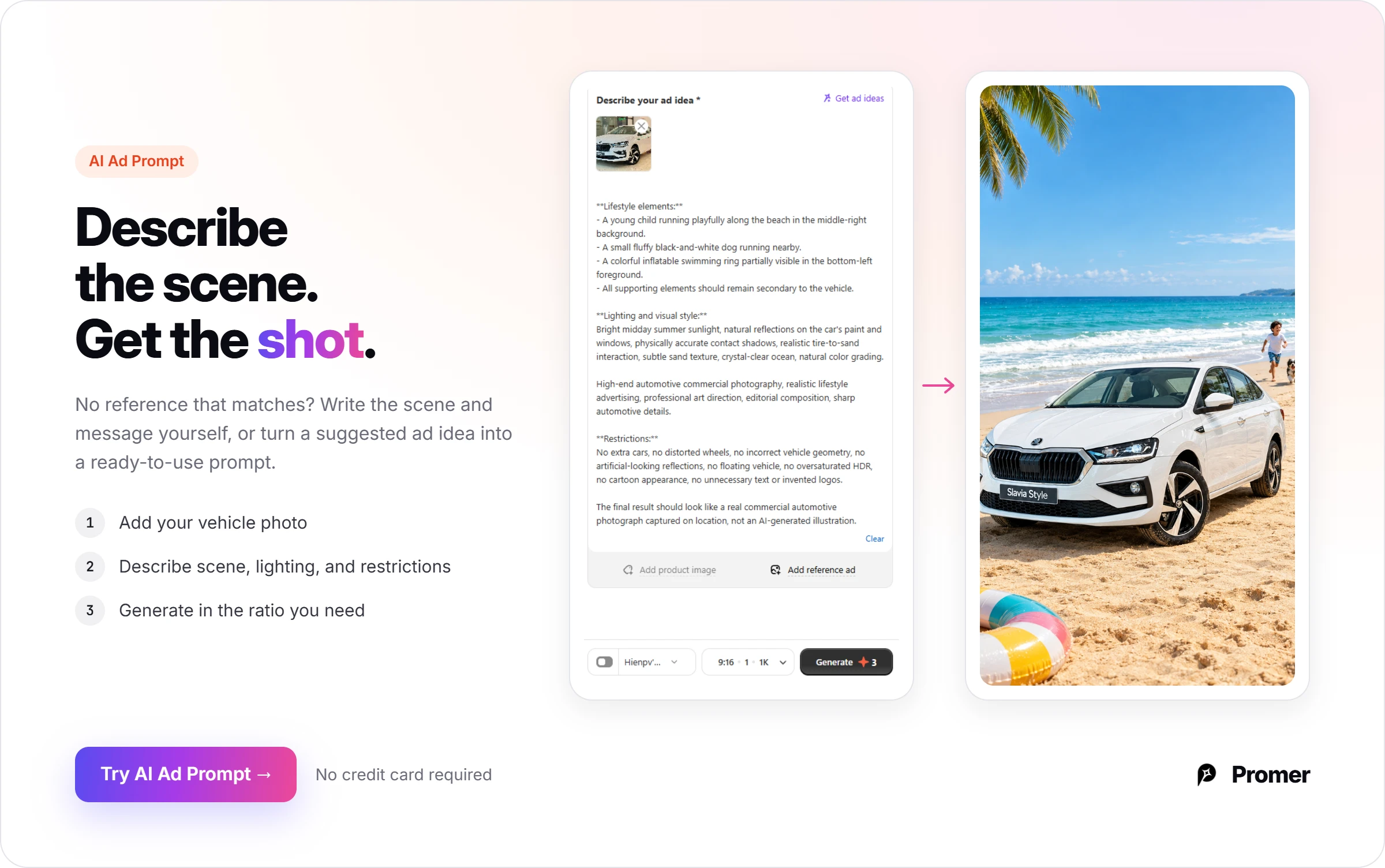
For a layout that isn't an exact match to one of these 11, Promer AI's AI Ad Prompt lets you describe the scene and message directly, or turn one of its suggested ad ideas into a ready-to-use prompt, with a product image and a reference ad as optional inputs.
Review every generated creative before it runs. AI-generated ads can have mistakes, and for automotive specifically, double-check that any spec, price, or claim shown in the creative matches what's actually accurate for your vehicle, part, or service.
Common mistakes car brands make with AI ad creative
Showing the whole vehicle when the actual hook is one part. A battery, interior, or rim ad loses its impact when it's diluted into a full-car shot instead of a detail or split-screen view.
Using the same hero shot for every type of business. A scenic OEM lineup shot and a parts-store discount banner need different visual languages; stapling a sale badge onto an aspirational lifestyle shot undercuts both.
Flat, unlit product photography on high-ticket items. Luxury and performance positioning depends on contrast and lighting; a flat studio shot loses the premium read these examples rely on.
Mixing an emotional backdrop with aggressive discount copy. A scenic or symbolic hero shot and a loud "% off" callout pull in opposite directions in the same frame.
Using the same ratio across every platform. A 1:1 square built for feed gets letterboxed on Stories and TikTok, where a 9:16 crop fills the whole screen and performs better.
FAQs about AI ad creative for car brands
These are the questions automotive marketers ask most before building their own AI-generated ad creative.
What makes good AI ad creative for car brands?
Good AI ad creative for car brands isolates one specific hook, like a part, a feature, or an offer, instead of trying to communicate the full brand story in one image. The examples above show this working across OEM, parts, rental, and service businesses, each with a different visual language suited to what's actually being sold.
Can AI generate ad creative for car parts and accessories, not just full vehicles?
Yes. Several examples above, including the battery anatomy and sport rim shots, focus on a single part rather than the whole car. The same AI Ad Clone workflow that recreates a full-vehicle hero shot works the same way for a part or accessory image.
What's the best platform for car brand ad creative, Meta or Pinterest?
It depends on the goal. Meta (Facebook and Instagram) suits most offer-led and hero-shot creative at 1:1 or 9:16, while Pinterest tends to work better for aspirational, lifestyle, or detail-focused shots like a rim or a sustainability metaphor, where longer discovery browsing fits the platform.
Should car brand ads use lifestyle shots or studio product shots?
Both have a role, depending on the business type. OEM brand-awareness creative typically benefits from a scenic or lifestyle hero shot, while parts, rental, and service businesses usually convert better with a clean studio shot paired with a direct offer.
How many ad creative variations should a car brand test?
Testing at least 3-5 structurally different variations, not just color or copy tweaks, usually surfaces a clearer winner. Covering different hooks (a detail shot, a split-screen, a scenic hero) gives a more useful read than testing five versions of the same layout.
Can AI ad creative work for car dealerships and rental services, not just manufacturers?
Yes. The rental and service examples above both use a direct price or offer hook paired with a high-contrast vehicle shot, a structure that fits dealerships, rental fleets, and workshops as well as it fits an OEM launch.
Summary
The 11 examples of ai ad creative for car brands above all follow the same underlying discipline: One clear hook, matched to the type of business behind the ad, instead of one generic vehicle shot reused for every purpose.
Pick the structure closest to what you're selling, choose the Promer AI tool that matches where you're starting from (a reference ad or a blank idea), and swap in your own brand colors and copy.
Nana Phan has 16 years of experience across marketing, ecommerce, and SaaS, including running her own dropshipping business and nearly 8 years at FireGroup working on products for online merchants. Her experience spans both selling online and building software for the people behind those businesses.
As Head of Growth at Promer AI, she works across customer research, product, and marketing. She writes about ecommerce growth, ad creative, and practical applications of AI, informed by firsthand experience and conversations with merchants about the challenges they face.




![Top 12 UGC Ad Examples That Actually Convert [With Examples]](https://static.promer.ai/blogs/n-images/3cd09dc0-1bd2-808e-8101-f6eb4138680d-thumbnail.webp)