Fast food ads don't sell the food - they sell the decision to order right now
A fast food ad isn't trying to prove quality. The buyer isn't researching ingredients, comparing nutrition, or evaluating preparation method. They're already a little hungry, they have the app on their phone, and what they need is a reason to stop waiting and act.
That changes everything about how the ad works. A bakery ad proves craftsmanship. A restaurant ad proves an experience worth going out for. A fast food ad compresses the distance between "I could eat something" and "I just ordered" - and every creative choice is in service of that compression.
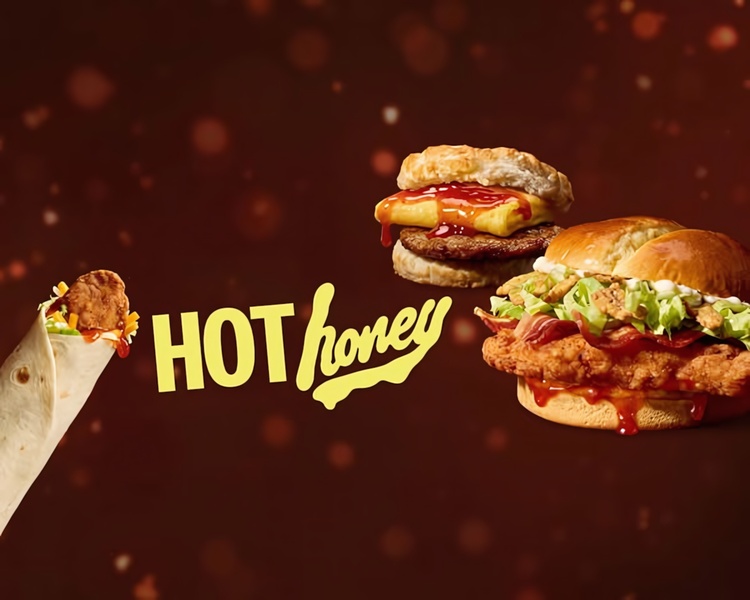
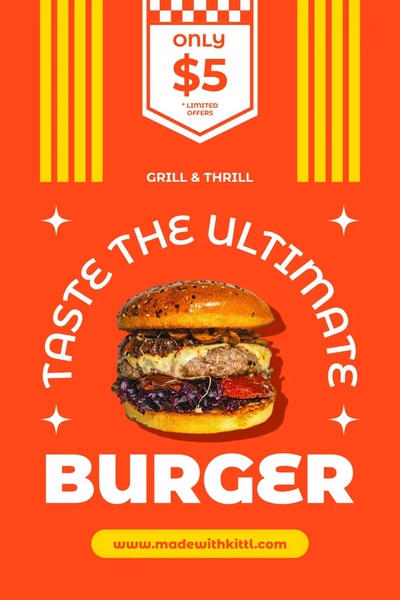
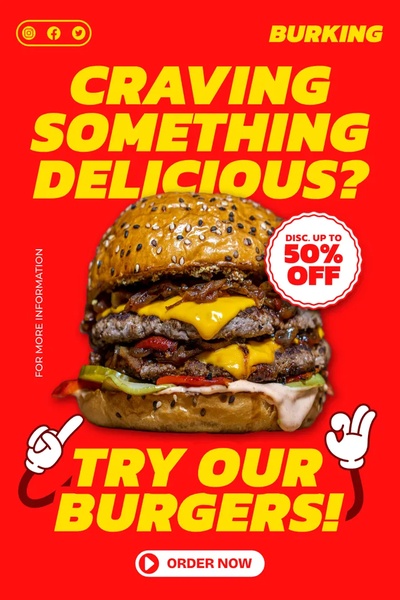
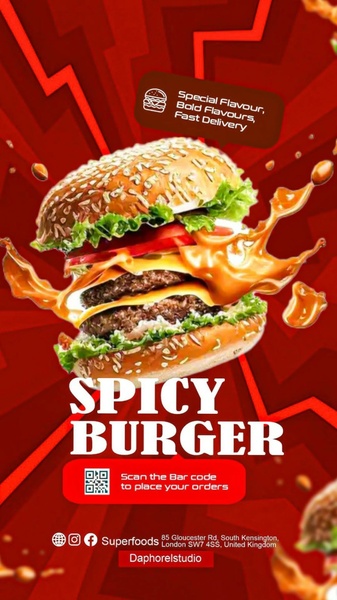
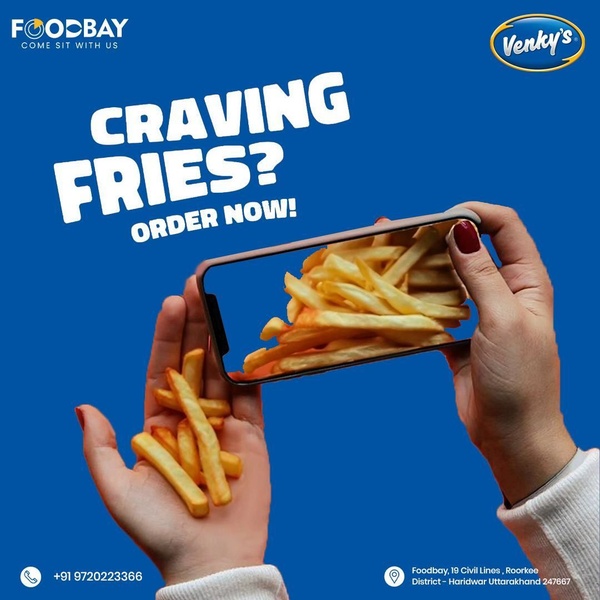
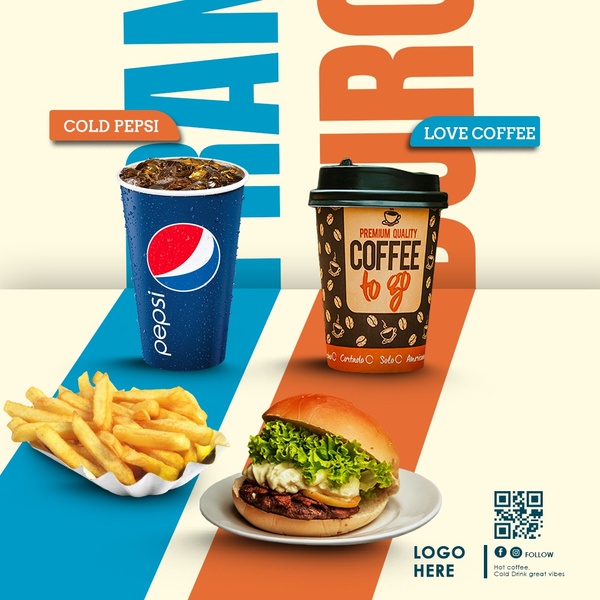
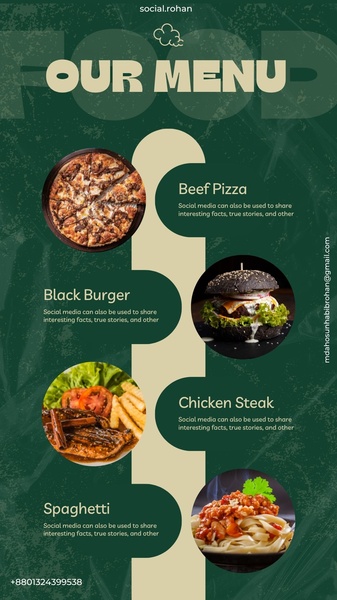
The craving question ("CRAVING FRIES?") works because it names a feeling the viewer might already be in, then immediately offers to solve it. Bold product-name typography ("SPICY BURGER" in oversized type) works because the name itself triggers appetite recall without needing a photo to do the work. The floating explosion shot - a burger with ingredients mid-air, sauce splashing - works because it signals freshness, energy, and abundance in a single frame.
Fast Food Ad Examples That Turn a Craving Into an Order
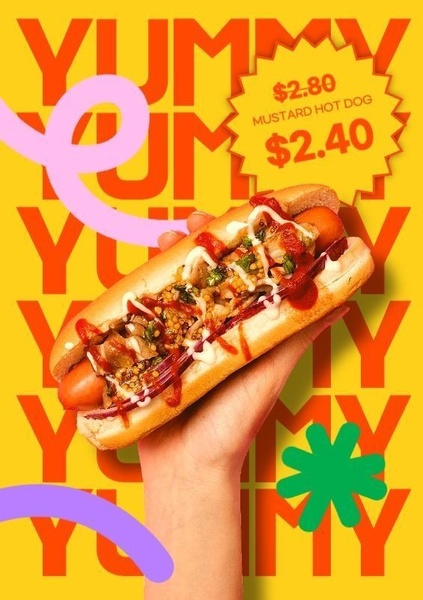
Each of these solves the "order right now" problem with a different mechanism - incentive, discount, identity, variety, or price contrast.
Fast Food Combo - Direct Incentive Offer
- Hook type: Direct Incentive Offer
- Theme: Incentivized Survey Campaign
- Platform: Facebook, Instagram
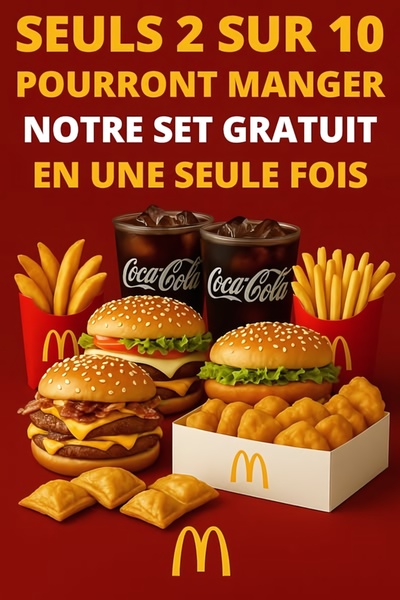
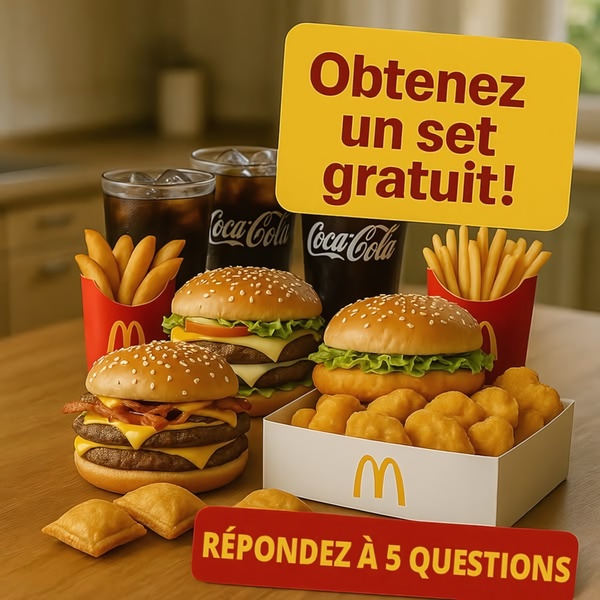
A meal bundle shot paired with a reward-for-a-short-questionnaire CTA. The incentive turns a passive scroll into an active exchange - the viewer gets something for a small amount of time, which lowers resistance compared to a plain "order now" ask.
Fast Food Restaurant - Discount Incentive
- Hook type: Discount Incentive
- Theme: High-Contrast Promotional Flyer
- Platform: Instagram, Facebook
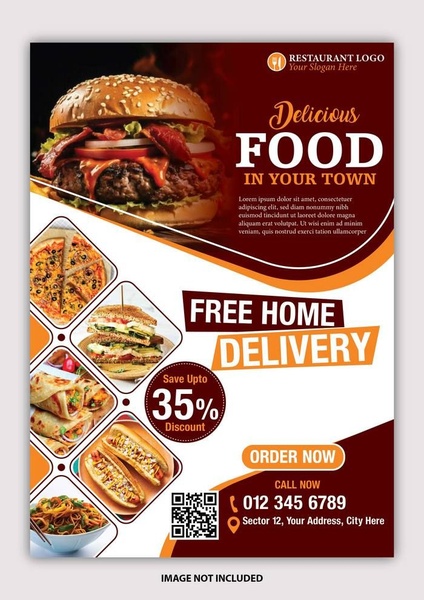
A hero burger shot next to a grid of other menu items, with a 35% discount badge anchored in the center. The grid proves menu variety in one frame while the discount removes the last hesitation - a QR code and phone number keep the path from ad to order short.
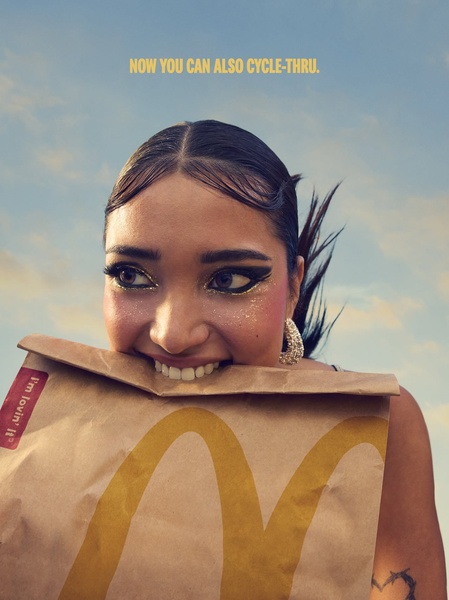
Fast Food Paper Bag - Lifestyle-First Hook
- Hook type: Lifestyle-First Hook
- Theme: Lifestyle Provocation
- Platform: Instagram, TikTok
A close portrait of someone biting a branded paper bag against a blue sky - no food visible, no menu item named. Skips appetite appeal entirely to sell an identity instead, which works for brand awareness among a younger audience rather than an immediate order.
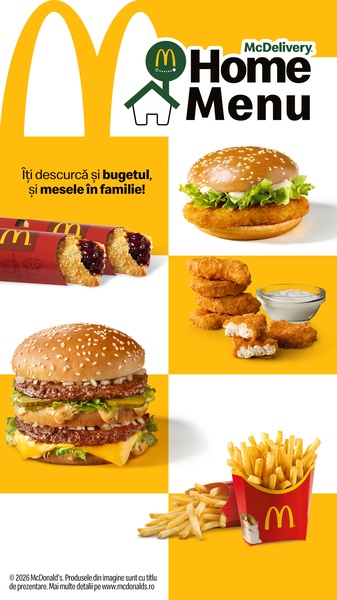
Fast Food Menu Grid - Direct Value Proposition
- Hook type: Direct Value Proposition
- Theme: Grid-Based Menu Showcase
- Platform: Instagram Stories, TikTok
Multiple menu items segmented into a clean grid against a bold yellow field, with a headline naming both savings and time. Treats the ad space as a mini-menu - useful for a catalog-heavy fast food brand where no single item is the whole pitch.
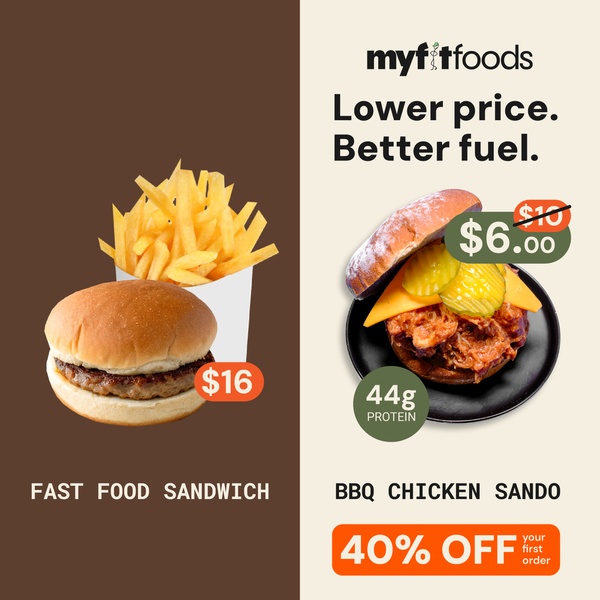
BBQ Chicken Sando - Price Contrast