UGC for OTT Platforms: Why the Raw Social Cut Usually Falls Short on the Big Screen?
UGC for OTT platforms can mean three different things, and mixing them up is why advice on the topic keeps contradicting itself.
If you run UGC-style ads on Meta or TikTok and are thinking about a CTV test, you will find studies saying premium content beats user-generated content. Those studies answer a different question from the one you are asking.
Our argument in this piece is that UGC-style ads usually disappoint on CTV because of how they are delivered: a vertical, caption-led cut dropped into a horizontal, sound-on ad break. That is a practitioner's reading of the formats, not something the studies below measure directly.
This article is for advertisers deciding whether UGC-style creative belongs in a CTV or OTT plan, not for streaming services deciding whether to let viewers upload video.
Key Takeaways
- "UGC for OTT" can mean platform strategy, ad placement, or ad creative. This piece focuses on creative and touches placement where the two get confused.
- The premium-versus-UGC studies cited by The Trade Desk compare ad environments. They do not test whether a UGC-style ad works on CTV.
- The two biggest changes when adapting a UGC-style ad are the aspect ratio (16:9, not 9:16) and the audio mix (built for sound-on viewing).
- Promer AI's AI UGC video generator outputs 9:16 today. A 16:9 version currently means going through AI Video Ad Clone, and Promer AI covers creative only, not CTV media buying.
Why Does "UGC for OTT" Mean Three Different Things?
Search the phrase and the results mix three separate topics. Each one has a different decision-maker and a different kind of evidence.
- Platform strategy: whether a streaming service should let its own viewers upload and share video. This is a product and moderation question.
- Ad placement: whether your ad runs next to premium, professionally produced content or next to user-generated content. This is a media-buying question.
- Ad creative: whether a UGC-style testimonial, made to look like a real customer talking, works as the ad itself. This is a creative question.
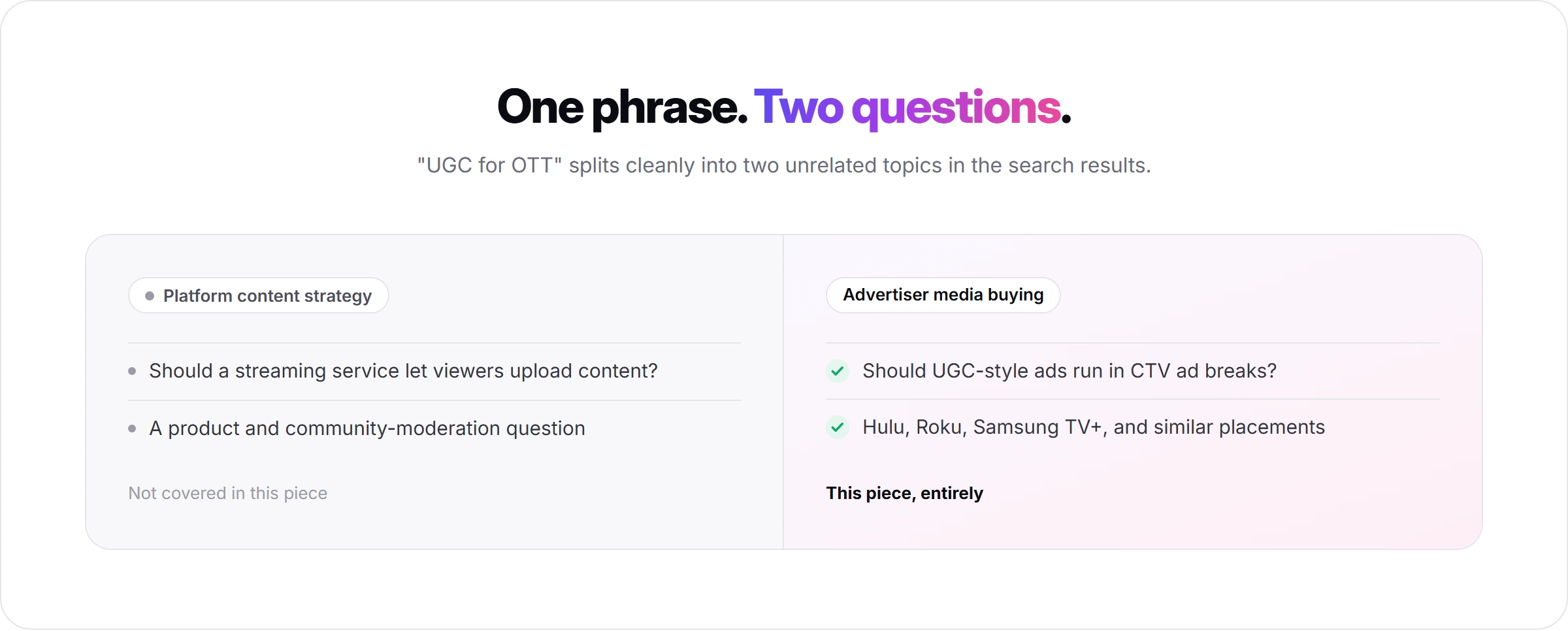
Most of the data people cite against UGC on CTV belongs to the second topic. Most of the decisions advertisers struggle with belong to the third.
What Does the Premium vs UGC Data Actually Measure?
The figure most often used against UGC on CTV comes from a Trade Desk article comparing premium content with platforms driven by user-generated content. It cites a Kantar and PubMatic study from 2021 showing a 37% uplift in unaided brand awareness for ads in premium OTT over non-premium video.
The same article cites a Yahoo study in which consumers preferred professional content over user-generated content roughly three to one, and ThinkTV research showing TV earning about twice the attention of UGC platforms.
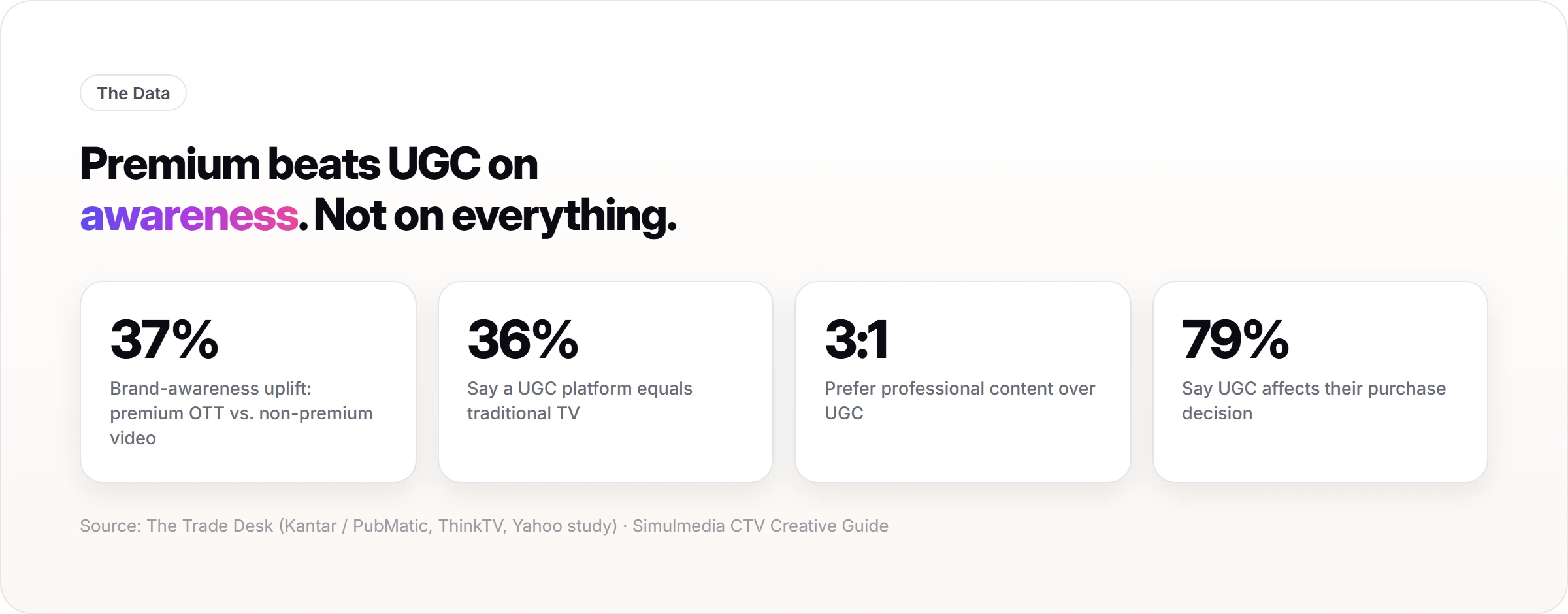
Read closely, every one of these compares where an ad runs. None of them tests a UGC-style creative against a polished one inside the same placement.
Two caveats are worth keeping in mind. The Trade Desk sells access to premium inventory, so the article argues from that position. And the Kantar and PubMatic figure dates from 2021.
Simulmedia's CTV creative guide makes a different point. It cautions against reusing mobile or desktop creative on CTV without adjusting it, and it cites a figure that 79% of consumers say UGC significantly affects their purchasing decisions. That figure describes UGC's influence in general, not its performance on CTV.
Put together, the evidence supports a placement argument (premium environments tend to do better on brand metrics) and a caution about repurposing creative. It does not show that UGC-style ads fail on CTV.
Why Does a Raw Social Cut Struggle in a CTV Ad Break?
This section is reasoning from how the formats differ, not a measured result.
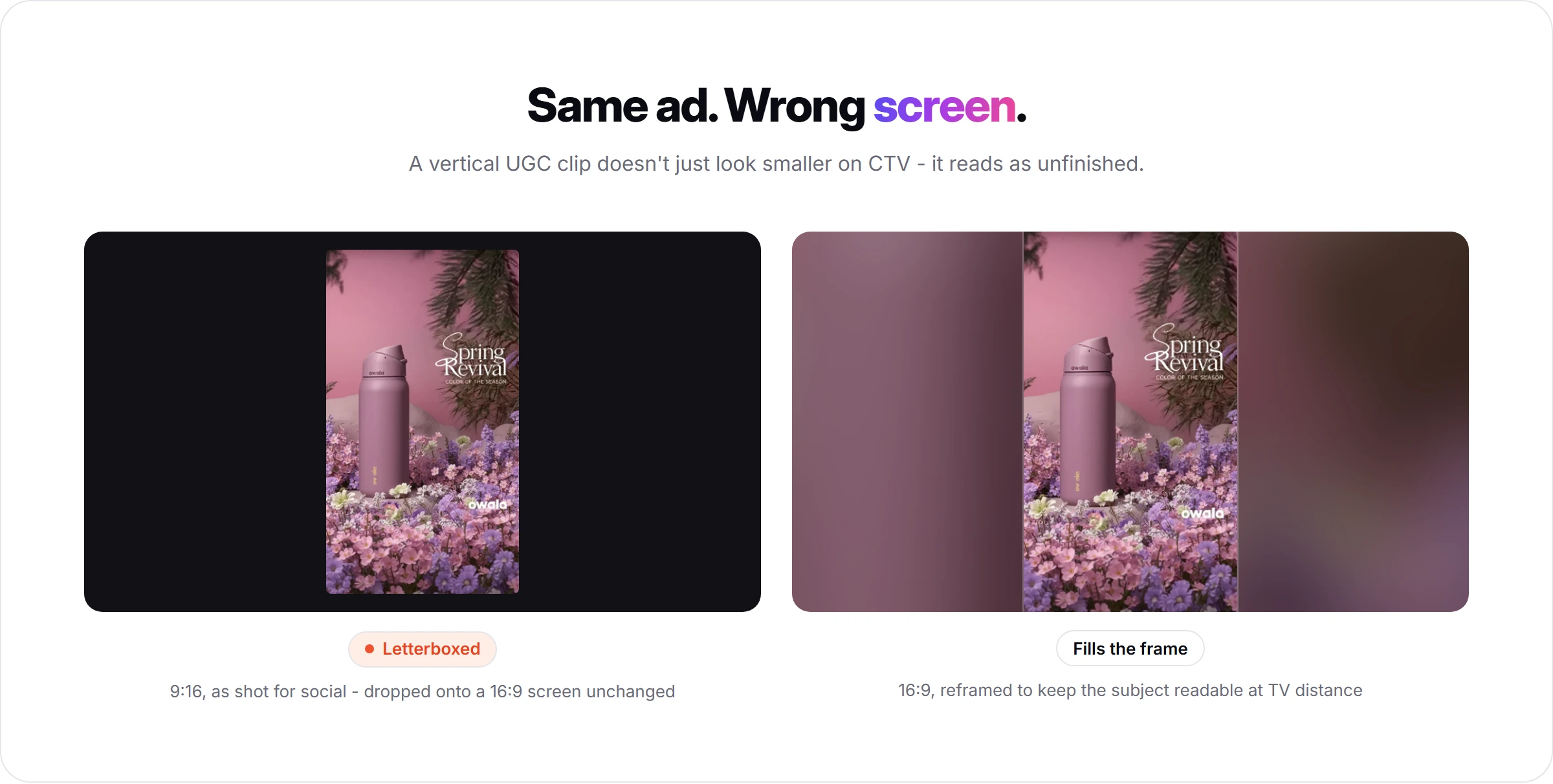
A vertical ad shot for TikTok or Reels, dropped into a CTV ad break unchanged, either sits letterboxed in a small centered rectangle or gets cropped to fill the screen. Either way, it signals that it was made for another screen before the viewer takes in the message.
Audio is the second gap. Social UGC is often cut for a muted, caption-led feed, while TV viewing typically has sound on. An edit built around captions can feel thin next to fully mixed content in the same break.
Context is the third. A scrolling feed punishes a slow opening, while a lean-back living-room viewer is in a different mode. The same pacing will not necessarily work in both.
How Do You Adapt a UGC-Style Ad for OTT/CTV?
Take a hypothetical skincare DTC brand (not a client case) with a 22-second vertical testimonial already converting on TikTok and Meta. The brand wants to test it on Roku. Three changes turn the social clip into a CTV-ready ad without rewriting it from scratch.
- Reframe for 16:9 first. Recompose the shot to fill the landscape canvas instead of cropping the vertical footage or centering it in black bars. The speaker and product stay readable at TV viewing distance.
- Re-mix for sound-on. Build the edit around a voice-led mix, not captions alone. Captions can stay as a supporting layer.
- Test a slightly longer hook window. Passive viewing may allow a little more room than a feed does. Treat this as a hypothesis to test against the original pacing, not a rule.
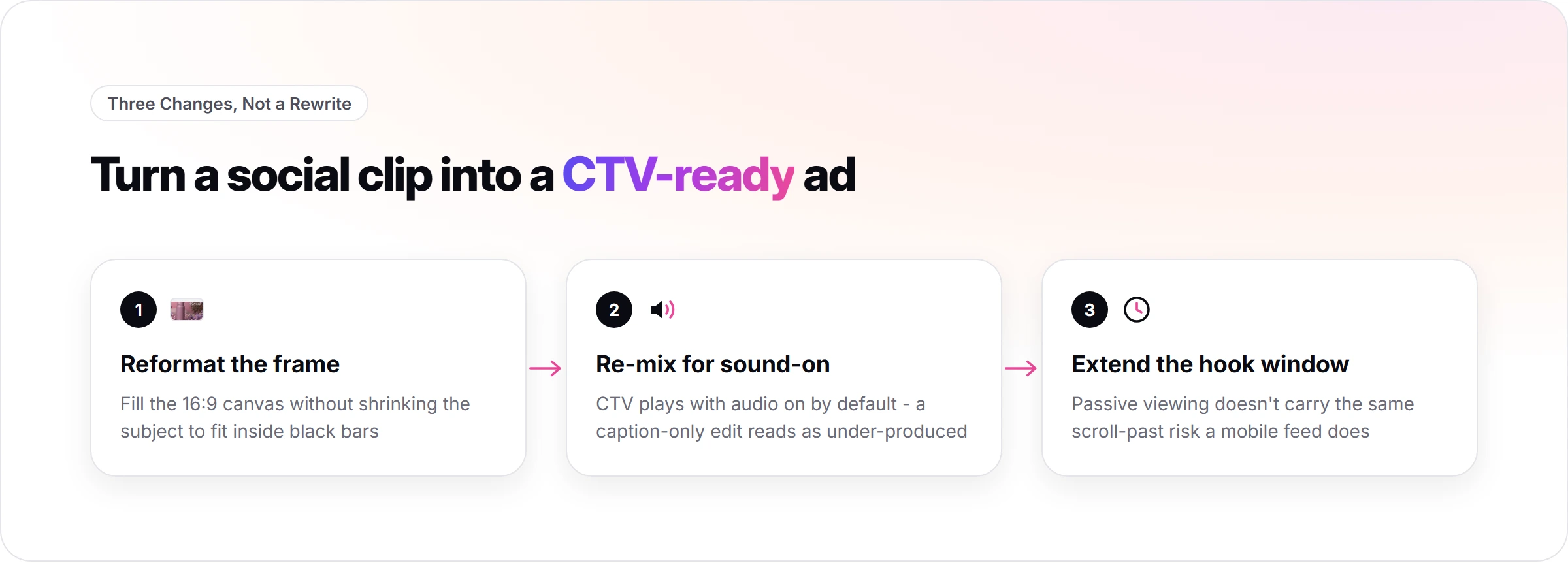
None of this requires abandoning the testimonial format or the customer-voice tone that worked on social. It requires treating the reformat as its own production step. If you are adapting one ad across several placements, guidance on how to scale ad production for different markets covers the wider version of this problem.
Which Promer AI Tools Can Produce a 16:9 UGC-Style Video?
Promer AI's AI UGC video generator currently outputs 9:16 video, built for Reels, Stories, and TikTok. That is the vertical shape the previous sections argued against for CTV, so it is not a direct route to a TV-ready ad.
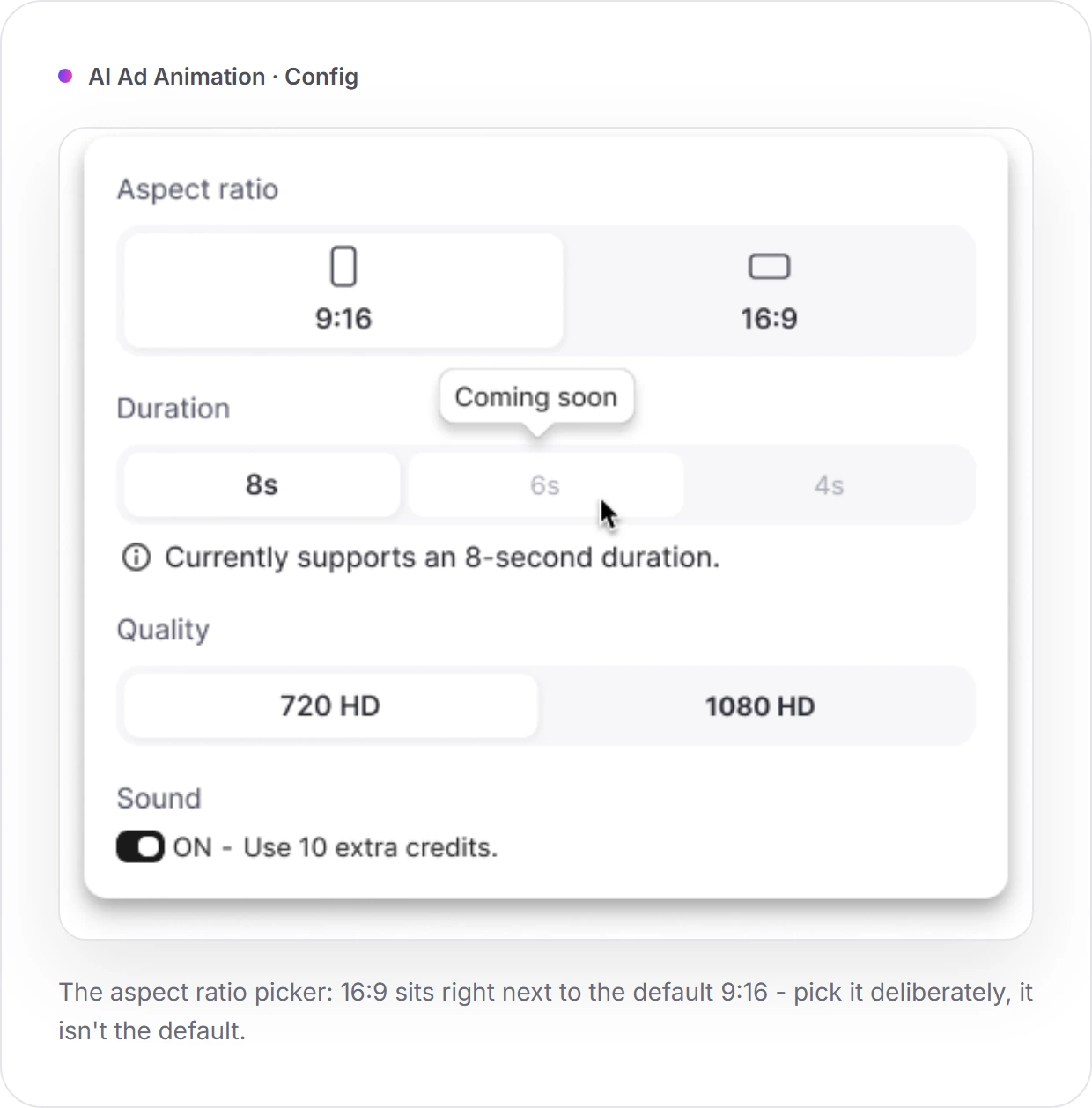
AI Video Ad Clone is the closer option. It applies the structure of a reference video ad to your product and can output 16:9 as well as 9:16, with HD options that include 1080. Using a testimonial-style video as the reference is how you keep the UGC feel in landscape.
Promer AI's AI Ad Animation also offers 16:9, but it animates a static creative into a short clip, currently around 8 seconds. That suits short motion pieces better than a full testimonial, so check the current duration options in the app before planning around it.
Neither is a one-click "make this CTV-ready" button. Choose the landscape setting deliberately, plan the sound mix as its own step, and review the output before it runs, since AI-generated creatives can contain mistakes.
Promer AI covers creative production only. Buying CTV media, setting budgets, and measuring incrementality happen in your media-buying platform.
What Should You Check Before Testing UGC-Style Ads on CTV?
Whatever the market numbers look like this quarter, three checks stay useful before any UGC-style ad goes into a CTV plan.
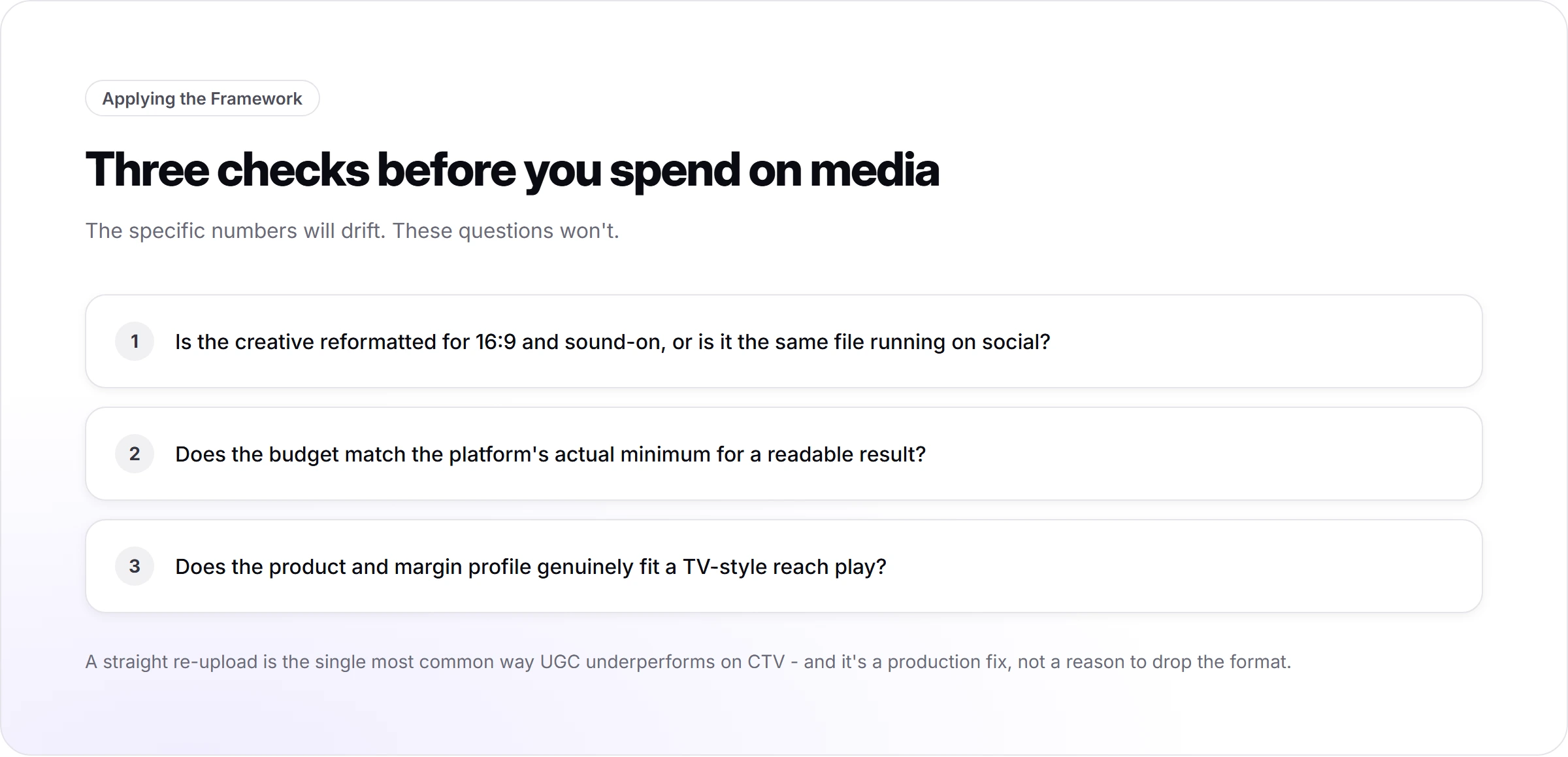
- Is the file built for the screen? A 16:9 frame with a sound-on mix is a different asset from the social cut. A straight re-upload is the most common reason a UGC-style ad disappoints on CTV, and it is a production fix, not a reason to drop the format.
- Did you choose the placement on purpose? The studies above suggest the environment matters. Decide whether the ad runs in premium inventory or a cheaper, broader one, and judge the creative within that context.
- Can you read the test separately from social? CTV results rarely show up in last-click attribution the way social results do. Plan how you will measure the test before you spend on it.
If a landscape version of an existing ad is your next step, the AI ad maker is where to start building it.
FAQs about UGC for OTT Platforms
The specific questions that come up once "does UGC work on CTV" becomes a real planning decision.
What Is UGC Advertising on OTT or CTV Platforms?
It means running a testimonial-style, customer-voice video ad inside a streaming ad break, on services such as Hulu, Roku, or Samsung TV+.
It is different from a streaming service hosting user-uploaded video, which is a platform strategy question this piece does not cover.
What Is the Difference Between UGC Platforms and UGC-Style Ads on CTV?
UGC platforms are a placement: where your ad runs. UGC-style ads are a creative choice: how your ad looks.
The premium-versus-UGC studies compare placements. You can run a UGC-style creative in premium inventory, and you can run a polished creative in a UGC environment.
Does UGC-Style Video Actually Work as an Ad on Connected TV?
There is no direct evidence in the sources cited here either way, so treat it as something to test.
The premium-versus-UGC data compares ad environments, not creative styles. A sensible test adapts the ad for 16:9 and sound-on first, so the format is not what you end up measuring.
Is Premium Content Always Better Than UGC on CTV?
The studies cited by The Trade Desk found premium content outperforming on brand awareness and attention, but they describe averages, not every campaign.
The source also sells premium inventory, and its key figure dates from 2021. Your goal, product, and budget decide whether a cheaper placement is worth testing.
What's the Right Aspect Ratio for a UGC Ad Running on OTT/CTV?
16:9, at the standard 1920x1080 CTV spec, not the 9:16 vertical format most social UGC uses.
A vertical ad on a horizontal screen is either cropped badly or shown in a small centered box. Both make the mismatch visible before the message lands.
Can I Just Reuse My TikTok or Instagram UGC Ad on CTV?
Not without reformatting.
Simulmedia's creative guide cautions against repurposing mobile or desktop creative for CTV unchanged. Reframe it for landscape and rework the audio for sound-on viewing first.
How Long Should a UGC-Style CTV Ad Be?
15 or 30 seconds are the lengths most commonly bought on CTV.
Confirm the accepted lengths with the platform you are buying on. The hook still needs to land early, though passive viewing may allow a little more room than a mobile feed.
Does Promer AI Generate UGC-Style Video Ads in a CTV-Ready Format?
Not by default.
Promer AI's AI UGC Ads currently outputs 9:16. A 16:9 version currently means using AI Video Ad Clone with a testimonial-style reference video, or AI Ad Animation for short motion pieces. Review the output before it runs, since AI-generated creatives can contain mistakes.
Does Promer AI Help With Buying CTV Media?
No. Promer AI focuses on creative performance, not campaign setup, bidding, or budget management.
You would produce the creative with Promer AI and buy and measure the media in a CTV platform or DSP of your choice.
Sources
- The Trade Desk. Premium vs. user-generated content and why it matters for advertisers. Retrieved September 2026, from thetradedesk.com/resources/premium-vs-user-generated-content-and-why-it-matters-for-advertisers
- Simulmedia. CTV creative guide. Retrieved September 2026, from simulmedia.com/blog/ctv-creative-guide