



The Necklace Ad Is Selling Something the Buyer Never Takes Off
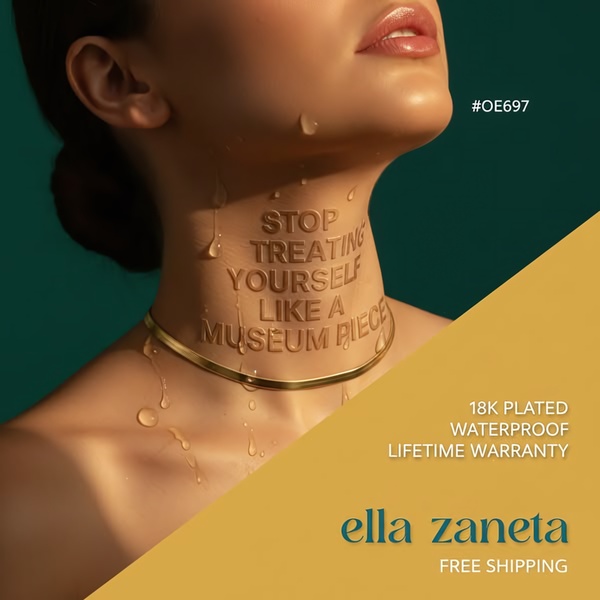
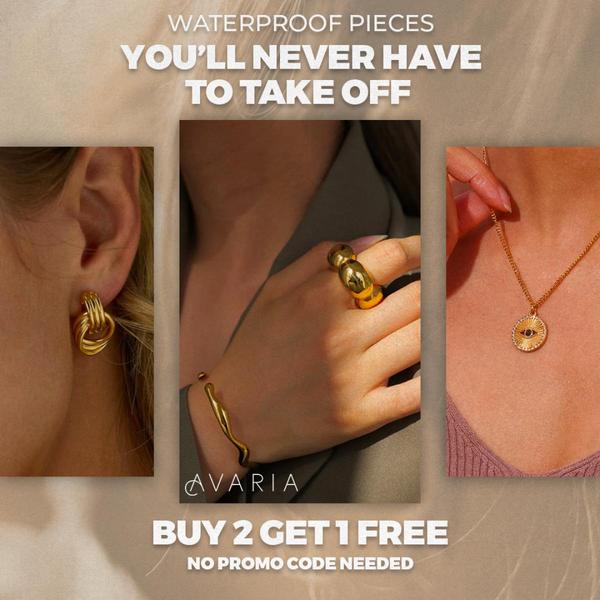
Read the headlines in this library and one promise keeps returning. Waterproof pieces you'll never have to take off. Jewelry as tough as you are. Stop treating yourself like a museum piece. The last thing I put on before I conquer the day. Nobody writes that about a ring.
The reason is physical. Rings come off to wash up, earrings come out to sleep, a watch comes off at the gym. A chain stays on through all of it, so the objection a necklace ad has to clear isn't whether the piece looks expensive - it's whether it survives a shower, a workout, and a year of being worn every single day. That's why 18K plating, no tarnish, sweat and heat resistance, and a lifetime warranty end up as headline text rather than footnotes, and why comparison layouts putting one brand's guarantee against everyone else's tarnishing do so well here.
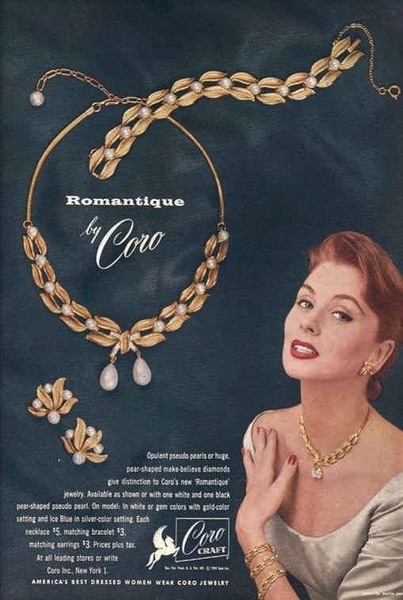
Layering is the second thing that makes this product type behave differently. A necklace is the one piece people deliberately buy in threes, stacked at different lengths on the same neck, which turns a single creative into a multi-unit order. It also introduces the spec this category quietly loses money on: length. A chain that photographs beautifully at 16 inches sits somewhere else entirely at 20, and a buyer who guesses wrong sends it back.
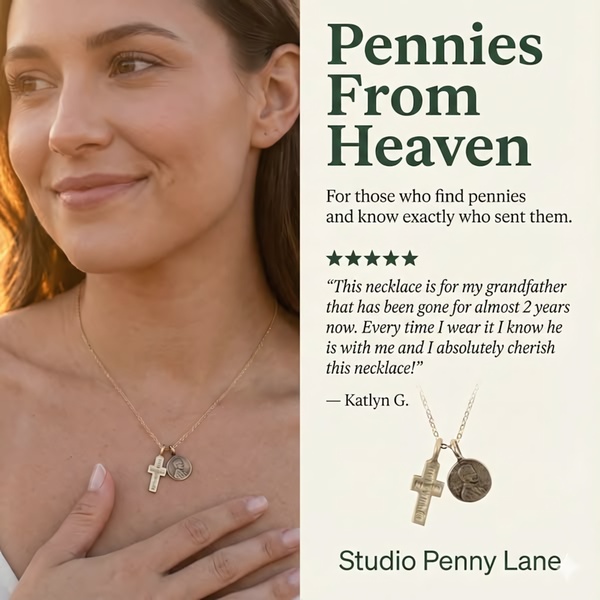
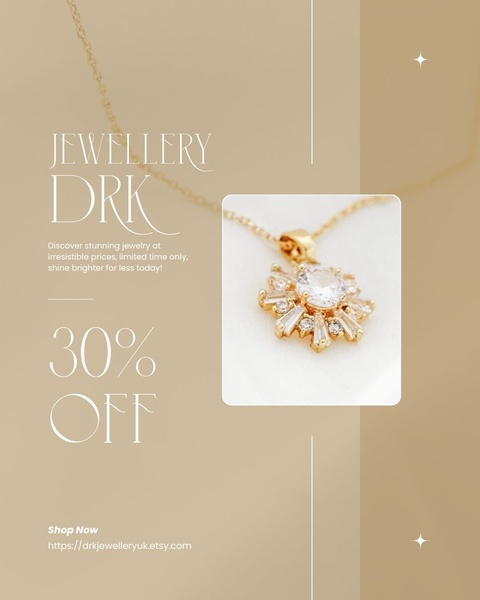
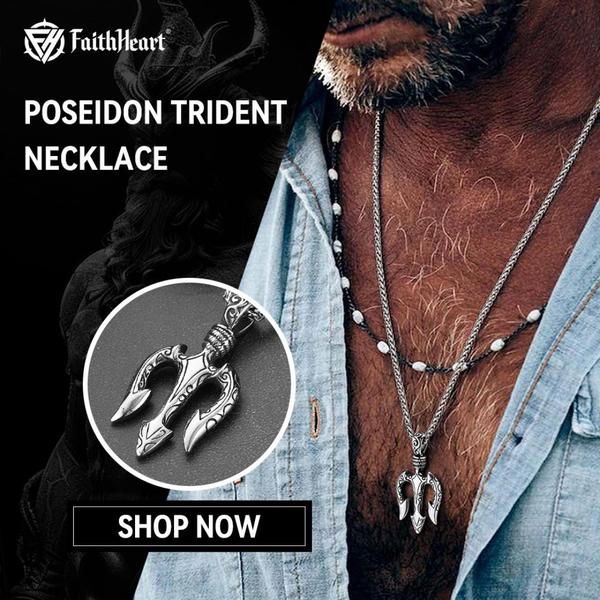
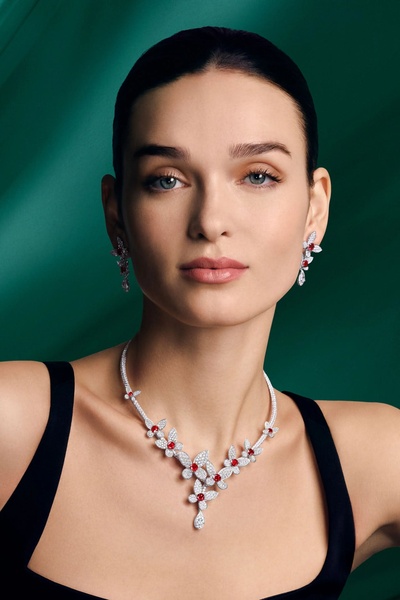
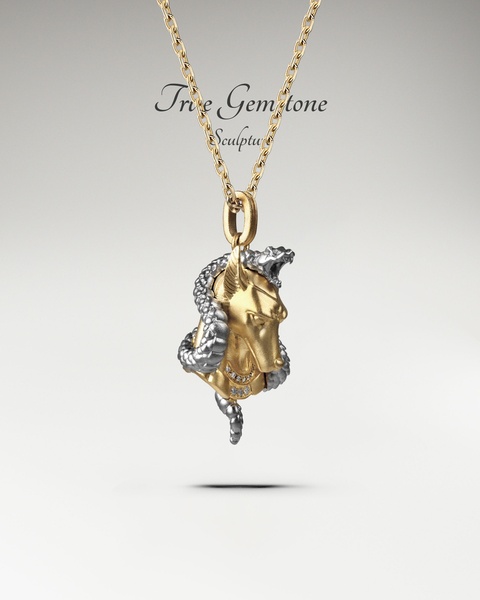
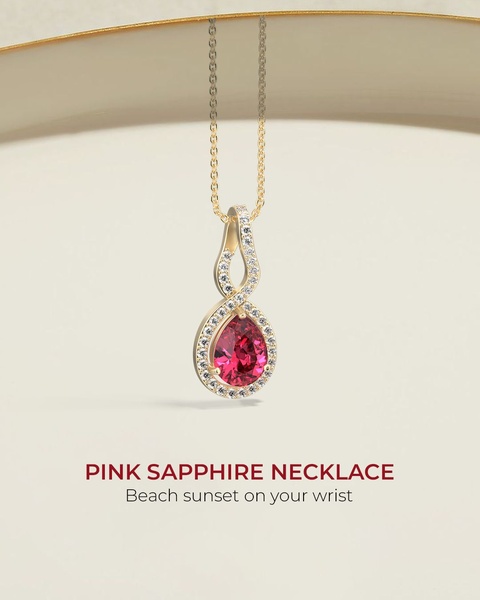
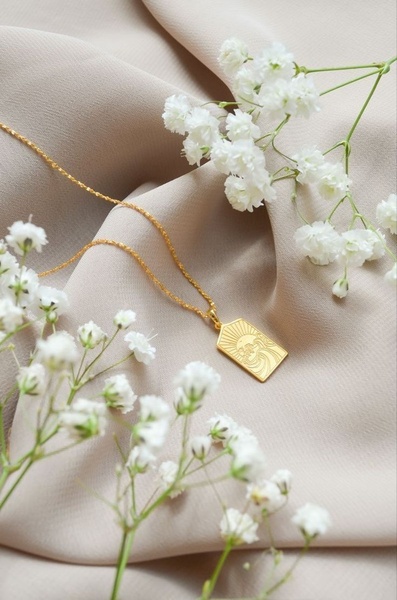
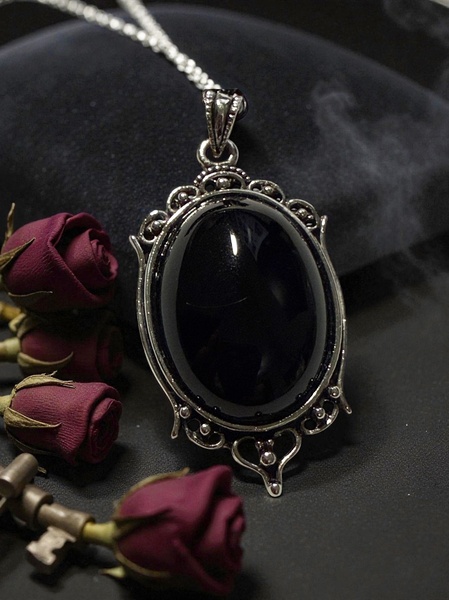
Then there's what hangs on the chain. A necklace is a delivery mechanism for a symbol - an initial, a coin, a zodiac sign, a custom pet face, a memorial piece someone wears because of who gave it to them. One of the strongest creatives in this set is nothing but a customer quote about a grandfather who has been gone two years. That emotional register is available to necklaces in a way it isn't to most of the jewelry ad templates, and it changes which creative theme you should be reaching for.
How Does Promer AI Build Your Necklace Ad From the Chain, the Pendant, and the Claim?
Knowing you're selling wear permanence, a layered set, or a symbol still leaves the headline, the visual direction, and the CTA unwritten. That's the part Promer AI handles, and each feature works on its own, so you start from whatever you already have.
AI Ad Prompt is the direct route. Describe the scene and the message - a waterproof chain on a wet collarbone, three lengths stacked on one neck - and Promer AI generates the creative straight away, with no other feature in between. A product image and a reference ad are optional but bring the result closer to the piece you ship, and "Get ad ideas" suggests five directions if you don't have one yet.
If what you have is phone photos of a chain on a table, AI Photoshoot turns them into studio-quality shots with guided style and composition picks, since a thin chain needs light and contrast before it needs copy.
When you'd rather start from a proven layout, AI Ad Clone rebuilds a reference from the library around your necklace - a durability claim over a close neck shot, a layering set, a personalization grid, or a testimonial where the customer's sentence is the whole ad. It suggests the headline, body, and CTA, each editable.
Review before it runs - generated creatives can have mistakes, and here they show up as a clasp, chain link, or pendant that isn't the one you ship. Every durability line is a claim you can be asked to support: waterproof, never tarnishes, ten times stronger, lifetime warranty, and any side-by-side against unnamed competitors. Keep stated lengths, weights, and karat identical to the product page, spell out what a warranty actually covers, and confirm you have the rights to any celebrity, model, or customer image before it goes live.