Pizza is almost never a solo purchase - and the ad has to sell the occasion, not just the pie
Most food is bought for one person. Pizza is bought for a group: a family dinner, a party, a late night with friends, a shared moment. That single fact reshapes the entire advertising approach - a pizza ad that sells one appetite is missing the reason most pizza gets ordered in the first place.
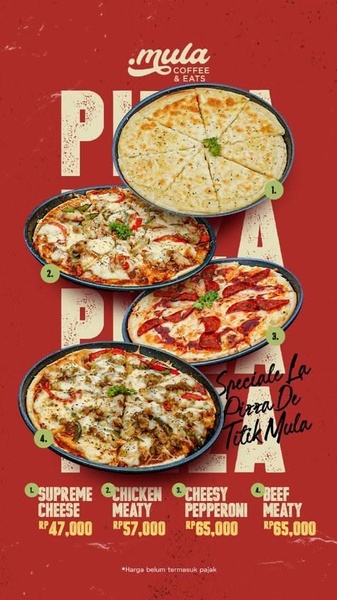
This is why the deal math matters so much in pizza advertising. "Buy 2, Get 1 Free" isn't just a discount; it's built for the group order it assumes. A multi-pizza menu grid with prices lets a group see the options and split the decision. The offer structure is the product for a shared purchase, in a way it isn't for a solo burger or coffee.
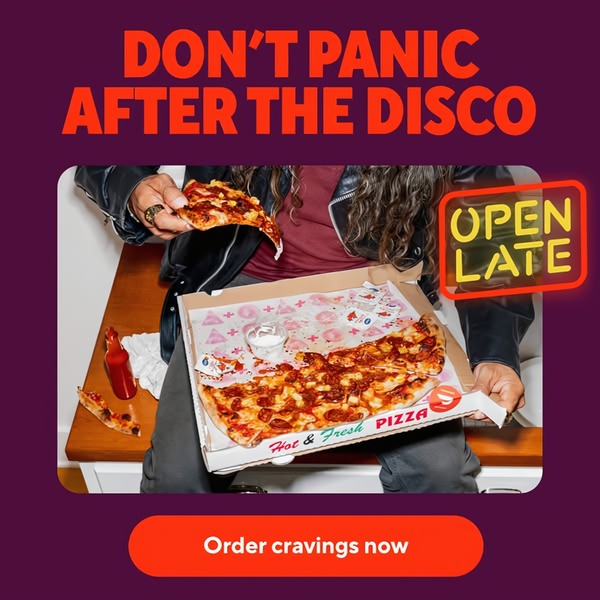
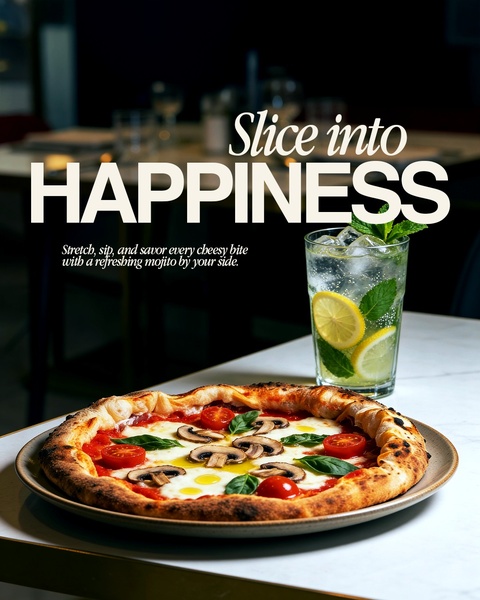
The occasion language does the emotional half. "Slice into Happiness," "open late," "after the disco" - these frame pizza as the food of a moment, not just a meal. And the overhead full-pie shot, taken from directly above to show the whole circle and every topping, is pizza's signature format because pizza is the one food that photographs best as a complete object the whole group is about to share.
Pizza Ad Examples Built Around the Group, Not the Slice
Each of these sells a shared order rather than a single appetite - through a deal, an occasion, or a hook that makes the group decision easy.
Pizza Roll - Direct Value Proposition
- Hook type: Direct Value Proposition
- Theme: High-Contrast Promotional Offer
- Platform: Facebook, Instagram
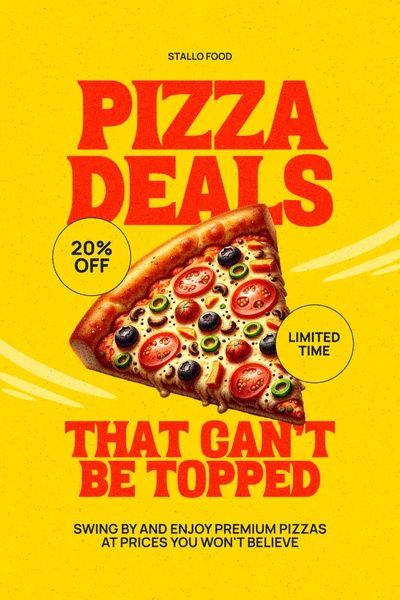
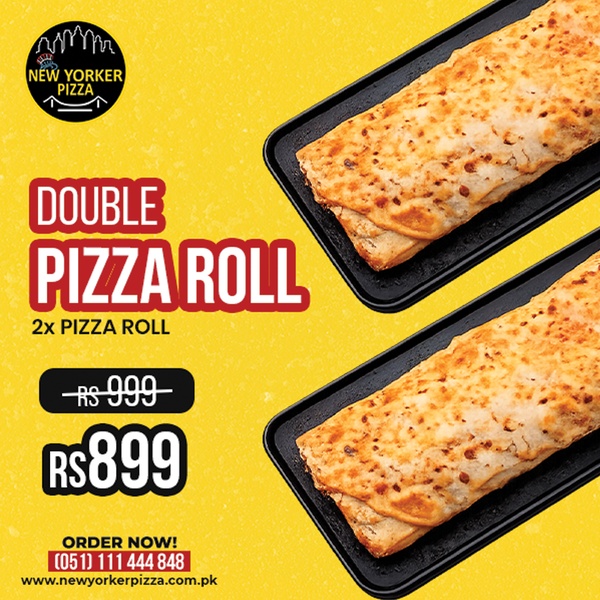
A "Double" quantity claim next to a struck-through original price, on a yellow field that stops the scroll before the text is even read. No occasion, no group framing - the deal math alone is doing the entire job of making a shared order feel worth it.
Pizza - Visual Metaphor
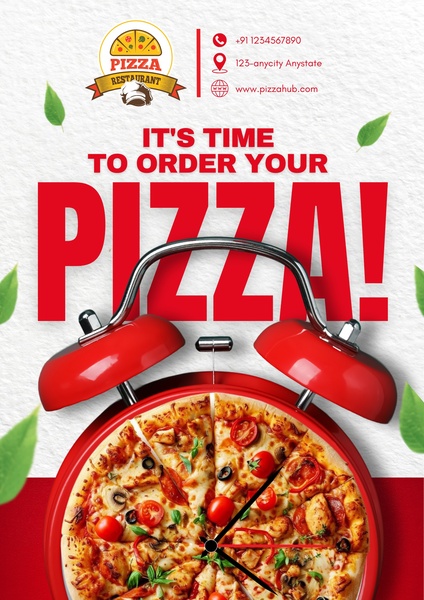
- Hook type: Visual Metaphor
- Theme: Urgency-Driven Visual Metaphor
- Platform: Facebook, Instagram
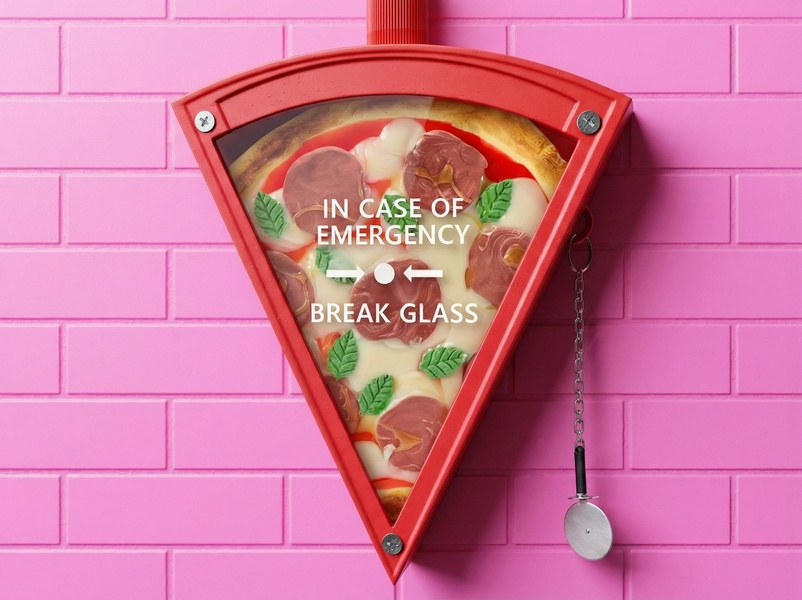
The pizza itself is arranged into a clock face, turning the product into the urgency message with no caption required. It skips occasion framing entirely and instead manufactures urgency out of the shape of the food - a different lever than a discount or a group scene.
Pizza and Beverage - Festive Visual Bundle
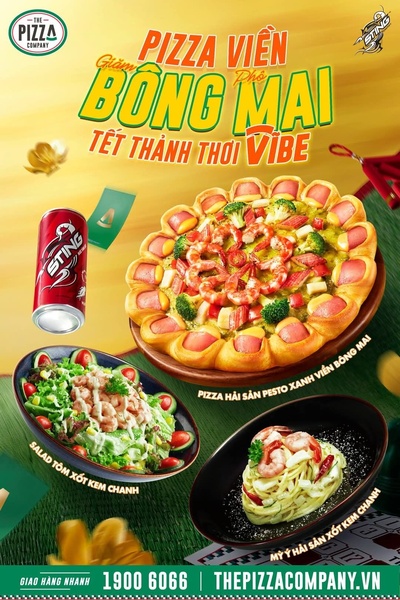
- Hook type: Festive Visual Bundle
- Theme: Festive Holiday Bundle
- Platform: Facebook, Instagram
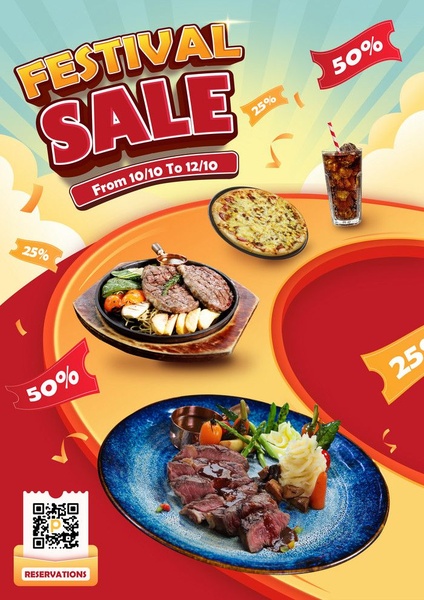
A premium pizza staged with a soda and sides for a holiday table - the bundle itself is the occasion signal. This is the clearest example of selling the moment first: the pizza is part of a spread, not a standalone item, which is what makes it read as a group order rather than a personal one.
Pizza - Direct Value Proposition
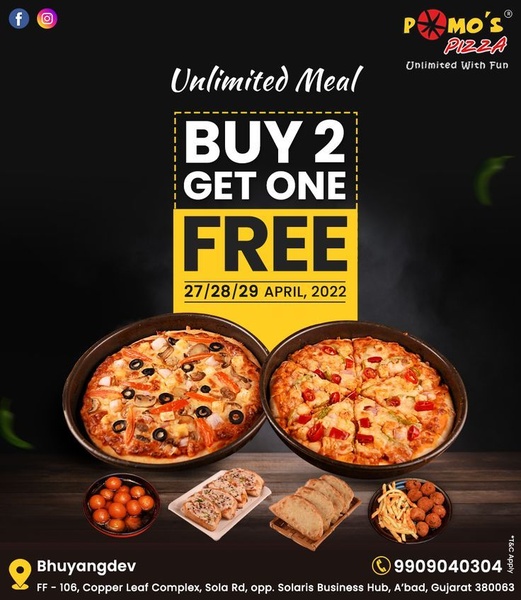
- Hook type: Direct Value Proposition
- Theme: Promotional Offer Spotlight
- Platform: Facebook, Instagram
"Buy 2 Get 1 Free" in a bright yellow box against black - a deal built for a group order in its exact wording, since one pizza rarely triggers a "buy 2" decision. The math itself implies the occasion without a single word of lifestyle copy.
Pizza - Holiday-Themed Discount
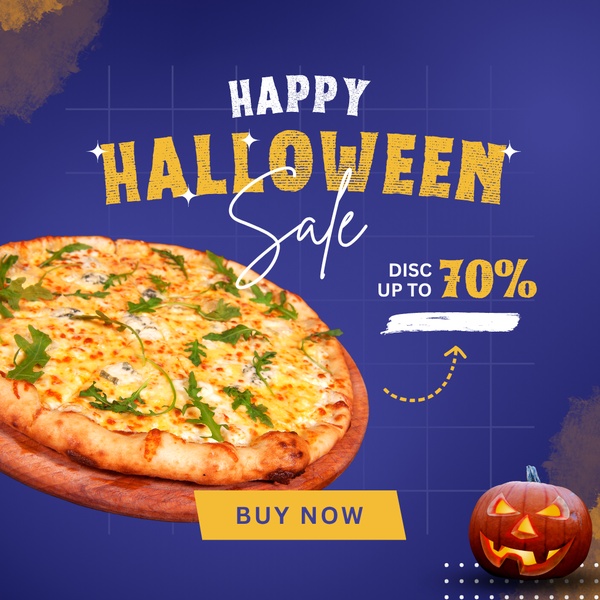
- Hook type: Holiday-Themed Discount
- Theme: Seasonal Festive Promotion
- Platform: Instagram, Facebook
A pumpkin icon and a bold discount percentage anchor a Halloween-specific promotion. The calendar event itself supplies the occasion - the ad doesn't need to describe a party, because the date already implies one.
The Most Common Pizza Ad Mistake: Selling the Pie, Not the Moment
Three of the five ads above never show a full pie at all - the deal math, the clock metaphor, and the holiday icon carry the entire ad. That's not an accident. When the offer or the occasion is strong enough, the pizza itself becomes supporting evidence rather than the hook.
The mistake shows up when a pizza ad leads with a generic overhead pie shot and nothing else - no group signal, no deal, no moment. It photographs well, but it doesn't answer the actual question a pizza buyer is asking, which is rarely "does this look good" and almost always "is this worth ordering for the people I'm with right now."
The fix isn't to drop the pie shot - it's pizza's strongest visual asset. It's to never let it stand alone. Pair it with a price built for sharing, a holiday or event it fits, or a bundle that turns one pizza into a full spread.
If one of the five ads above already pairs the pie with a hook that fits your menu, Promer AI's Ad Clone recreates that structure around your own pizza instead of starting from a blank layout.
FAQs about Pizza Ads
Why does deal structure matter more for pizza than for most other food ads?
Because pizza is almost always a group decision, and the offer has to make sense for a group, not a person. A single-serving discount doesn't move a pizza order the way "Buy 2 Get 1 Free" does, because the math is built around the size of the group already deciding to order. Compare this to Promer AI's food ad creatives for single-serving products, where a solo discount is often enough on its own.
Does a pizza ad need to show the whole pie?
Not always - it depends on whether the offer or occasion is already doing the selling. An overhead full-pie shot is the strongest default because it shows the whole shareable object at once. But when a discount or a holiday hook is strong enough to carry the ad, the pie can appear as a supporting detail rather than the hero, as long as the ad still signals a shared order somewhere.
How does a seasonal or holiday pizza ad differ from an evergreen one?
The calendar event replaces the occasion copy the ad would otherwise need to write. A Halloween or Tet-themed pizza ad doesn't have to describe a party or a gathering - the date does that work automatically. An evergreen pizza ad has to build the occasion itself, through language ("open late," "family night") or through a bundled spread of food that implies the moment.
Is a visual metaphor riskier than a straightforward hero shot for pizza?
It trades some clarity for a stronger scroll-stop, and it works best when the product is still recognizable. Turning a pizza into a clock face is memorable precisely because the food is still clearly a pizza - the metaphor adds a layer rather than replacing the product. If the manipulation makes the food hard to recognize at a glance, the ad loses the appetite appeal it needs underneath the concept.
How do I create a pizza ad from my own menu?
Paste your menu page and Promer AI reads it, pulling out the pizza names, the combo or deal structure, the price points, and the occasion angle the pizza fits - family night, party, late-night, or a festival promotion. It then writes the headline, body, and CTA on top of the structure you picked. Review before it runs, as generated creatives can have mistakes.
How Promer AI Builds Your Pizza Ad From Pie, Deal Structure, and Occasion
Getting the right combination of pie visual, deal math, and occasion framing still leaves the headline, the offer, and the CTA unwritten. That's the part Promer AI's AI advertisement generator handles from your actual menu page rather than a blank brief.
Paste your menu page and the AI reads it, pulling out the pizza names, the combo or deal structure, the price points, and the occasion angle the pizza fits - family night, party, late-night, or a festival promotion. It then writes the headline, body, and CTA on top of the winning structure you picked.
If you have a menu but no direction yet, Promer AI's Ad Concept reads your page and builds ad angles from your product context before any design begins.
Review before it runs - generated creatives can have mistakes.
If dessert rounds out your menu alongside pizza, the same library covers ice cream ad templates built around a very different occasion - heat relief and personal indulgence rather than a shared meal.