Static vs Dynamic Ads: Which Should Ecommerce Brands Use?
Category
Blogs
Date
Authored by
Promer Team
Summary
Static ads are fixed images built for creative testing. Dynamic ads are automated, data-fed creatives built for personalization at scale.
Static ads are fixed image creatives - a single frame with a headline, visual, copy, and CTA that does not change. Dynamic ads are automated creatives that pull content from a data feed - product images, prices, names, and offers - and assemble the ad in real time based on who is seeing it.
The two formats are built for different jobs. give ecommerce teams full creative control - every element is chosen deliberately and tested in isolation. Dynamic ads give ecommerce teams scale - personalized product ads served automatically to the right audience without producing each creative manually.
Most ecommerce teams do not need to choose one over the other. They need to understand what each format does well, where each one breaks down, and how to use both together in a creative system that produces consistent performance.
Key Takeaways
Static ads are manually produced, fully controlled creatives - best for testing hooks, angles, and performance logic
Dynamic ads are automated creatives assembled from a product feed - best for retargeting at scale and personalized product recommendations
Static ads fatigue faster at high frequency because the frame never changes - refresh cycles are essential
Dynamic ads remove creative control - the angle, hook, and message are generated by the platform, not by the advertiser
The most efficient ecommerce creative system uses static for testing and validation, dynamic for scaling retargeting
Static vs Dynamic Ads: The Core Difference?
The core difference is not aesthetic - it is how the creative is produced and what it is optimized for.
Static Ads
Dynamic Ads
How it is produced
Manually designed, one creative at a time
Auto-assembled from a product data feed
Creative control
Full control over hook, angle, copy, visual, CTA
Platform controls the assembly - limited creative input
Best use case
Testing hooks and angles, brand-building, cold audiences
Retargeting, product catalogue ads, personalization at scale
Setup complexity
Low - produce the image, upload, go live
Higher - requires a product feed, catalogue setup, pixel integration
Fatigue pattern
Fatigues at the frame level - same image every impression
Less susceptible to frame-level fatigue, but can still fatigue at the offer level
Testing approach
A/B test one element at a time, clear learnings
Harder to isolate variables - platform optimizes automatically
The deciding factor for most ecommerce teams is not which format performs better in isolation - it is which format is right for the specific audience and goal of that campaign.
What Is a Static Ad?
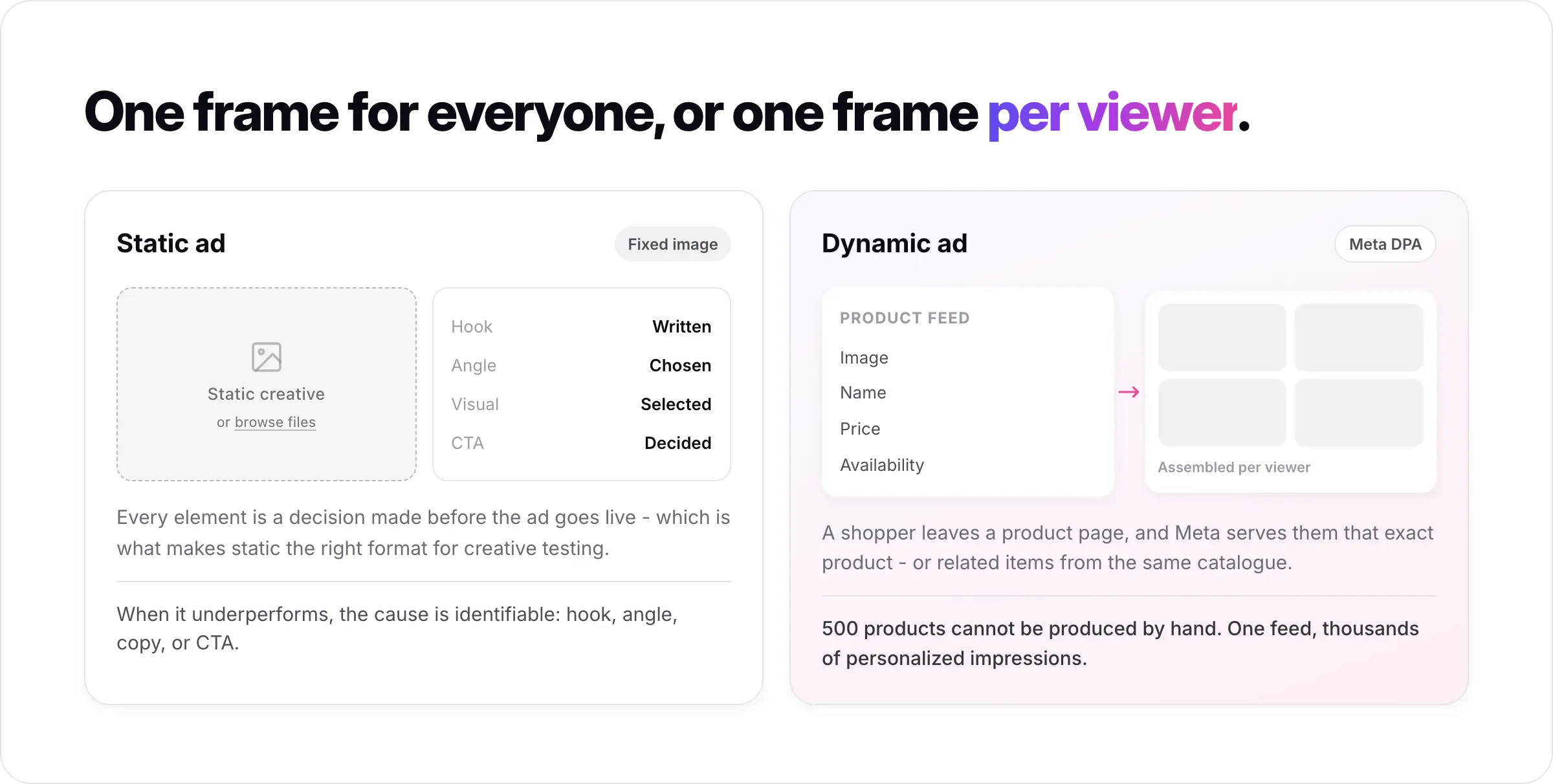
A static ad is a single, fixed image used in paid advertising. The creative does not change after it is published - the same headline, visual, copy, and CTA is seen by every viewer on every impression.
Static ads give the advertiser complete control over the message. The hook is written deliberately. The angle is chosen based on product context and customer insight. The visual is selected to match the hook. Every element is a decision made before the creative goes live - which is what makes static ads the right format for creative testing.
When a static ad underperforms, the cause is identifiable: the hook did not stop the scroll, the angle did not resonate, the copy did not build belief, or the CTA did not match the audience's intent. That diagnosis is only possible because every element was set intentionally.
What Is a Dynamic Ad?
A dynamic ad is an automated creative assembled in real time from a product data feed. The platform - Meta, Google, or another network - pulls product images, names, prices, and availability from the feed and builds the ad automatically based on the viewer's browsing behaviour or interests.
The most common form for ecommerce is the Dynamic Product Ad (DPA) on Meta. When a shopper visits a product page and leaves without purchasing, Meta automatically serves them an ad showing that exact product - or related products from the same catalogue. No manual creative is required for each product. The feed does the work.
Dynamic ads are powerful for retargeting at scale. A brand with 500 products cannot manually produce a static ad for each one. Dynamic ads solve that problem - one feed, one campaign structure, thousands of personalized impressions.
Where Static Ads Win?
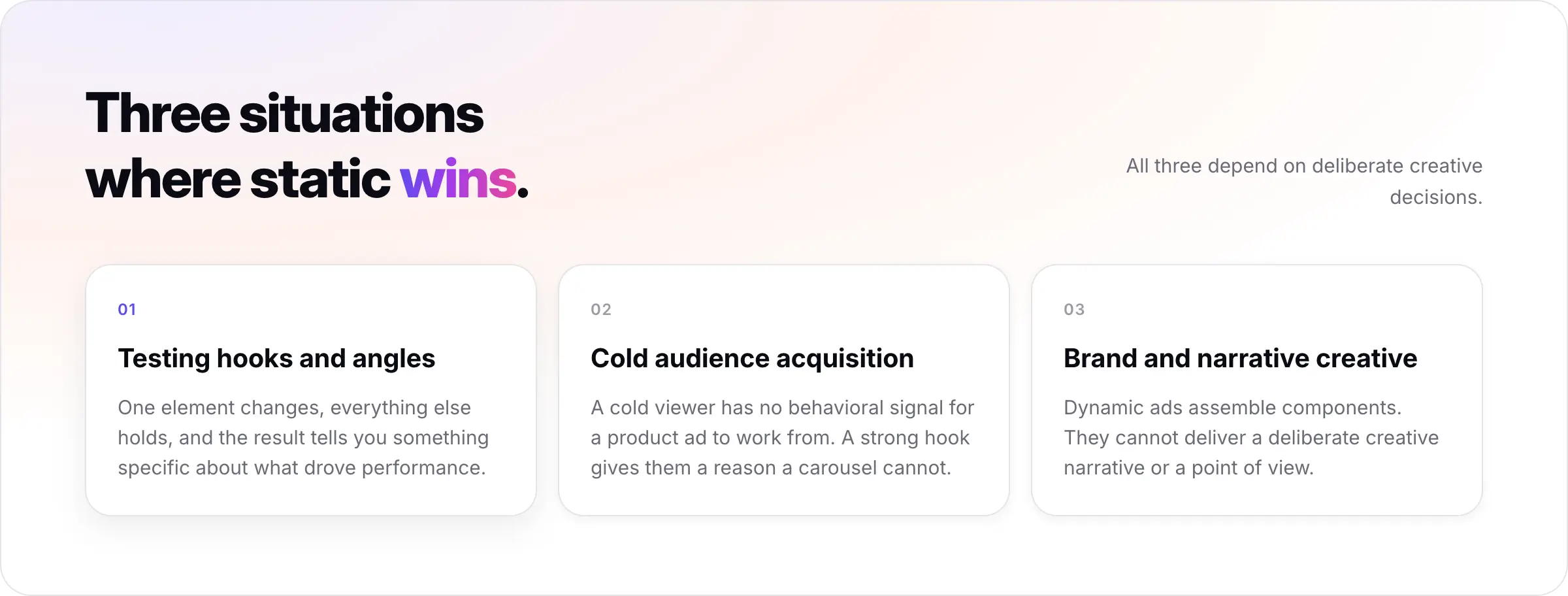
Static ads outperform dynamic ads in three specific situations.
Testing new hooks and angles. Dynamic ads do not produce learnings about what creative logic is working - the platform optimizes automatically and the advertiser cannot isolate the variable. Static ads are built for isolation. One element changes, everything else holds, and the result tells you something specific about what drove performance.
Cold audience acquisition. Dynamic ads are built around product intent - they show people products they have already shown interest in. For cold audiences who have never encountered the brand or the product, a dynamic product ad has no behavioral signal to work from. A static ad with a strong hook, a defined angle, and a message matched to a real customer pain gives cold audiences a reason to engage that a product carousel cannot.
Brand-building and narrative creative. Static ads allow full control over the message, the emotional trigger, and the visual direction. For campaigns designed to build a point of view, establish a brand position, or deliver a specific creative concept, static is the only format that works. Dynamic ads assemble components - they cannot deliver a deliberate creative narrative.
Where Dynamic Ads Win?
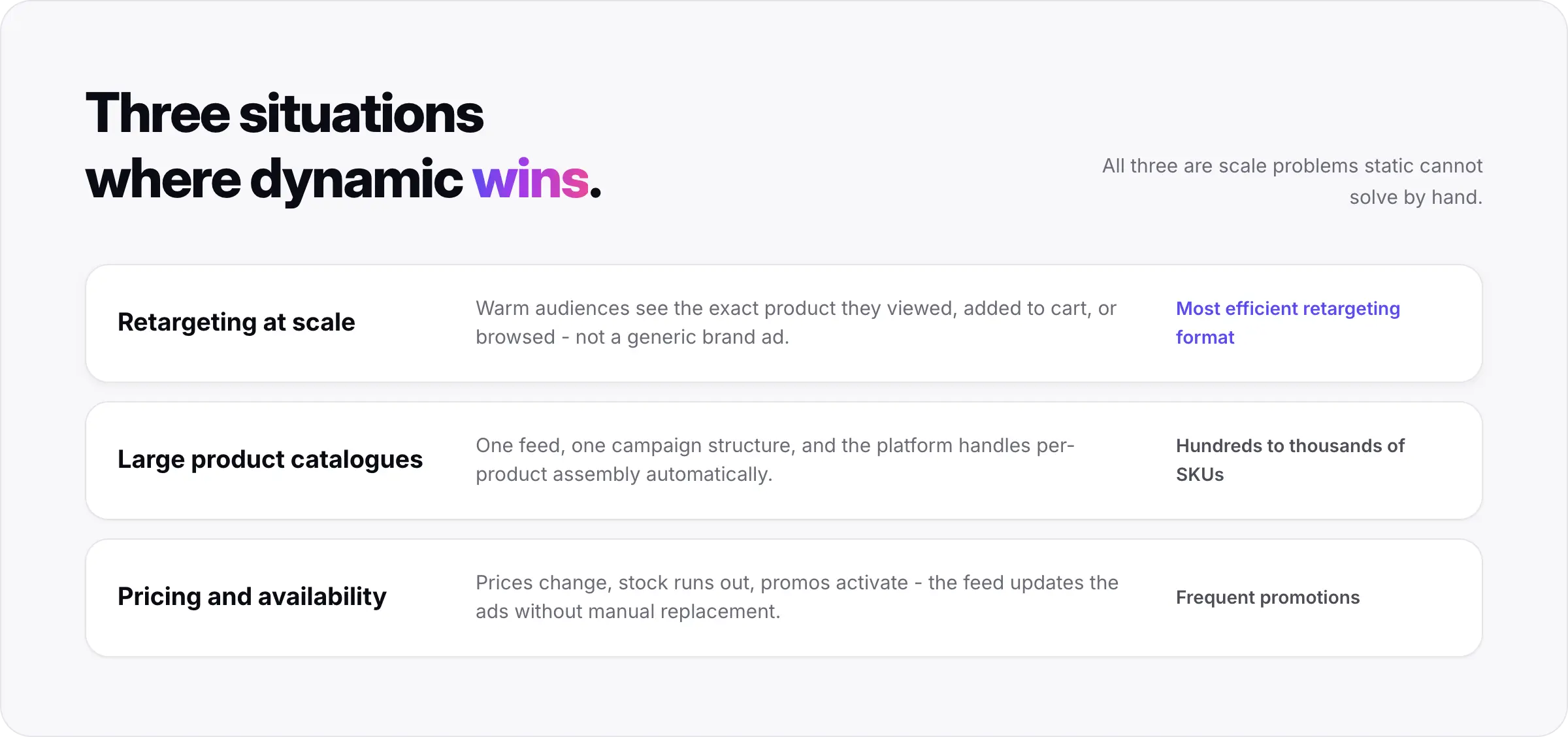
Dynamic ads outperform static ads in three specific situations.
Retargeting at scale. Dynamic product ads automatically show warm audiences the exact products they viewed, added to cart, or browsed. The personalization drives relevance - the viewer sees the specific product they were already considering, not a generic brand ad. For ecommerce teams with large product catalogues, this is the most efficient retargeting format available.
Large product catalogues. A brand with hundreds or thousands of SKUs cannot manually produce a static creative for each product. Dynamic ads solve the scale problem - one product feed, one campaign structure, and the platform handles the per-product creative assembly automatically.
Seasonal pricing and availability updates. When prices change, products go out of stock, or promotional offers activate, dynamic ads update automatically from the feed. Static ads have to be manually updated or replaced. For ecommerce teams running frequent promotions, dynamic ads remove a significant operational burden.
How Static and Dynamic Work Together?
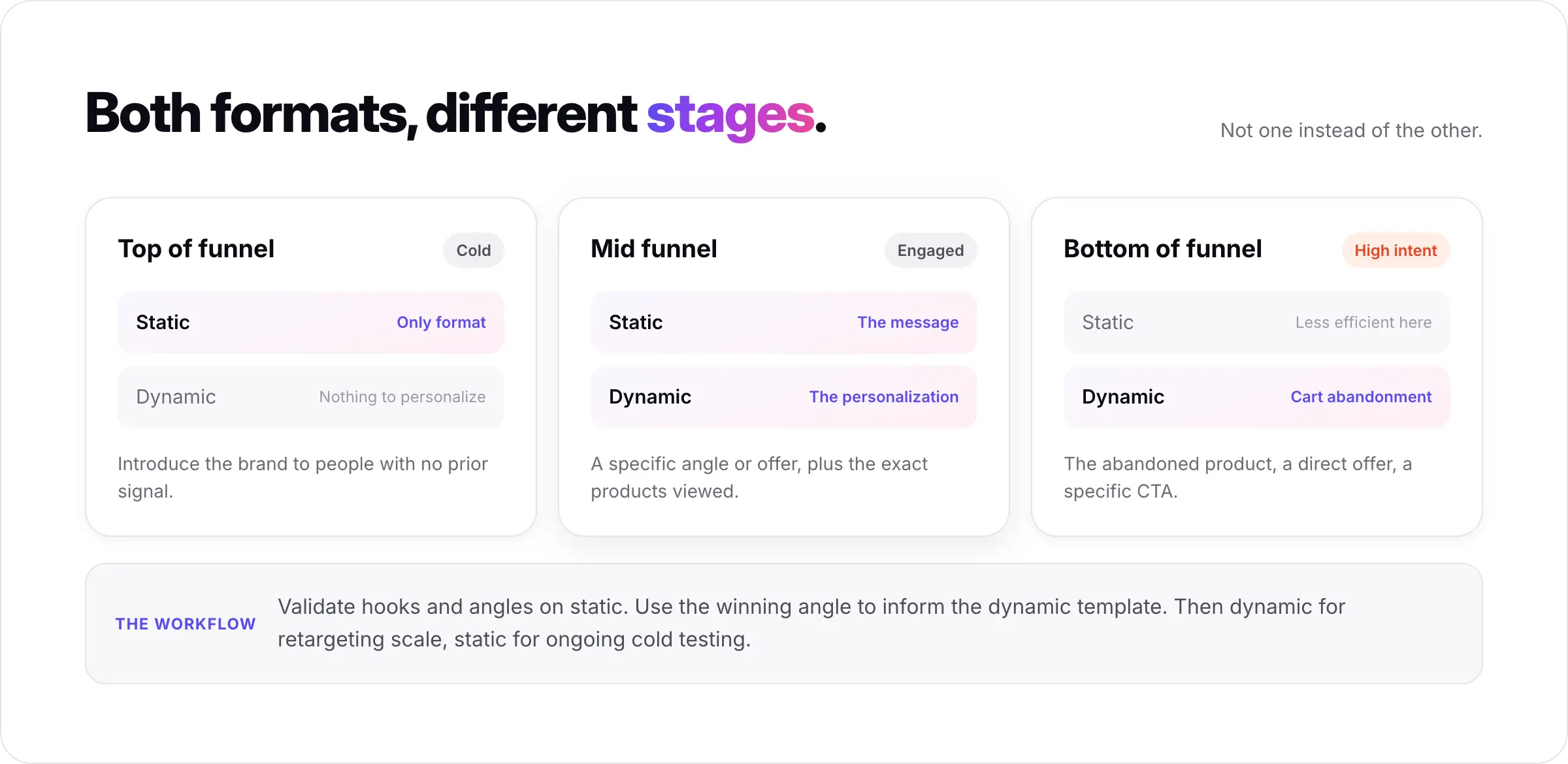
The most effective ecommerce creative system uses both formats at different stages of the funnel - not one instead of the other.
Top of funnel - cold audiences: Static ads with tested hooks and angles. The goal is to introduce the brand or product to people who have no prior signal. Dynamic ads have nothing to personalise against at this stage. Static is the right format.
Mid funnel - engaged but not converted: A combination of static retargeting ads with a specific angle or offer, and dynamic product ads that show the exact products viewed. Static ads deliver the message. Dynamic ads deliver the personalization.
Bottom of funnel - high intent, cart abandonment: Dynamic product ads. The audience has already shown strong product intent. Showing the exact product they abandoned, with a direct offer and a specific CTA, is more efficient than any manually produced static ad at this stage.
The practical workflow: Validate hooks and angles on static first. Use the winning angle to inform the copy and visual direction for the dynamic ad template. Then use dynamic for retargeting scale and static for ongoing cold audience testing.
Creative Limitations of Dynamic Ads
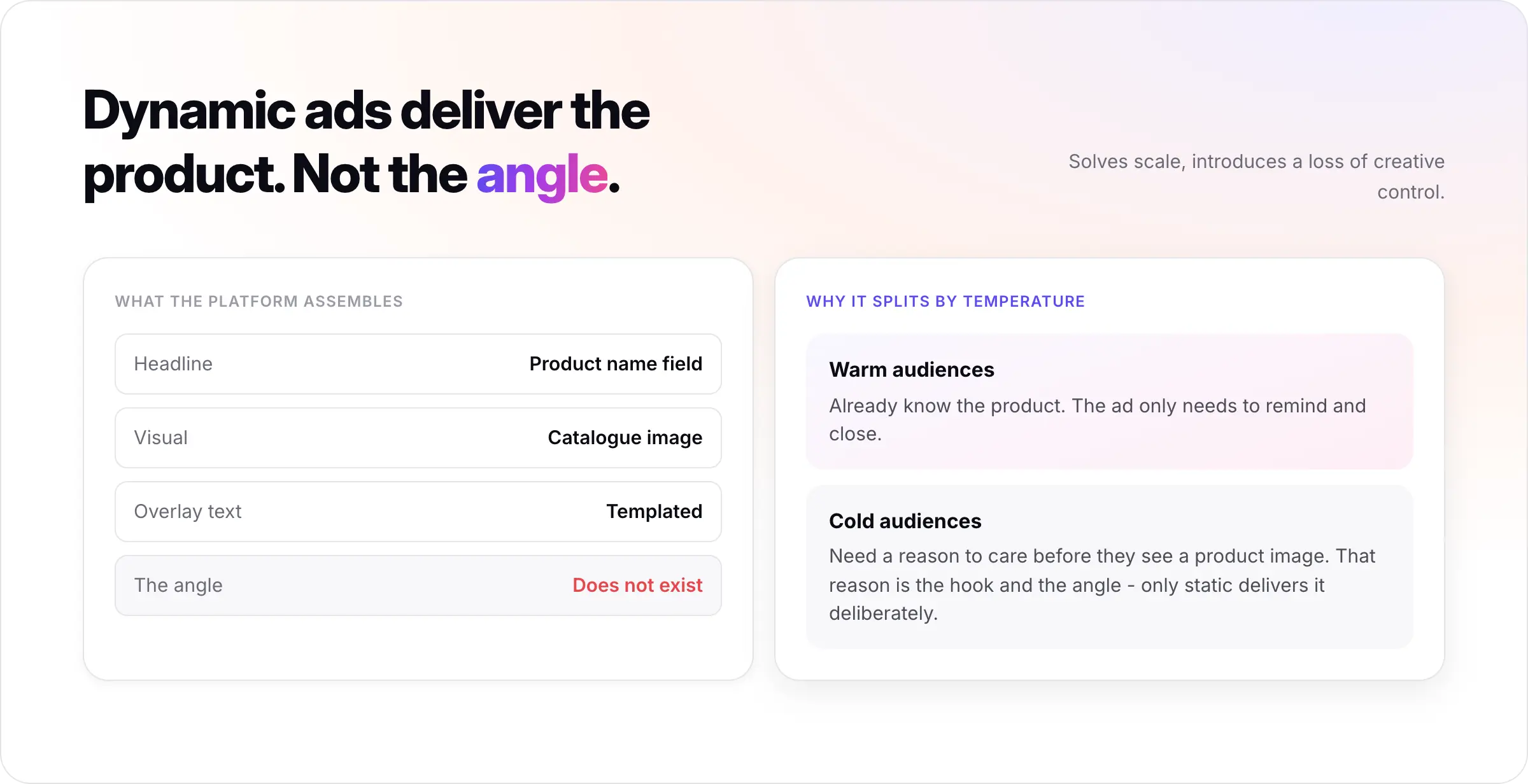
Dynamic ads solve the scale problem but introduce a different one: the advertiser loses control of the creative.
The platform assembles the ad from feed components. The headline is pulled from the product name or a short description field. The visual is the product image from the catalogue. The overlay text, if any, is templated. The angle - the specific customer truth the ad is built around - does not exist. Dynamic ads deliver the product. They do not deliver a hook, an angle, or a message.
This is why dynamic ads work well for retargeting warm audiences but struggle with cold audiences. Warm audiences already know the product - the ad just needs to remind them and close. Cold audiences need a reason to care before they see a product image. That reason is the hook and the angle, which only a static ad can deliver deliberately.
How Promer AI Fits Into a Static and Dynamic Creative System
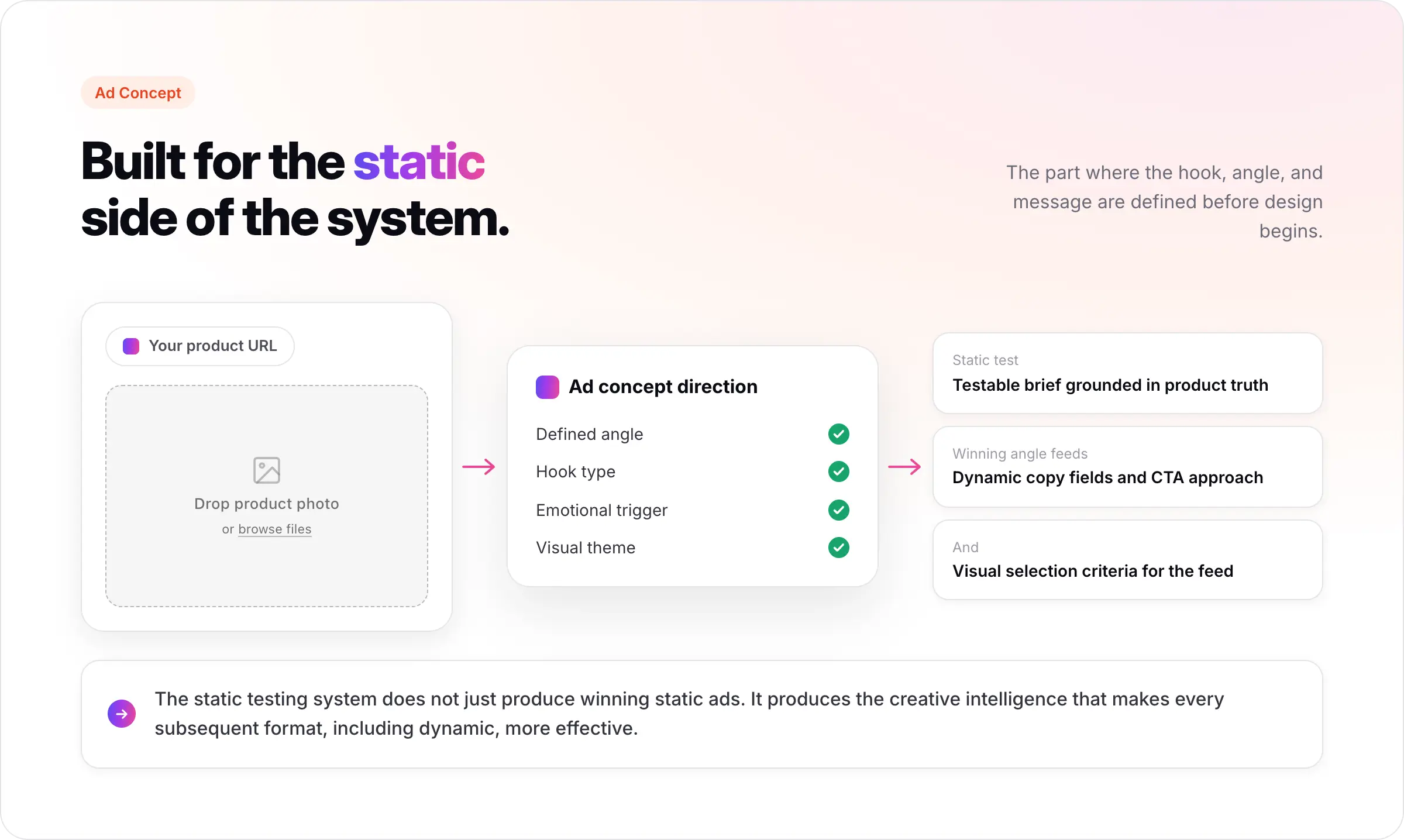
Promer AI is built for the static side of the creative system - the part where the hook, angle, and message are defined before design begins.
When you paste a product URL into app.promer.ai, Promer extracts the product context - highlights, customer profile, pain point, and need - and generates structured ad concept directions. Each direction includes a defined angle, hook type, emotional trigger, and visual theme. The output is a testable static ad brief grounded in product truth.
As static test results come in, the winning angle and hook logic also inform the dynamic ad template - specifically the copy fields, the visual selection criteria, and the CTA approach used in the feed. The static testing system does not just produce winning static ads. It produces the creative intelligence that makes every subsequent format, including dynamic, more effective.
FAQs About Static vs Dynamic Ads for Ecommerce
Which performs better: static ads or dynamic ads?
Neither format universally outperforms the other - it depends on the audience, the funnel stage, and the goal.
Dynamic ads typically outperform static on retargeting and warm audience campaigns because of personalisation. Static ads typically outperform dynamic on cold audience acquisition and brand-building because they allow deliberate hook and angle development.
The most efficient ecommerce creative system uses both: static for testing and cold audience acquisition, dynamic for retargeting scale.
Are dynamic ads harder to set up than static ads?
Yes - dynamic ads require more technical setup. They need a product data feed, a pixel or SDK installed on the site, a catalogue linked to the ad account, and campaign structures built around dynamic formats. Once the infrastructure is in place, the creative scales automatically. But the upfront setup is more involved than uploading a static image and writing a headline.
Static ads require no feed or pixel - you produce the image, set the targeting, and go live. The tradeoff is that static ads require ongoing production effort to refresh and iterate.
Can static and dynamic ads run at the same time?
Yes - and for most ecommerce teams, they should. Static and dynamic ads serve different stages of the funnel and different audience temperatures. Running both simultaneously means cold audiences see static ads with deliberate hooks and angles, while warm audiences see dynamic product ads personalised to what they already viewed. The two formats complement each other rather than compete.
Which format is better for a small ecommerce team with limited resources?
Start with static. Static ads require less technical infrastructure, cost less to set up, and produce clearer learnings because every element is intentional. A small team with limited resources benefits more from understanding what hook and angle works for their product than from running automated dynamic ads that offer no creative insight.
Once the winning angle is validated through static testing, dynamic retargeting becomes a logical next step - the feed setup is a one-time investment and the creative scale it provides is worth the effort.
When should I use dynamic ads instead of static for retargeting?
Use dynamic product ads for retargeting when your product catalogue has multiple SKUs and you want to show each shopper the specific product they viewed or abandoned. Dynamic ads handle per-product personalization at a scale that static ads cannot match manually.
Use static retargeting ads when you want to deliver a specific message - a time-limited offer, a specific angle, or a brand narrative - to a warm audience. Static retargeting gives you control over the message. Dynamic retargeting gives you personalization. Choose based on what the campaign needs to deliver.
Do dynamic ads suffer from creative fatigue?
Dynamic ads are less susceptible to frame-level fatigue because the product image and content vary per viewer. However, they can fatigue at the offer level - when the same product is shown repeatedly with no variation in the template, the audience starts to ignore it.
The refresh strategy for dynamic ads is different from static: update the offer, the overlay text, or the template design rather than the underlying product content. If the catalogue is stale or the template has not changed in months, performance will decline even on a dynamic campaign.